
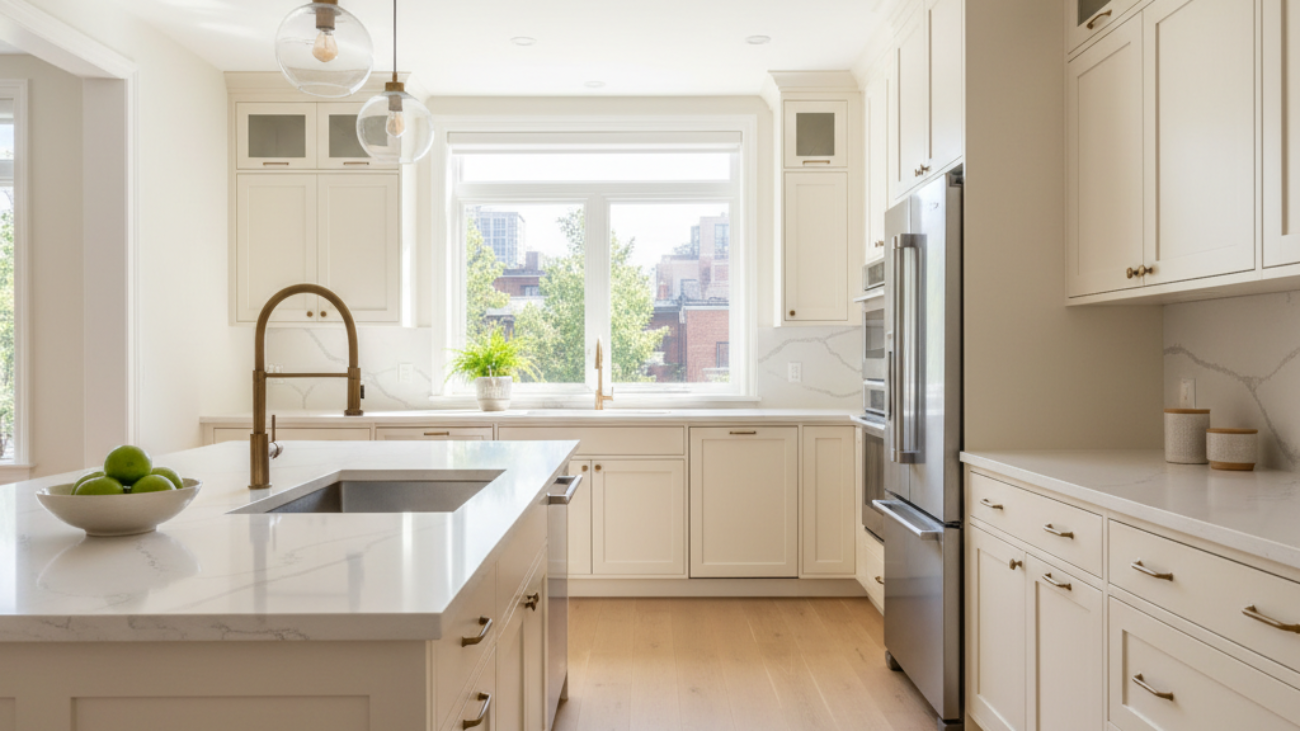
Cream colored kitchen cabinets are soft off-white cabinets with warm undertones that balance brightness and coziness. In York, near 2710 St Clair Ave W, Toronto homeowners often choose this palette when refinishing instead of replacing. Paint2decor INC uses professional spray techniques to deliver durable cream finishes that elevate kitchens without a full renovation.
By Paint2decor INC • Last updated: 2026-05-16
Overview and table of contents
This guide explains what cream kitchen cabinets are, why they work across styles, how refinishing and refacing achieve the look, and which countertops pair best in 2026. Use the table of contents to jump to buying tips, comparisons, and real Toronto examples.
- What is “cream” in cabinetry?
- Why cream cabinets matter in York/Toronto
- How the refinishing/refacing process works
- Shades, finishes, and door styles
- Buying guide: picking the right cream
- Top 12 countertop picks (2026)
- Comparisons: cream vs white vs greige
- Best practices for a pro finish
- Tools and resources checklist
- Toronto case studies and examples
- FAQ
- Key takeaways
Quick summary
Cream kitchen cabinets deliver warmth, hide wear better than stark white, and work with many countertops. Refinishing or refacing by Paint2decor INC creates a factory-smooth, durable finish while keeping existing layouts, saving time and disruption compared with full replacement.
- Definition: Off-white with warm undertones; looks bright but not clinical.
- Why choose it: Timeless, forgiving with daily use, complements wood and stone.
- Process options: Refinishing (spray-painting) or refacing (new doors + finish).
- Top counters: Veined quartz, light marbles, mid-tone soapstone, warm butcher block.
- Local help: Our kitchen cabinet refinishing in Toronto team handles prep, spray, and cure.
What is “cream” in cabinetry?
Cream cabinetry refers to off-white paint colors with yellow, beige, or greige undertones. These undertones soften glare, read warmer than pure white, and adapt to changing light. The result is a bright yet welcoming kitchen that pairs easily with natural stone and wood tones.
Designers often describe cream using Light Reflectance Value (LRV), typically landing around the 70–85 range. Higher LRV reflects more light, which visually enlarges smaller Toronto kitchens. Undertones vary: some lean buttery, others lean sandy or linen-like, which affects how the color reads against flooring, backsplash, and countertops.
- Warmth vs brightness: Cream balances soft warmth with the cleanliness people expect from light cabinets.
- Undertone control: Beige/yellow undertones shift with daylight and LEDs; always test swatches in your space.
- Finish sheen: Satin or low-sheen delivers a refined look while resisting fingerprints better than matte.
- Material match: Cream contrasts nicely with walnut, white oak, and mid-gray floors.
In our experience serving Toronto homes, cream reads less stark than cool whites under winter daylight and stays inviting under warm bulbs at night. That versatility is why it remains a go-to choice for busy family kitchens.
Why cream cabinets matter in York and greater Toronto
Cream cabinets suit Toronto’s mix of condo and detached homes, adding warmth in small spaces while keeping rooms bright. In York and the GTA, the palette pairs with both contemporary quartz and classic stone, boosting everyday livability and long-term appeal.
Toronto homes juggle winter gloom, bright summer sun, and a range of floor plans. Cream colored kitchen cabinets bridge those extremes. They diffuse harsh light, brighten without glare, and make wood textures feel richer. We see them thrive in century homes and new-build condos.
- Livability: Cream hides minor scuffs better than pure white; families appreciate the day-to-day forgiveness.
- Style agility: Works with modern flats, Shaker doors, or traditional profiles—simple hardware swaps refresh the look.
- Resale readiness: Neutral yet warm tones attract a wide range of buyers touring Toronto listings.
- Easy pairing: Pairs with light veined quartz, warm butcher block, and muted soapstone without harsh contrast.
When we refinish or reface for York homeowners, we test two undertones side by side. Kitchens with cool northern light often prefer a sandy cream, while south-facing spaces handle a buttery note without looking yellow.
How the refinishing and refacing process works
To achieve a durable cream finish, pros remove doors, deep-clean, sand, prime, spray multiple coats, and cure under controlled conditions. Refacing replaces doors and veneers before finishing. Both approaches keep your layout while delivering a factory-smooth result.
Paint2decor INC offers two proven paths to a cream transformation: professional cabinet refinishing (spray-painting your existing doors and boxes) and cabinet refacing (new doors/drawer fronts plus matching panels, then finishing). We tailor the method to your cabinet condition and design goals.
Refinishing (professional spray)
- Remove and label: Doors, drawers, and hardware come off and are mapped for precise reassembly.
- Degrease and sand: We clean thoroughly, then sand to promote adhesion—critical around stoves and handles.
- Prime for grip: Bonding primer blocks tannins and keeps cream tones stable.
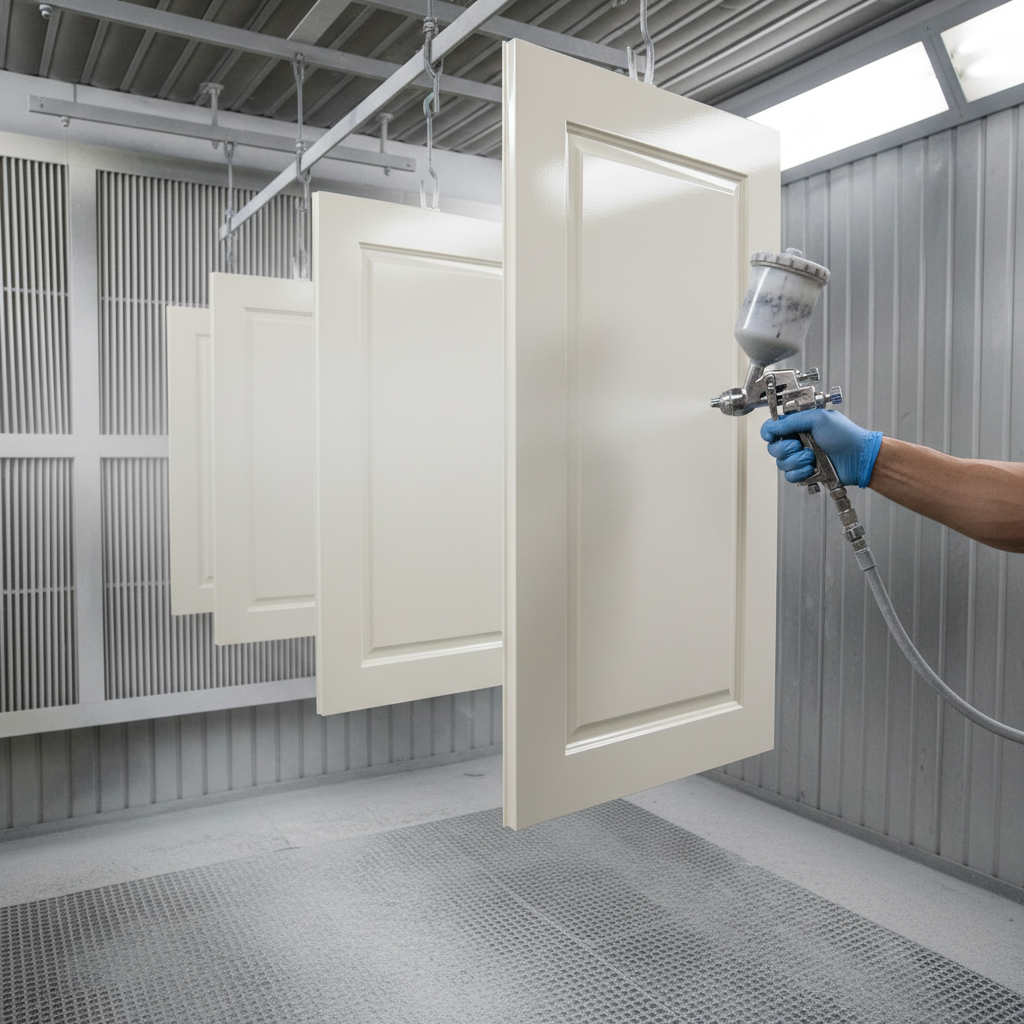
- HVLP spraying: Multiple thin coats build a smooth, uniform film with crisp edges.
- Cure and reassemble: Components cure fully before we reinstall and level doors.
Refacing (new faces + finish)
- Assess boxes: If boxes are sound, we replace doors/drawer fronts and add veneered panels.
- Style upgrade: Choose Shaker, slab, or routed styles before finishing them in cream.
- Hardware plan: Update pulls/hinges and align hole patterns for a clean look.
| Path | Best for | What changes | Keeps layout? |
|---|---|---|---|
| Refinishing | Good doors needing new color/finish | Color, sheen, surface durability | Yes |
| Refacing | Worn or dated door style | Door style + new finish | Yes |
For deeper planning on trade-offs, see our kitchen cabinet painting contractors guide and cabinet refacing resource.
Shades, finishes, and door styles that read “cream”
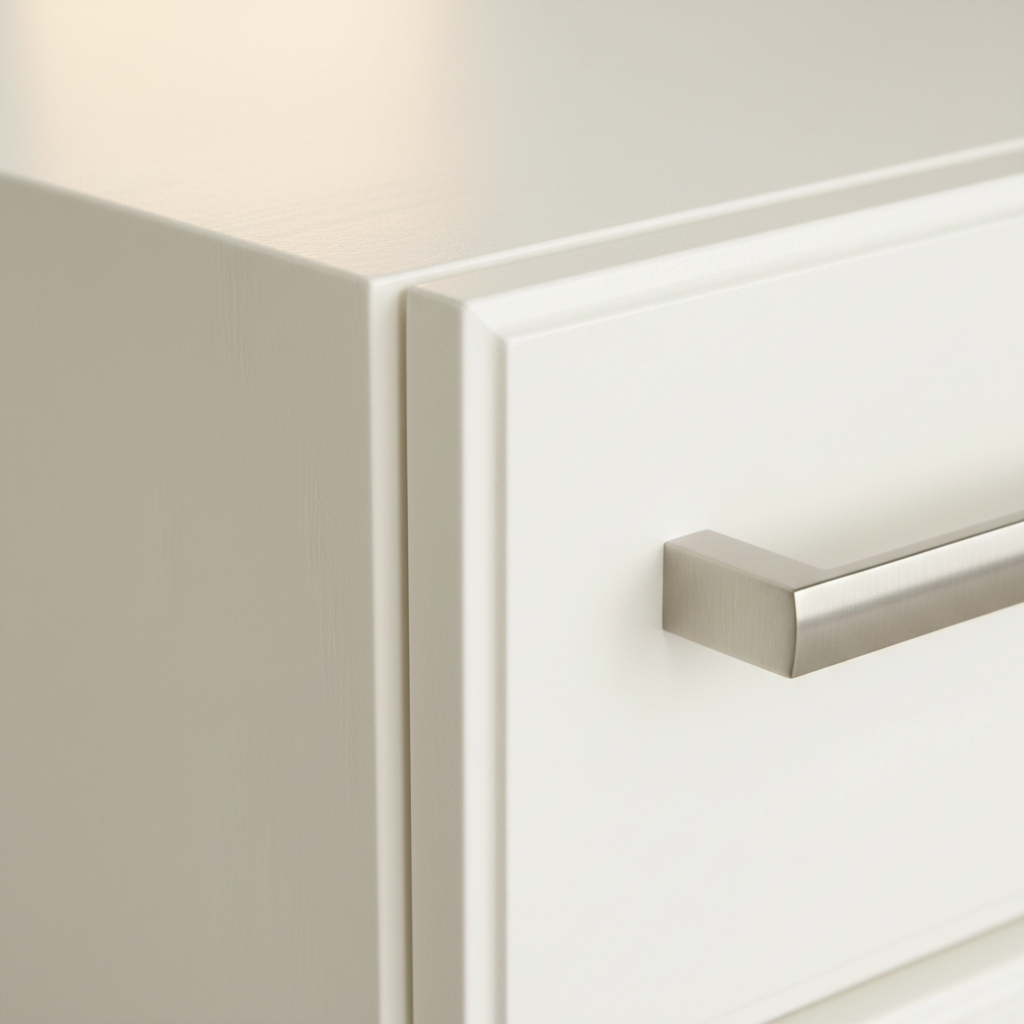
Cream spans linen, ivory, almond, and light beige. Satin or semi-gloss sheens enhance cleanability and depth. Shaker and slab doors read modern-classic in cream; raised-panel doors add traditional warmth without looking yellow.
Popular cream undertones
- Linen cream: Neutral-warm, pairs with gray veined quartz.
- Ivory cream: Slightly brighter; avoid cool blue lighting that can skew it.
- Almond: Leans beige; complements oak and warm floors.
- Greige-cream: Adds a touch of gray for modern spaces.
Finish sheens
- Satin: Balanced look; resists fingerprints and cleans easily.
- Semi-gloss: More reflective; great for small, low-light kitchens.
- Matte: Design-forward; shows marks sooner—use selectively on island panels.
Door styles that love cream
- Shaker: Timeless rails/stiles that highlight the color without fuss.
- Slab: Sleek and modern; works with long pulls in brushed nickel or brass.
- Raised panel: Traditional character; cream softens the formality.
Need help choosing? Our team can show samples during a refacing consult or a refinishing visit so you can compare undertones under your actual lighting.
Buying guide: picking the right cream and finish
Evaluate undertone, LRV, sheen, and hardware in your real lighting. Build a sample board with flooring and countertop swatches, then view it morning, midday, and evening. Choose satin or semi-gloss for durability, and confirm door style and pull size before approval.
Color and lighting tests
- Make a mini board: Include a cream sample, floor, backsplash, and countertop.
- Test in three lights: Morning (cool), midday (neutral), evening (warm LEDs).
- Target range: Many Toronto kitchens look best with LRV ~70–80 for brightness without glare.
Finish and hardware
- Sheen pick: Satin balances wipeability and design; semi-gloss brightens darker rooms.
- Pulls and knobs: Brushed nickel cools a warm cream; aged brass adds character.
- Hinge style: Soft-close concealed hinges keep lines clean.
When to refinish vs reface
- Refinish if your doors are in good shape and the style still works.
- Reface if the door style is dated or damaged; keep the layout you love.
For a step-by-step on prep and painting fundamentals, see the practical overview from Altima Kitchens; it aligns with our pro spray workflow while highlighting common homeowner pitfalls.
Top 12 countertop picks for cream kitchen cabinets (2026)
The best 2026 countertop pairings for cream cabinets include warm-veined quartz, soft marbles, soapstone, butcher block, and mid-tone granites. Prioritize movement that echoes your undertone, plus finishes that balance light reflection and daily wear.
- Warm-veined quartz (Calacatta-look): Creamy base with taupe/gold veining ties undertones together.
- Subtle Carrara marble: Soft gray veining keeps cream feeling airy and classic.
- Soapstone (mid-tone): Muted green-gray deepens contrast without feeling stark.
- Butcher block (oak or maple): Natural warmth complements satin cream beautifully.
- Light taupe quartz: A near-tone-on-tone look that reads quiet and elevated.
- Honest black granite (honed): Smooth, low-sheen black modernizes Shaker cream doors.
- Beige granite with subtle movement: An easy match for almond undertones.
- Concrete-look quartz: Pairs with slab doors and matte black pulls.
- Warm white quartz (fine grain): Brightens small kitchens while staying cohesive.
- Greige quartzite: Natural depth with delicate, earthy veining.
- Terrazzo composite (micro-chip): Adds playful texture that still reads neutral.
- Leathered dark quartzite: Tactile finish grounds busy family zones.
Not sure where to start? We’ll bring sample palettes to your home and compare them beside your doors and floors so your favorite countertop option wins in your actual light.
Comparisons: cream vs white vs greige vs taupe
Cream reads warm and forgiving; white is crisp but can feel stark; greige trends cooler-modern; taupe skews earthy. Choose based on light direction, floor color, and desired contrast with your countertop and backsplash.
| Color family | Look & feel | Best pairs | Watch-outs |
|---|---|---|---|
| Cream | Warm, bright, welcoming | Veined quartz, butcher block, bronze/brass | Avoid very cool LEDs that can dull warmth |
| White | Crisp, high-contrast | Black counters, chrome, glass backsplashes | Can show smudges; may feel clinical in winter light |
| Greige | Modern, subtle | Concrete-look quartz, matte black hardware | Risk of looking flat with beige floors |
| Taupe | Earthy, cozy | Warm granites, aged brass, tumbled stone | Too much brown can feel heavy in small rooms |
Considering a bigger style change? Explore our guide to updating oak cabinets for more ideas on tying wood tones into creamy palettes.
Best practices for a professional cream finish
Success with cream hinges on prep, controlled spraying, and proper cure. Degrease thoroughly, sand evenly, use bonding primer, and apply multiple thin HVLP coats in a dust-controlled zone. Allow full cure before reassembly and handle with clean, lint-free gloves.
- Deep clean first: Kitchen oils and aerosols sit invisibly on doors—remove them or adhesion suffers.
- Uniform sanding: Consistent profiles avoid sheen flashes that show on light colors.
- Right primer: Stain-blocking primer prevents tannin bleed-through, keeping cream stable.
- HVLP technique: Overlap passes, maintain gun distance, and watch edge build.
- Controlled cure: Let coatings reach handling strength before reinstalling hardware.
For hardware planning and ergonomics that complement cream, the practical pointers from this hardware selection guide provide helpful size and placement considerations that pair well with Shaker and slab doors.
Tools and resources checklist
A great cream finish depends on the right tools and a disciplined process. This checklist covers site protection, cleaning, sanding, priming, spraying, and reassembly—what our Toronto team brings to every refinishing or refacing project.
- Protection: Masking film, zipper walls, drop cloths, labeled hardware bags.
- Cleaning: Degreaser, rinses, lint-free wipes.
- Sanding: Orbital sander, profile pads, vacuum extraction.
- Priming: High-adhesion, stain-blocking primer.
- Spraying: HVLP gun, fine filters, viscosity cups.
- Curing: Racks, spacers, dust control, temp/humidity monitoring.
- Reassembly: Leveling tools, hinge jigs, soft-close hardware.
Curious about daily upkeep once the work is done? Practical maintenance tips in this cabinet care overview align with how we recommend cleaning light-toned finishes in busy kitchens.
Toronto case studies and real-world examples
Cream cabinets adapt to many Toronto homes. These mini case studies show how undertone, sheen, and countertops come together—whether you’re updating a condo galley or a family kitchen in York.
York family kitchen: cream on oak floors
- Goal: Brighten a high-traffic space without losing warmth.
- Approach: Refinishing existing Shaker doors in a linen cream, satin sheen.
- Counter: Warm-veined quartz echoing floor tones.
- Result: Softer light bounce; fingerprints minimized versus previous matte paint.
Downtown condo: small galley, big light
- Goal: Make a narrow kitchen feel wider and cleaner.
- Approach: Refacing to slab doors; semi-gloss cream for extra reflectivity.
- Counter: Fine-grain warm white quartz to amplify brightness.
- Result: Visual width increased; hardware lines streamlined.
Century home refresh: classic details
- Goal: Calm visual noise while honoring heritage character.
- Approach: Refinishing raised-panel doors to a softly almond cream.
- Counter: Honed black granite to ground ornate trim.
- Result: Character preserved; surfaces feel intentional and current.
Free expert color consult: Book a quick assessment with our Toronto team. We’ll test undertones and countertop samples in your real light, then map the fastest path—refinish or reface.
Local considerations for York
- North-facing kitchens near the Toronto Public Library – Daniel G. Hill Branch tend to read cooler; favor a slightly warmer cream to avoid looking gray.
- Plan scheduling around winter humidity and summer heat; controlled cure windows protect light finishes.
- Busy corridors like Jane St at St Clair Ave West mean more daily traffic—choose satin sheen and durable hardware.
Frequently asked questions
Homeowners ask about undertones, cleaning, sheen, and whether to refinish or reface. These quick answers cover what lasts, what’s easiest to live with, and how to choose the right path for your Toronto kitchen.
What undertone works best with stainless appliances?
A linen or greige-leaning cream balances the cool of stainless without turning yellow. Test a sample beside your fridge and range under day and evening light to confirm it stays neutral-warm.
Should I choose satin or semi-gloss for cream cabinets?
Satin is the sweet spot for most homes—refined, wipeable, and forgiving. Semi-gloss adds brightness in low-light kitchens but shows surface variations more, so prep and spraying must be precise.
Is refinishing durable enough for a busy family kitchen?
Yes—when done professionally with bonding primer, multiple HVLP coats, and full cure. We’ve seen cream finishes hold up for years with simple care: gentle cleaners, soft cloths, and prompt wipe-ups.
When is refacing better than refinishing?
Choose refacing when door styles are dated or damaged. You’ll keep your layout but get brand-new doors, fresh panels, and the cream finish you want—ideal when you’re also switching to new hardware.
How do I keep cream cabinets from looking yellow?
Balance warm undertones with neutral lighting (3500–4000K), choose a linen-leaning cream, and pair with counters/backsplashes that carry taupe or soft gray veining. Avoid overly warm bulbs that exaggerate yellow.
Key takeaways
Choose cream for warmth without losing brightness. Test undertones in real light, pick satin or semi-gloss, and pair with veined quartz or warm wood. Refinishing or refacing delivers a durable, factory-smooth result faster than a full replacement.
- Cream = welcoming, easy to pair, family-friendly.
- LRV, undertone, and sheen drive how it looks in your space.
- Pro prep and HVLP spraying are non-negotiable for durability.
- Top counters: warm-veined quartz, marble, soapstone, butcher block.
- Get help: book a refinishing consult or ask about refacing.
Conclusion
Cream colored kitchen cabinets remain a smart, timeless choice for Toronto homes. With the right undertone, sheen, and countertop, you’ll get warmth, brightness, and long-term appeal—delivered efficiently through professional refinishing or refacing by Paint2decor INC.
Ready to see samples in your own lighting? Our York-based team can bring cream swatches, hardware, and countertop options to compare on the spot. You’ll get a clear plan for refinishing or refacing that fits your layout and timeline.
Next step: Schedule your color and finish assessment with Paint2decor INC—serving York, Toronto, and the GTA—so your cream kitchen comes together beautifully the first time.