
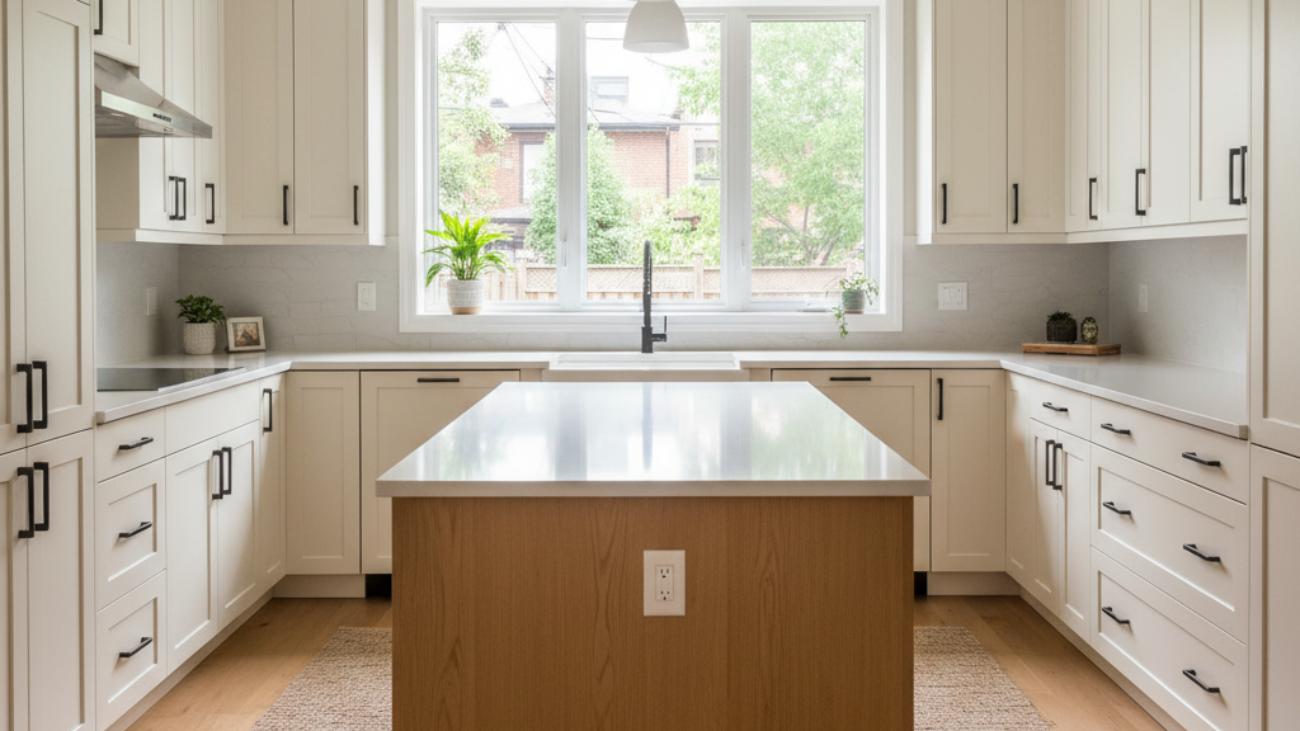
Updating oak cabinets is the professional process of refinishing, painting, or refacing existing oak doors and frames to modernize your kitchen without replacing the boxes. From our York location at 2710 St Clair Ave W in Toronto, Paint2decor INC performs careful prep and spray finishing so homeowners get a clean, durable, and current look fast.
By Paint2decor INC • Last updated: 2026-05-07
Overview and table of contents
This complete guide to updating oak cabinets explains what the process involves, why it matters for value and daily use, and how it works step by step. You’ll learn methods (refinishing, painting, refacing), best practices for durability, tools pros use, and real Toronto examples—so you can choose the right path confidently.
Oak was the star of the 1990s. Today, you can keep its sturdy bones and refresh the style—often in days, not weeks. In this guide, we cover:
- What “updating oak cabinets” means in practical terms
- Why it’s a smart alternative to full renovation
- Exact steps pros follow for a factory-level finish
- Refinishing vs painting vs refacing—how to choose
- Best practices that prevent peeling, chipping, and yellowing
- Tools, materials, and setup for reliable results
- York and Toronto-specific planning tips
- Real-world makeovers and a quick FAQ
What is updating oak cabinets?
Updating oak cabinets means improving appearance and function—without replacing boxes—by refinishing, painting, or refacing doors and frames, plus hardware upgrades. The goal is a smoother, modern look with durable coatings and better usability, achieved through professional prep, spray finishing, and selective carpentry or door replacement.
In simple terms, you keep the cabinet structure you already own and make it look and feel new. For many Toronto homes, the boxes are solid; it’s the honey-orange tone, heavy grain, and dated hardware that feel tired.
- Refinishing: Preserve wood character with new stain and protective clear coats.
- Painting: Hide heavy grain and shift to timeless colors like soft white, greige, or deep navy.
- Refacing: Replace doors/drawer fronts and add matching veneer to face frames for a style reset.
- Hardware: Swap old knobs and hinges for modern pulls and soft-close components.
Our team at Paint2decor INC specializes in cabinetry refinishing and refacing for GTA homeowners, pairing professional spray systems with meticulous surface prep to deliver durable, uniform finishes that look built-in.
Why updating oak cabinets matters in York and Toronto
In York and the broader Toronto market, modernizing oak cabinets quickly lifts a kitchen’s brightness and perceived size without demolition. Homeowners keep sturdy boxes, reduce disruption, and get finishes that align with current palettes—helpful for everyday enjoyment and competitive showings.
We see large clusters of 1990s–2000s oak kitchens across the GTA. A targeted refresh typically delivers:
- Visual impact fast: Two to four spray-applied coats can transform color and sheen in days.
- Less disruption: Doors go offsite; boxes are sprayed on-site with careful masking and dust control.
- Design alignment: Light, neutral palettes create airier rooms and complement quartz or composite counters.
- Sustainability: Keeping boxes out of landfill reduces waste while still achieving a “new kitchen” feel.
Because many York kitchens are compact, focusing on uniform sheen, slimmer hardware, and light-reflecting finishes can make spaces feel larger. Small choices—like satin instead of high gloss—help hide minor imperfections and keep upkeep easy.
How updating oak cabinets works: step-by-step
Pros update oak by cleaning, sanding, grain-filling, priming, and spray-coating doors and frames, then reassembling with new hardware. The controlled workflow—often offsite for doors—produces consistent film build, smooth texture, and reliable adhesion that resists chips and stains.
Here’s the proven, pro-grade sequence our team follows for kitchen cabinet refinishing and painting:
- Evaluate and plan: Document conditions, discuss color direction, confirm any refacing or minor carpentry.
- Degrease: Clean thoroughly with cabinet-safe degreasers so sanding dust doesn’t embed oils.
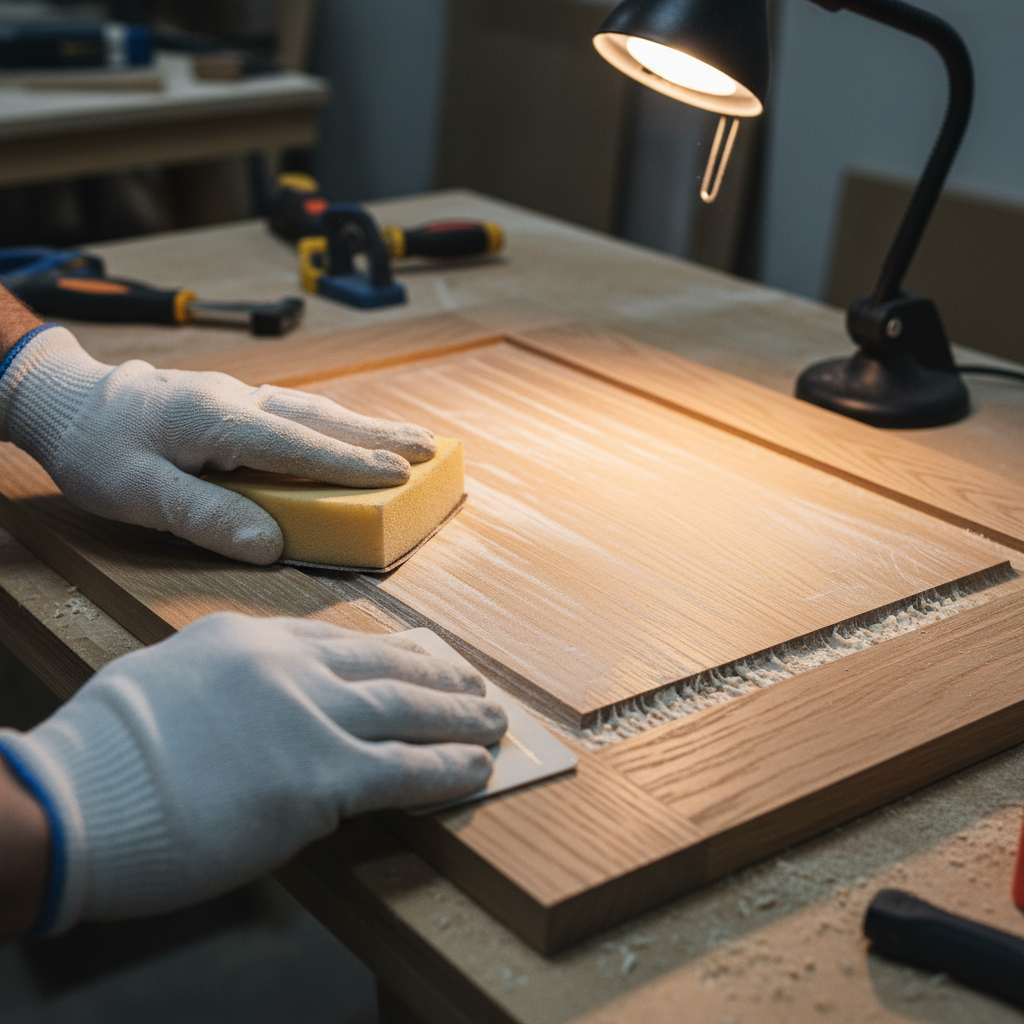
- Sand: Progress through 120–220 grit on doors; scuff-sand frames for mechanical adhesion.
- Grain-fill (optional): Apply filler to oak’s open pores when a glass-smooth painted look is desired.
- Mask and label: Number doors, protect interiors, floors, and appliances; create a clean spray zone.
- Prime: Use a bonding primer formulated for slick substrates and resinous woods.
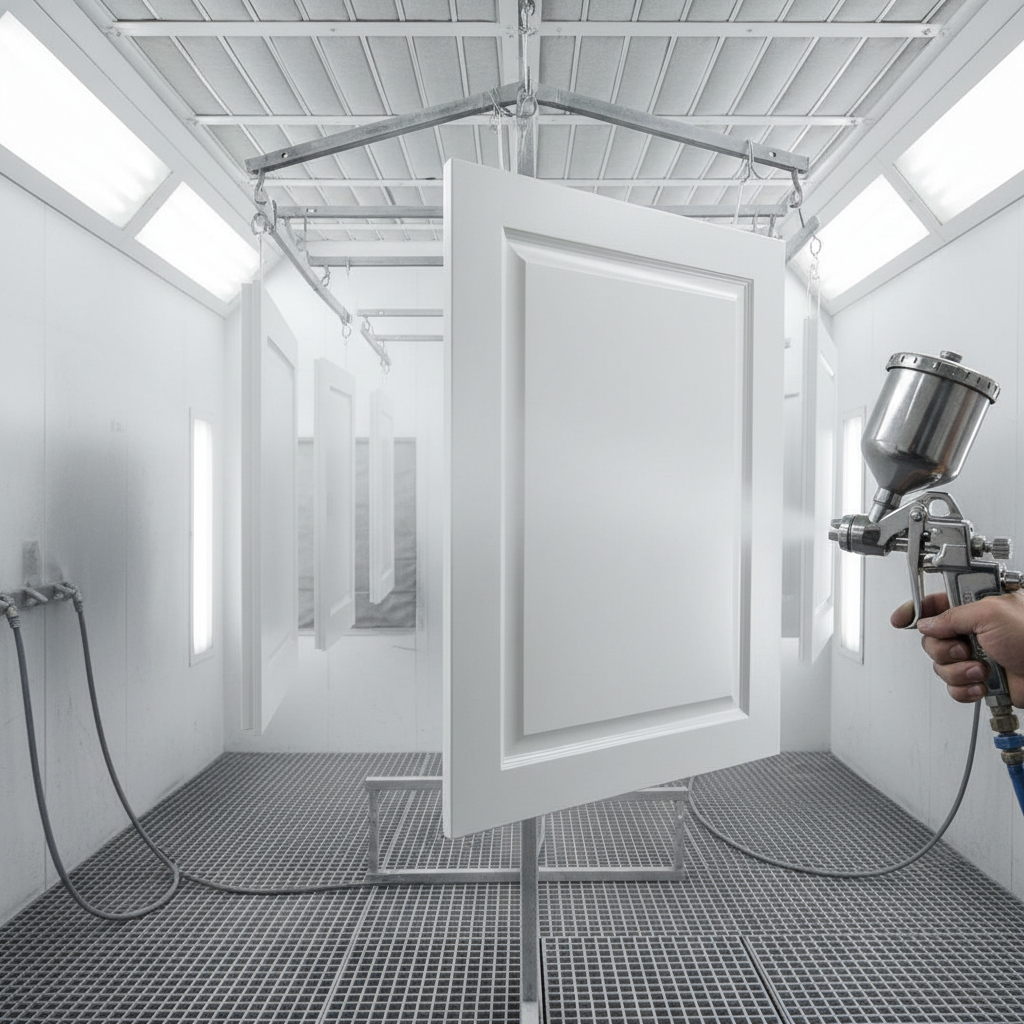
- Spray topcoats: Apply 2–3 coats of high-performance waterborne or catalyzed finishes.
- Hardware upgrade: Install new pulls, knobs, and optional soft-close hinges or slides.
- Reassembly and cure: Allow proper cure time before heavy kitchen use.
For a deeper dive into readiness, see our cabinet refinishing preparation guide and how we approach cabinet refinishing in Toronto. Good prep is where 80% of the finish quality is won.
Local considerations for York
- Scheduling: Door finishing offsite reduces disruption in compact York kitchens; plan staging zones near the Toronto Public Library – Daniel G. Hill Branch busier hours to avoid loading delays.
- Seasonality: Maintain stable indoor humidity (around 40–55%) in winter to support even curing and avoid flashing.
- Logistics: Nearby Smythe Park means easy outdoor airflow when ventilating on mild days—still, use professional filtration indoors.
Methods to modernize oak: refinish, paint, or reface
You can modernize oak by refinishing (new stain/clear), painting (opaque color, smoother feel), or refacing (new doors plus veneer over frames). Choose refinishing to keep wood tone, painting for the biggest color shift, or refacing for a dramatic style change without replacing boxes.
Each path fits a different design goal. Painting hides heavy grain and aligns with lighter, cleaner palettes. Refinishing preserves wood warmth—great with matte black or brass hardware. Refacing lets you swap in Shaker, slab, or other styles while retaining cabinet boxes.
| Method | Best When | Pros | Considerations |
|---|---|---|---|
| Refinishing | You like wood character | Warmth, visible grain, protective clear coats | Color options tied to stain families; grain remains visible |
| Painting | You want a color change | Brightens spaces, hides grain with filler, wide palette | Requires thorough prep; chips if shortcuts are taken |
| Refacing | You want new door style | Shaker/slab options, soft-close upgrades, like-new look | More components changed; match veneer to frames |
Explore our core services for your best-fit path: kitchen cabinet refinishing or kitchen cabinet refacing across Toronto.
For style ideas on door profiles and hardware considerations, see this overview of modern door profiles and a concise hardware selection guide. And for additional inspiration specific to oak kitchens, this look at making oak look modern is a useful reference.
Best practices for a durable, modern finish
Durable cabinet finishes come from meticulous cleaning, mechanical sanding, correct primers, and controlled spray application. Maintain cure windows, choose satin to semi-gloss sheens, and upgrade hardware. Small process details prevent peeling, telegraphed grain, and early wear.
In our experience, finish longevity depends on consistency more than any single product. We standardize the following:
- Clean first, then sand: Degrease to avoid driving oils into pores during sanding.
- Grain management: Fill or partially fill oak pores based on the desired smoothness.
- Primer match: Use a bonding primer compatible with your topcoat system.
- Spray control: Even film build, correct tip size, and crosshatch technique reduce orange peel.
- Sheen selection: Satin balances easy cleaning with low glare and hides minor substrate variation.
- Cure discipline: Light use after reassembly; wait for full cure before heavy cleaning.
If sustainability is a priority, we also offer guidance on eco-friendly cabinet refinishing and sustainable refinishing practices. Waterborne coatings and proper containment protect indoor air quality and help achieve sleek, low-odor results.
Tools, materials, and setup we trust
Professional refinishing relies on degreasers, multiple sanding grits, bonding primers, HVLP spray systems, and high-performance waterborne or catalyzed topcoats. Dedicated racks, labeling, and dust control keep parts organized and finishes clean throughout the process.
- Surface prep: Cabinet-safe degreasers; 120–320 grits; sanding blocks and pads for profiles.
- Filling and repair: Wood filler for dings; grain filler for smoother paint results.
- Primers and topcoats: Systems designed for cabinetry and frequent cleaning.
- Spray gear: HVLP turbine or compressor-driven guns with fine-finish tips.
- Organization: Numbered labels, zip bags for hardware, mobile racks for doors and drawers.
- Protection: Masking paper, plastic, zip walls, and filtration to contain overspray and dust.
To understand the full journey, review our approach to kitchen cabinet refinishing in Toronto and our broader cabinet refinishing services offered across the GTA.
Thinking about painting or refacing your oak? Let’s align color, sheen, and method to your kitchen’s lighting and layout. Request a friendly consultation with Paint2decor INC and get a clear, low-disruption plan that fits your goals in Toronto.
Call us at +1 (416)-831-8489 or explore service details above.
Case studies and examples from the GTA
Across Toronto, updated oak kitchens consistently look brighter and more cohesive when grain is controlled and hardware is modernized. Two-tone palettes, satin sheens, and soft-close upgrades deliver a custom feel—without replacing cabinet boxes.
York bungalow, compact galley
The challenge: heavy honey oak in a narrow, north-facing kitchen. We degreased, sanded, and filled grain on doors for a smoother painted result, then sprayed satin coats in soft white. We added slim matte-black pulls and soft-close hinges. The space looked wider and calmer immediately.
Toronto semi-detached, open concept
The owners liked wood warmth but wanted less orange. We refinished to a cooler mid-tone stain and applied a matte clear coat. Modern brushed-brass pulls tied into existing fixtures. Refinishing preserved character while balancing with pale floors and new quartz.
GTA family home, style leap with refacing
Boxes were sturdy, but doors were highly profiled. We refaced with clean Shaker doors, veneered face frames to match, and installed soft-close slides. Frames remained; function and aesthetics jumped dramatically. An island accent color anchored the new layout visually.
Frequently Asked Questions
Homeowners ask about painting vs. refacing, grain filling, durability, cure time, and whether pros must remove doors. These concise answers address the most common decisions so you can move forward with clarity.
Is painting or refacing better for updating oak cabinets?
Painting is the fastest way to shift color and reduce visible grain. Refacing goes further by changing door style while keeping boxes. If you want a big style change—like switching to Shaker—refacing is ideal. If your door style is fine, painting delivers a crisp, modern look quickly.
Do I need grain filler on oak before painting?
Use grain filler if you want a glass-smooth painted finish. Oak has open pores that telegraph through paint. Filling, sanding, and priming reduce texture so the final satin sheen reads clean and uniform under everyday lighting.
How durable are professional spray finishes in busy kitchens?
High-performance waterborne and catalyzed coatings hold up well to frequent cleaning and bumps when applied over proper prep. Expect strong stain resistance and a smooth feel. Durability depends on prep quality, correct primer, controlled spray, and allowing adequate cure before heavy use.
Can doors stay on during painting?
For best results, we remove and label doors, spray them in a controlled environment, and finish frames on-site with full masking. This approach keeps dust down, ensures even film build, and produces a factory-like finish on edges and profiles.
What sheen should I choose for painted oak cabinets?
Satin is a smart default—it’s easy to clean and doesn’t glare. Semi-gloss adds reflectivity and can look formal. Matte hides flaws but marks more easily. In compact kitchens, satin keeps things bright yet forgiving under mixed daylight and task lighting.
Conclusion and next steps
Updating oak cabinets preserves solid boxes while delivering a modern, durable look. Choose refinishing for wood warmth, painting for a crisp color shift, or refacing for a style reset. Plan carefully, respect cure windows, and upgrade hardware to complete the transformation.
- Key takeaways:
- Updating oak cabinets modernizes kitchens without demolition or replacing boxes.
- Refinishing, painting, and refacing each serve different goals—pick based on look and function.
- Prep, primer choice, and controlled spray work are the backbone of durability.
- Simple hardware upgrades finish the look and improve daily use.
Ready to refresh your space in Toronto? Explore refacing options and refinishing services, then call +1 (416)-831-8489. We’ll help you pick the right method, color, and sheen—then schedule a tidy, well-managed update from our York base.