
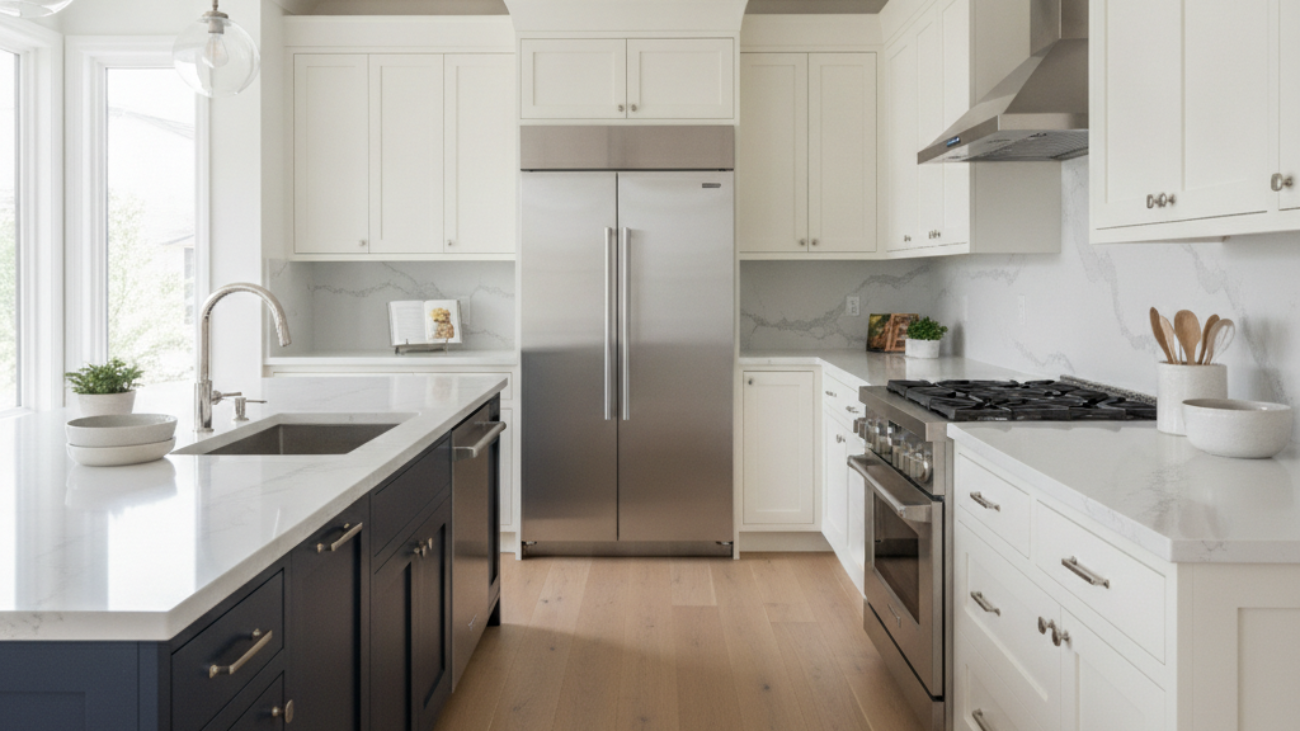
Cabinet renovation is the targeted upgrade of existing kitchen or bathroom cabinets—through refinishing, refacing, and spray painting—to transform style and durability without full replacement. For York and greater Toronto homes near 2710 St Clair Ave W, Paint2decor INC delivers these updates as an award‑recognized cabinetry refinishing specialist.
By Paint2decor INC • Last updated: June 15, 2026
Overview
This complete guide explains cabinet renovation from start to finish—what it is, why it matters in Toronto, how the process works, and which method to choose. You’ll see best practices, tools we trust, local tips for York homes, real examples, and a quick path to getting your project started with confidence.
Here’s what you’ll learn and how to use it:
- Definitions: Refinishing, refacing, and respraying—what each one does.
- Decision help: Which path fits your cabinets, timeline, and desired look.
- Step-by-step: How pros prepare, spray, cure, and reassemble.
- Best practices: Surface prep, coatings, and ventilation that last.
- Local insights: York and Toronto conditions that influence results.
- Real outcomes: Mini case studies you can compare to your space.
What Is Cabinet Renovation?
Cabinet renovation is a targeted refresh of existing boxes and doors using refinishing, refacing, and professional spray painting to modernize color and durability without full replacement. It preserves sound cabinetry, updates style, reduces disruption, and aligns with sustainable home upgrades for kitchens and bathrooms.
In our work across Toronto, “cabinet renovation” covers three core paths:
- Refinishing: Clean, repair, sand, prime, and apply a sprayed finish to existing wood or laminate surfaces.
- Refacing: Keep the cabinet boxes, replace doors/drawer fronts, add matching panels and trim, then finish.
- Respraying: Off-site spray booth finishing of doors and drawers; on-site spraying or rolling of cabinet frames.
Paint2decor INC focuses on these renovation alternatives. We help homeowners choose the right path, then execute with shop-level spray systems and on-site protection so the result looks built-in—not “brushed on.” For deeper background, see our kitchen cabinet refinishing service overview.
Why Cabinet Renovation Matters in Toronto
Cabinet renovation matters because it modernizes style, improves durability, and limits disruption compared with tear-outs. For York and Toronto homes, it also supports sustainability by extending the life of quality boxes and reducing landfill waste from full replacements.
When cabinetry frames are structurally sound, renovation avoids demolition and keeps your layout intact. That means less mess, fewer trades on site, and a faster return to everyday life. It also opens up finish options—from soft white and warm gray to saturated navy or green—with pro-grade coatings designed for kitchens.
- Faster transformation: Projects move quickly because boxes stay.
- Style freedom: Color shifts, sheen choices, and hardware swaps refresh the whole room.
- Sustainable mindset: Reuse good materials rather than replacing everything.
In our experience, Toronto homeowners often combine a cabinet refresh with counters, backsplash, or lighting updates for a complete look. If paint is your path, scan our cabinet respraying guide to see how we achieve a smooth, factory-style finish.
Local considerations for York
- Transit and access: If you’re near Jane St at St Clair Ave West, plan door pickup/drop-off windows so parking and loading don’t slow the schedule.
- Seasonal timing: Toronto humidity affects dry and cure times; climate-controlled spray booths help keep schedules on track.
- Weekend prep: Families around Smythe Park often prefer masking and cleaning early Saturday, with spraying staged for weekdays.
How Cabinet Renovation Works (Step-by-Step)
Cabinet renovation follows a predictable workflow: evaluation, removal and labeling, degreasing and sanding, priming and spraying, curing, reassembly, and final touch-ups. Keeping boxes in place speeds timelines while shop spraying delivers consistent, durable finishes on doors and drawers.
Here’s the high-level process we follow on most Toronto projects:
- Evaluate cabinet condition, door style, and layout; confirm refinishing vs. refacing vs. replacement.
- Document and label doors, drawers, and hardware; protect floors and counters.
- Degrease with cabinet-safe cleaners; repair dings, chips, or veneer edges.
- Sand and scuff to promote adhesion; address wood grain if aiming for a glass-smooth look.
- Prime with a bonding primer matched to substrate (wood, MDF, or laminate).
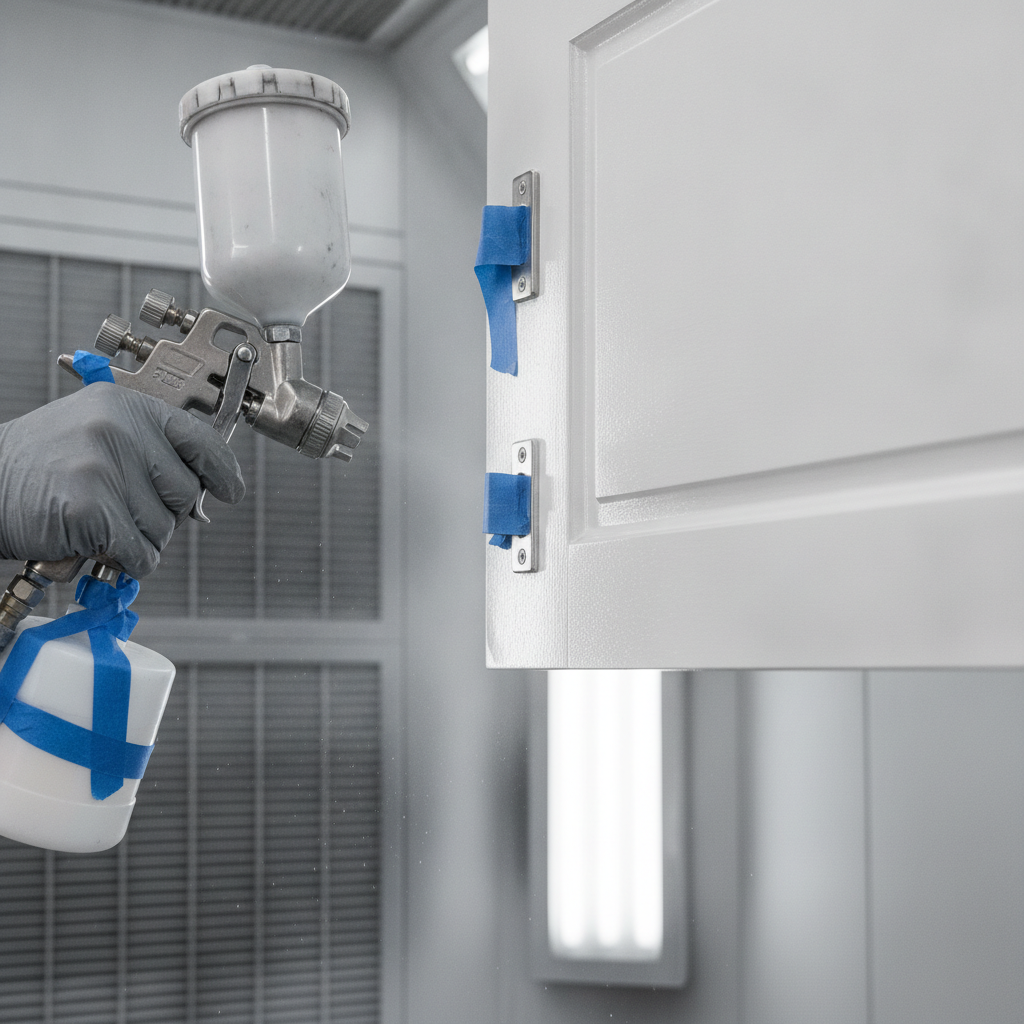
- Spray finish using HVLP systems for a smooth, even film on doors and drawer fronts.
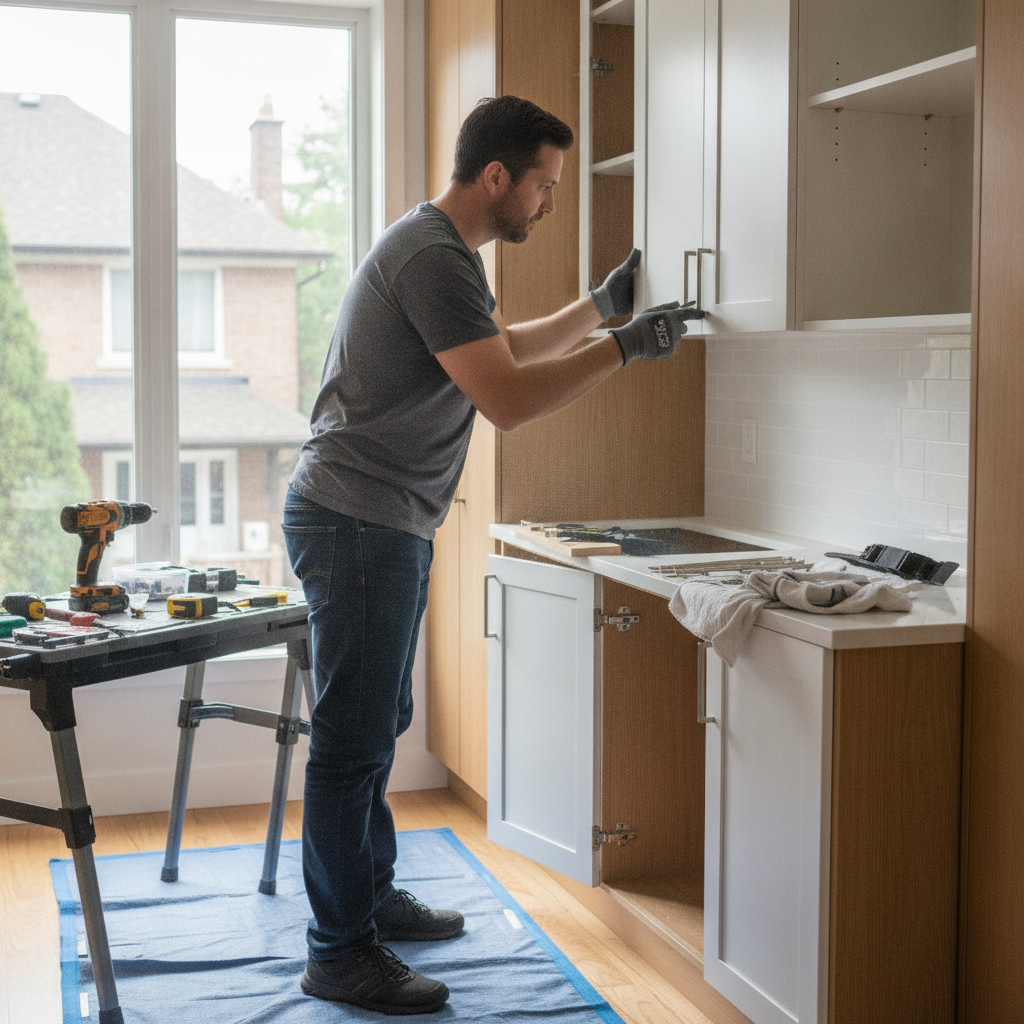
- Cure under controlled conditions; reassemble on-site with door adjustments and new hardware as needed.
- Quality check sheens, reveals, and soft-close action; clean and hand over care tips.
| Stage | Primary Goal | What We Focus On |
|---|---|---|
| Assessment | Choose the right path | Substrate type, box integrity, door style, timeline |
| Prep | Ensure adhesion | Degreasing, sanding, repairs, masking |
| Finishing | Factory-style look | HVLP spray technique, film build, dust control |
| Cure & Reinstall | Longevity and alignment | Proper cure windows, hinge adjustments, hardware |
For a deeper dive into spray technique and finish selection, our kitchen cupboard refinishing page outlines how we match coatings to real Toronto kitchens.
Types of Cabinet Renovation Methods
The three primary methods are refinishing (keep everything, change the finish), refacing (new doors and visible panels), and full replacement (new boxes). Most York and Toronto homes qualify for refinishing or refacing, which modernize style without the disruption of demolition.
Each path solves a different problem. Use this quick comparison to orient, then we’ll unpack when to choose each one.
| Method | What Changes | When It Fits | Typical Finish Result |
|---|---|---|---|
| Refinish/Respray | Color, sheen, surface repairs | Boxes are sound; you like the layout | Factory-style sprayed coating on existing doors |
| Reface | New doors/drawers + panel skins | Boxes are solid but door style is dated | New door profiles with matching panels and trim |
| Replace | Everything | Boxes are failing or you’re reworking layout | Brand-new cabinetry and configuration |
Refinishing and respraying
- Best for: Solid frames, decent door style, color change desired.
- Results: Smooth, durable coatings; upgraded hardware; consistent sheen.
- Learn more: Our repainting kitchen cupboards resource shows before/after scenarios.
Refacing
- Best for: You want a new door profile (e.g., shaker) but keep the layout.
- Results: New doors/drawer fronts, end panels, mouldings, and color.
- Explore: See our renovation makeovers in kitchen cabinets makeover.
When replacement is the right call
- Structural issues: Water-damaged boxes, failing joinery, or major layout changes.
- Workflow: If appliances or walls move, plan cabinetry around the new footprint.
Best Practices for a Durable, Factory-Style Finish
Durable results come from disciplined prep, bonding primers, pro-grade cabinet coatings, and controlled curing. Mask thoroughly, maintain clean air, build thin even coats with HVLP, and allow proper cure before heavy use. These fundamentals make a cabinet renovation look built-in.
We’ve refined a repeatable playbook that holds up in busy Toronto kitchens:
- Degrease thoroughly: Kitchen aerosols settle everywhere; cleaning is essential for adhesion.
- Sand with intent: Scuff for bite; fill grain when a glass-smooth look is the goal.
- Prime smart: Bonding primer tuned to your substrate (wood, MDF, or laminate).
- Spray controls: HVLP tip size, fan pattern, and distance kept consistent.
- Dust discipline: Spray doors in a controlled booth; isolate on-site frames with proper masking.
- Cure window: Let coatings harden fully before reloading shelves or deep cleaning.
Want the environmental angle too? Our team outlines finish choices and reuse practices in sustainable cabinet refinishing, including ways to keep boxes and replace only what matters.
Tools and Materials We Trust
Professional results depend on pro tools: HVLP systems for smooth films, cabinet-specific primers and urethane enamels, high-adhesion fillers, and clean-area controls. The right consumables and surface prep compounds make the difference between a quick repaint and a lasting cabinet renovation.
Core tools
- HVLP sprayers for controlled atomization and minimal overspray.
- Extraction and filtration to manage dust and keep air clean while spraying frames.
- Random-orbit sanders with dust collection to scuff surfaces evenly.
- Labeling systems so hinges, doors, and drawers go back perfectly.
Consumables and coatings
- Bonding primers formulated for wood, MDF, or laminate.
- Cabinet-grade topcoats with strong block resistance and stain resistance.
- Fillers/putties for nicks, dings, and seam repairs.
- Masking films and tapes for floors, appliances, and inside boxes.
To see how these choices translate on real projects, skim our refinishing guide for Toronto with notes on door styles and sheen selection.
Case Studies and Real-World Examples
Three snapshots from our Toronto projects show how refinishing and refacing solve different problems. Each example keeps the layout, updates door style or color, and uses shop spraying for consistency. Use them to benchmark your own space and timeline.
York townhouse: from orange oak to soft white
- Starting point: Solid oak boxes, classic cathedral doors, heavy orange tone.
- Approach: Refinishing with grain management; HVLP-sprayed soft white; new pulls.
- Outcome: Brighter room, cleaner lines; layout unchanged and morning routines uninterrupted.
Toronto condo: dark to light with durable enamel
- Starting point: Good MDF doors, dark espresso finish showing wear on edges.
- Approach: Respraying doors off-site; bonding primer and cabinet-grade enamel; satin sheen.
- Outcome: Light, reflective surfaces; better scratch resistance for high-touch areas.
Family home near Smythe Park: style change without demo
- Starting point: Sturdy boxes; dated slab doors; family prefers shaker look.
- Approach: Refacing with new shaker doors, end panels, and crown; sprayed warm white with a navy island accent.
- Outcome: Fresh style and improved storage hardware—no tear-out required.
If your project includes a bathroom too, see our repainted bathroom cabinets article for moisture-minded finishing tips.
Frequently Asked Questions
Homeowners ask about longevity, door materials, how to prepare, and timelines. Here are clear, fast answers you can rely on before booking a consultation for your York or Toronto home.
What’s the difference between refinishing and refacing?
Refinishing keeps your existing doors and boxes but changes the finish with pro-grade coatings. Refacing adds new doors and visible panels while keeping the cabinet boxes. Both avoid demolition and are strong options when your layout works.
How should I prepare my kitchen for a cabinet renovation?
Clear counters, empty drawers, and remove shelf items into labeled bins. Confirm a staging area for doors and hardware. Plan pet and family routes around masked areas. Good prep shortens project time and helps finishes cure undisturbed.
Will a sprayed finish look like factory cabinetry?
With HVLP systems, bonding primers, and cabinet-grade topcoats, the result is smooth and consistent. Shop spraying doors and drawers controls dust and temperature, while on-site masking protects frames and surfaces for a cohesive look.
Can you renovate laminate or thermofoil cabinets?
Often yes. Laminate can be refinished with proper bonding systems. Failing thermofoil is usually refaced with new doors and matching panels. We evaluate substrate condition to choose the most reliable method for your kitchen.
Conclusion and Next Steps
Cabinet renovation modernizes kitchens and bathrooms without the disruption of full replacement. If your boxes are sound, refinishing or refacing delivers a fast, durable, and stylish upgrade—ideal for York and Toronto homes looking for a confident refresh.
Here’s how to move forward with clarity:
- Assess boxes: If they’re solid and your layout works, you’re a strong candidate.
- Pick a path: Refinishing for color changes; refacing for new door style; replace only when boxes fail.
- See the finish: Review our sprayed cabinet process to visualize results.
- Get guidance: Our team can help match coatings, sheens, and hardware to your family’s use.
Key takeaways
- Cabinet renovation preserves good materials while delivering a style reset.
- Refinishing and refacing solve different problems; both avoid demolition.
- Pro prep, bonding primers, and controlled curing drive durability.
- Local conditions in Toronto (humidity, access) influence scheduling and cure windows.
Ready to refresh your cabinets? Paint2decor INC serves York and the GTA with professional refinishing, refacing, and respraying. Call +1 (416)-831-8489 or explore our kitchen cabinet refinishing in Toronto to start your renovation conversation.
Related Articles in the Kitchen Cluster
Learn more about specific renovation paths and finishes in our kitchen cluster. These resources expand on spraying technique, refacing decisions, and eco-minded refinishing—so you can plan a project that fits your space and goals.
If paint is your direction, review our detailed repainting kitchen cupboards guidance. Prefer a style shift with new doors? Our kitchen cabinets makeover article explains how refacing changes the profile without changing your layout. For sustainability-minded choices, we outline reuse and finish options in sustainable cabinet refinishing. And for a start-to-finish overview, explore our kitchen cupboard refinishing page and the kitchen cabinet refinishing service walk-through.
For inspiration on door choices and makeover ideas, you can also browse examples like a practical cabinet makeover playbook, a hands-on how-to painting overview, and a primer on standard vs. custom cabinet doors for renovation planning.