
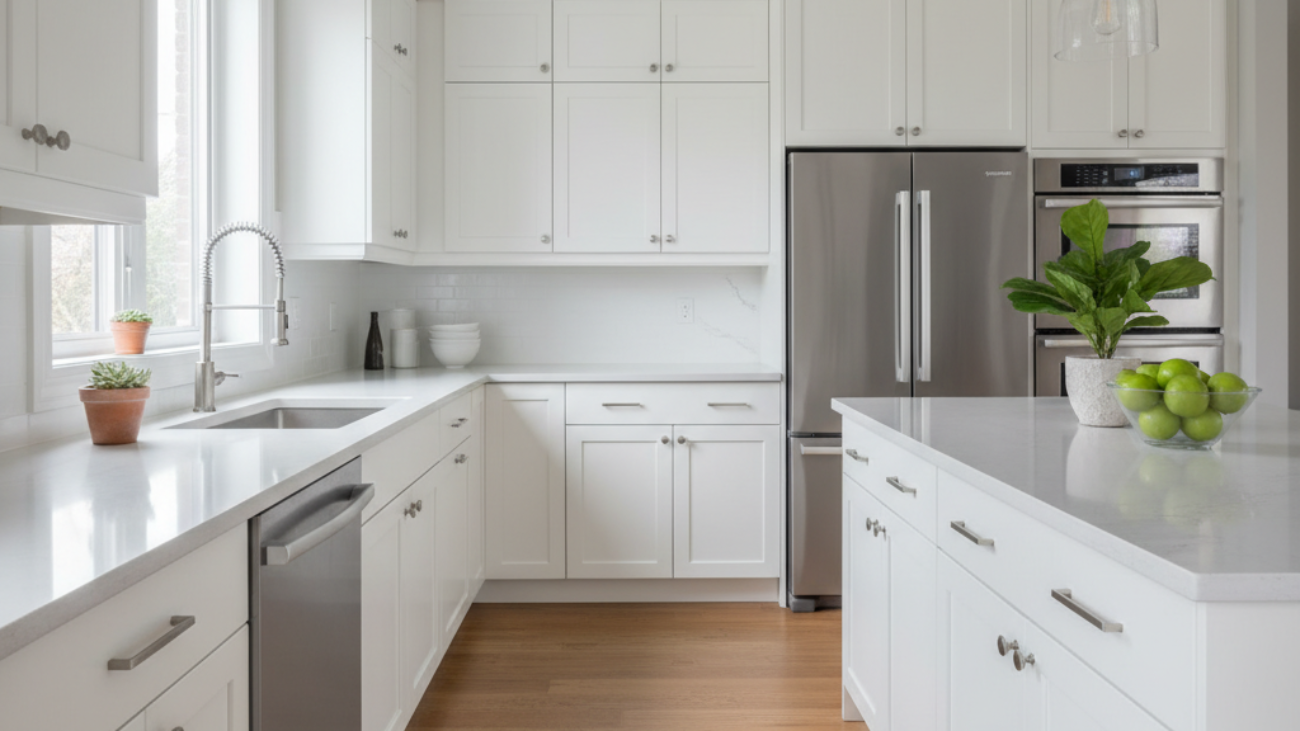
The price to refinish cabinets is determined by scope, condition, finish system, and shop vs. on-site work. For York and Toronto homeowners near 2710 St Clair Ave W, Paint2decor INC delivers professional kitchen cabinet refinishing, refacing, and spray painting that protects wood and modernizes style without a full renovation.
By Masoud Kakar • Paint2decor INC
Last updated: 2026-06-09
Above-Fold Overview: Price to Refinish Cabinets in Toronto
Cabinet refinishing restores existing doors and boxes with pro-grade prep, priming, and sprayed topcoats. Your price to refinish cabinets depends on kitchen size, material (wood vs. laminate), repairs, color changes, and whether doors are finished in-shop. This approach keeps layouts intact and delivers a factory-like finish.
Refinishing is ideal when your layout works, boxes are sound, and you want a durable, modern finish. It’s cleaner and faster than a tear-out, and it pairs well with new hardware and minor carpentry. In our experience around Toronto, most kitchens are great candidates when doors and boxes are structurally solid.
Quick Summary
If you’re weighing the price to refinish cabinets, focus on controllable factors: kitchen size, surface material, prep complexity, and finish quality. Paint2decor INC in York uses a controlled spray process for consistent, satin-to-matte results that look factory-made and stand up to daily cooking and cleaning.
- What you’ll learn: how pricing is scoped, what drives timelines, and the refinishing workflow.
- Who it’s for: Toronto and GTA homeowners comparing refinishing, refacing, and repainting.
- Why Paint2decor: GTA-focused, award-recognized cabinet refinishing and refacing specialists.
- End result: a clean, durable spray finish without the cost and disruption of a full renovation.
What Is Cabinet Refinishing?
Cabinet refinishing is the professional restoration of existing cabinet doors and boxes using repair, deep cleaning, sanding, priming, and sprayed topcoats. It upgrades color and sheen while preserving your layout and cabinet boxes, making it a smart alternative to full replacement.
In plain terms, refinishing reuses what you already own. We remove doors, mask the kitchen, and spray-finish components for an even, factory-like appearance. The result is a modern, consistent finish that resists everyday wear from cooking, cleaning, and family life.
- Scope: doors, drawer fronts, face frames, end panels, crown/valance, and toe-kicks.
- Surfaces: solid wood, veneer, MDF, and many laminates (with the right adhesion system).
- Finish systems: bonding primers + catalyzed or high-performance topcoats for durability.
- Color control: from timeless soft whites to on-trend greens and natural wood tones.
When homeowners search for the price to refinish cabinets, what they’re really asking is whether refinishing can deliver a like-new look that lasts. With the right prep and materials, it can—and it often outperforms brush-and-roller paint jobs.
Why Cabinet Refinishing Matters for York and Toronto Homes
Refinishing matters because it preserves your layout, reduces waste, and speeds up kitchen refresh timelines. In York’s established homes and across Toronto, it modernizes style without demolition, protects cabinetry, and aligns with tight city schedules and condos’ access rules.
Older Toronto kitchens often have solid, well-built boxes. Keeping them and upgrading the finish is practical and greener than replacing. We routinely see kitchens with 20–30 doors and drawers; refinishing these components brings uniform color and sheen while minimizing disruption to daily routines.
- Sustainability: fewer materials landfilled and less transport compared with replacement.
- Speed: controlled shop finishing for doors while on-site frames are prepped in parallel.
- Consistency: spray application yields even film build and crisp profiles on shaker rails.
- Lifestyle fit: predictable sequencing helps you keep cooking through much of the project.
Local considerations for York
- Weekday daytime access near Jane St at St Clair Ave West can ease material drop-offs and pickup coordination for door batches.
- Winter projects benefit from shop-sprayed doors; cold weather slows on-site curing and window ventilation.
- Families near the Toronto Public Library – Daniel G. Hill Branch often schedule masking work around school hours to keep routines smooth.
How Cabinet Refinishing Works: Step-by-Step
A professional refinishing workflow removes doors, completes repairs, and uses bonding primers plus sprayed topcoats for a uniform, durable finish. Paint2decor INC sequences shop and on-site tasks in parallel to shorten timelines and reduce disruption in your kitchen.
- Assessment and planning: confirm substrate (wood, veneer, laminate), document repairs, and align finish color and sheen.
- Label, remove, and transport: doors and drawers are numbered and moved to our controlled spray area.
- Degrease and sand: we deep-clean cooking residues, scuff-sand for adhesion, and patch nicks or dings.
- Prime for bond: adhesion primers lock to existing finishes; stain-blockers stop tannin bleed in woods like oak.
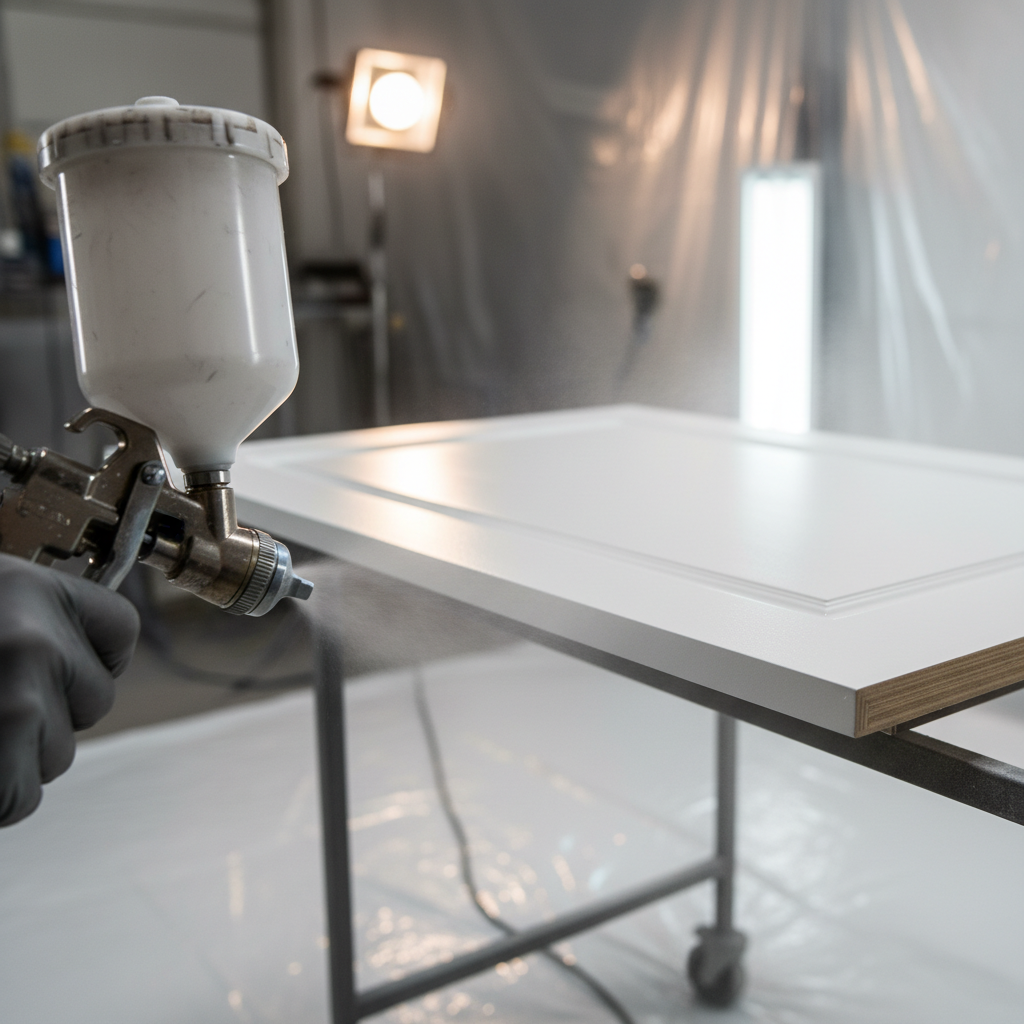
- Spray topcoats: 2–3 pro coats are applied for even coverage and film build; edges receive extra attention.
- On-site masking and spraying: face frames, panels, and moldings are masked and sprayed to match door finish.
- Cure and reassemble: components cure before reinstallation; new hardware can be installed to complete the refresh.
We publish our approach in detail in our kitchen cabinet refinishing guide. For specific project planning, see our refinishing service overview and the Toronto refinishing considerations.
Factors That Influence the Price to Refinish Cabinets
Your price to refinish cabinets is shaped by kitchen scale, substrate, repairs, color shifts, finish chemistry, and logistics. Shops that spray doors in controlled environments while masking on-site typically deliver the best consistency and predictable schedules for busy households.
- Kitchen size: more doors/drawers and longer runs mean more prep, priming, and coats.
- Material type: wood and veneer refinish differently than thermofoil or slick laminates.
- Repairs: filling grain, fixing chips, or modifying hinge patterns adds precision steps.
- Color change: dark-to-light shifts require extra stain-blocking and coverage.
- Finish system: durable, low-VOC, high-performance coatings improve longevity.
- Access and setup: condos and tight spaces need more masking and ventilation planning.
In our Toronto projects, kitchens often carry 20–30 fronts; shaker profiles and open-grain woods like oak may require grain-filling for that ultra-smooth look. We’ll flag these scope details during your assessment so your plan, timeline, and expectations are aligned.
Refinishing vs. Refacing vs. Repainting vs. Replacement
Refinishing updates color and sheen on existing cabinets. Refacing swaps doors and veneers while keeping boxes. Repainting is cosmetic paint without deep prep. Replacement changes layout and boxes. Choosing depends on cabinet condition, style goals, timeline, and renovation appetite.
| Approach | What Changes | Finish Quality | Timeline | Disruption | Best For |
|---|---|---|---|---|---|
| Refinishing | Color, sheen; keeps doors/boxes | Factory-like spray | Days to short weeks | Low–moderate | Sound boxes; style update |
| Refacing | New doors + veneer on boxes | Factory doors + matched panels | Short weeks | Moderate | New door style change |
| Repainting | Cosmetic paint only | Varies; brush/roller marks risk | Days | Low | Quick refresh on a budget |
| Replacement | New boxes, layout, and doors | Factory-manufactured | Weeks to months | High | Layout/function changes |
If you’re redoing cabinets, start with our cabinet refacing guide to compare door-style options, then see how a cupboard refinishing plan might reach the same design goal with fewer moving parts.
Finish Options, Spraying Methods, and Durability
Durable cabinet finishes come from adhesion primers and pro-grade sprayed topcoats. Satin and matte sheens hide fingerprints and complement Toronto’s modern designs. The right chemistry resists moisture, stains, and cleaning, extending the lifespan of your refreshed kitchen.
- Adhesion primer: bonds to existing finishes and promotes uniform topcoats.
- Spray application: HVLP equipment lays down even coats with crisp profile edges.
- Sheen choices: satin for balanced light, matte for a soft contemporary look.
- Color trends: off-whites, warm grays, and deep greens remain popular across the GTA in 2026.
- Hardware: updated pulls and soft-close hinges elevate the finished space.
Pro tip: Let finishes cure before heavy use. Many systems reach initial cure within days and continue hardening over several weeks. Gentle cleaning during this period preserves that just-finished look.
Best Practices to Maximize Results and Value
The best results come from disciplined prep, controlled spraying, and clear homeowner coordination. We provide scheduling windows, protect surfaces meticulously, and sequence shop and on-site work to reduce kitchen downtime while protecting finish quality and curing conditions.
- Surface prep first: degrease, sand, and dust-control determine adhesion and smoothness.
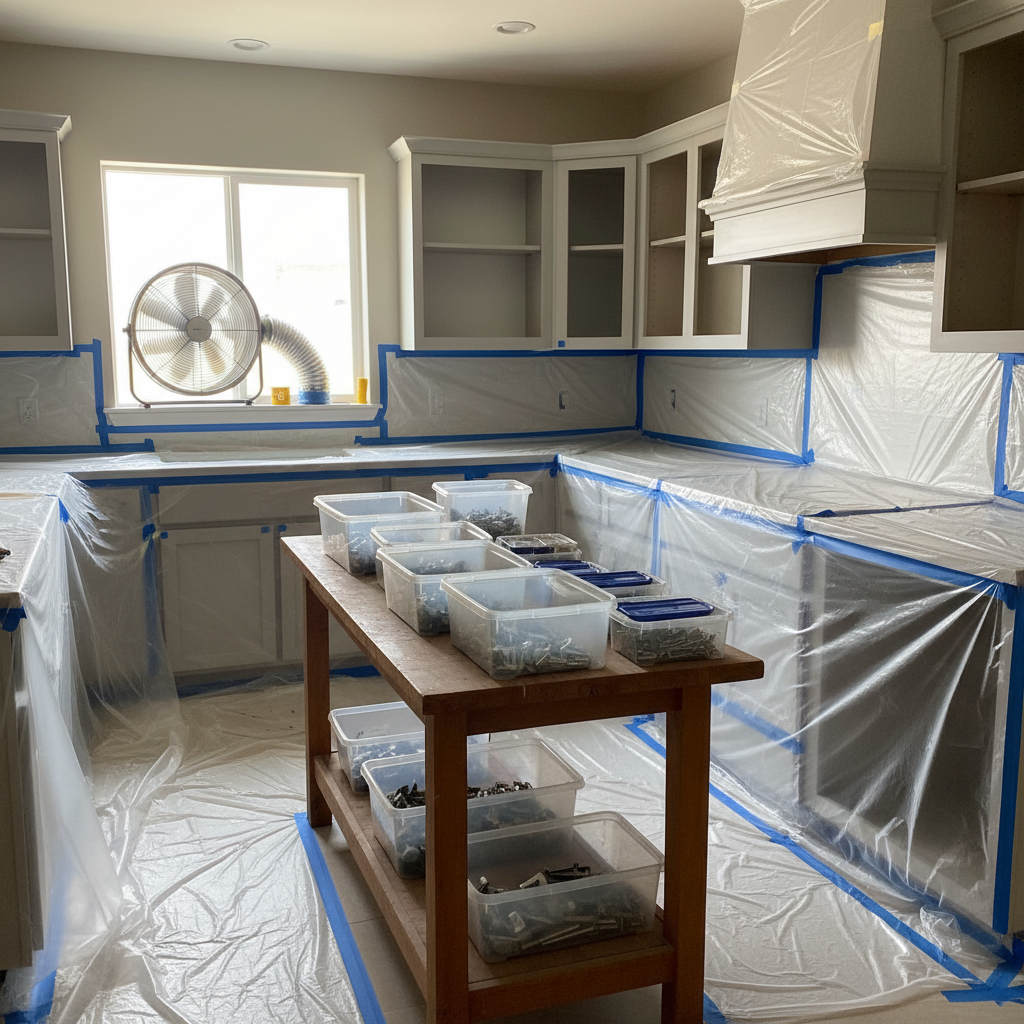
- Masking discipline: clean lines at ceilings, appliances, and flooring protect your home.
- Ventilation and filtration: portable systems reduce airborne particulates during spraying.
- Hardware mapping: label and bag by cabinet; use jigs to keep handle spacing consistent.
- Home coordination: reserve a staging zone; plan light cooking around spray days.
- Final checks: inspect sheen, color uniformity, door alignment, and soft-close function.
Our refinishing approach lines up with the process outlined in our contractors’ Toronto guide and our detailed cabinet painting planning tips.
Tools, Materials, and Resources We Trust
Professional results rely on pro-grade spray equipment, bonding primers, and low-VOC topcoats. We also use dust containment, ventilation setups, and hardware jigs. These tools, paired with a clear plan, keep your project tidy, efficient, and consistent from first coat to final install.
- Spray systems: HVLP guns and fine-finish tips for even film build and edge coverage.
- Primers/topcoats: selected for adhesion, stain blocking, and kitchen-grade durability.
- Containment: zippers, plastic sheeting, and portable filtration to protect living areas.
- Hardware tools: drilling jigs and hinge templates for accurate, repeatable installs.
- Planning aids: see this process overview of cabinet painting for a broad view of steps homeowners often consider.
- Cabinet basics: review this cabinet materials guide to understand substrates and how they refinish.
- Remodel context: when comparing full remodels, this remodel vs. replacement article outlines trade-offs beyond finish alone.
For a GTA-focused perspective on redoing cabinets and finish selection, explore our cabinet refacing guide alongside the refinishing service overview.
Thinking about a refresh? We help York and Toronto homeowners plan a clean, durable cabinet refinishing project that fits your layout and schedule. Share a few photos and your goals—we’ll outline finishes and sequencing.
Real-World Scenarios from GTA Projects
Toronto kitchens often have solid boxes and dated finishes. We refinish for a like-new look without removing cabinets. These snapshots show how scope and material drive timelines and deliverables while keeping households functional during the project.
Young family in York, shaker maple, soft white satin
Goal: brighten a well-built kitchen without changing the footprint. We removed and shop-sprayed 26 doors/drawers, grain-managed panels, and updated hardware. The family cooked through most of the week with a short pause during on-site spraying.
Toronto condo, flat-panel MDF, warm gray matte
Goal: reduce glare and fingerprints in a compact kitchen. We emphasized ventilation, quiet hours, and tight masking in the unit. Doors were sprayed off-site to control dust and odor; frames were finished in a single coordinated day.
Heritage home near Smythe Park, oak with heavy grain
Goal: smooth, modern look while keeping original boxes. We added grain-filling steps and extra primer passes before topcoats. The final satin finish unified color and reduced visual noise from open grain.
Frequently Asked Questions
Homeowners ask about timelines, materials, and where refinishing makes sense. Here are clear, direct answers to common questions so you can plan confidently and decide if cabinet refinishing is right for your Toronto-area home.
How long does cabinet refinishing typically take?
Most projects run days to short weeks, depending on kitchen size, repairs, and finish complexity. We often spray doors in-shop while prepping frames on-site, which shortens timelines and helps you keep using the kitchen between spray sessions.
Will refinishing work on laminate or thermofoil cabinets?
Many laminates can be refinished with proper adhesion systems and surface prep. Thermofoil that’s peeling may need repair or door replacement. We assess substrate and bond requirements during your consultation to recommend the right path.
How durable are sprayed cabinet finishes?
Professional sprayed finishes resist moisture, stains, and routine cleaning when paired with the correct primers. Satin and matte sheens perform well in busy kitchens. Let surfaces cure before heavy use to maximize early-life durability.
What should I do to prepare my kitchen?
Clear countertops, empty the sink area, and remove fragile items. We’ll set up a staging zone and handle labeling, masking, and containment. Light cooking is usually possible around spray days; we’ll provide a schedule so you can plan.
When is refacing a better choice than refinishing?
Choose refacing when you want a new door style or your doors are damaged beyond repair. Refacing keeps cabinet boxes but replaces doors and adds matching veneer to exposed panels. If boxes are unsound or you want a new layout, consider replacement.
Key Takeaways
Refinishing is a smart, fast way to modernize Toronto kitchens without demolition. Focus your planning on scope, substrate, repairs, and finish quality. A controlled spray process delivers even, durable results that feel factory-made and align with busy household schedules.
- The price to refinish cabinets depends on scale, materials, repairs, and finish system.
- Refinishing preserves boxes and layout while upgrading color and sheen.
- Shop-sprayed doors and on-site frame work reduce downtime in lived-in homes.
- Satin and matte sheens fit GTA design trends and hold up to regular cleaning.
- Refacing or replacement are options when style or layout changes are required.
Conclusion and Next Steps
Ready to modernize your kitchen without a gut renovation? Cabinet refinishing gives you a durable, designer look with less disruption. Share photos and goals; we’ll assess materials, repairs, and finishes, then outline a clear plan that fits your Toronto home and schedule.
If you’re exploring the price to refinish cabinets in the GTA, start with our refinishing service overview, compare with cabinet refacing options, and review our Toronto refinishing guide. When you’re ready, we’ll schedule an assessment from our York location.