
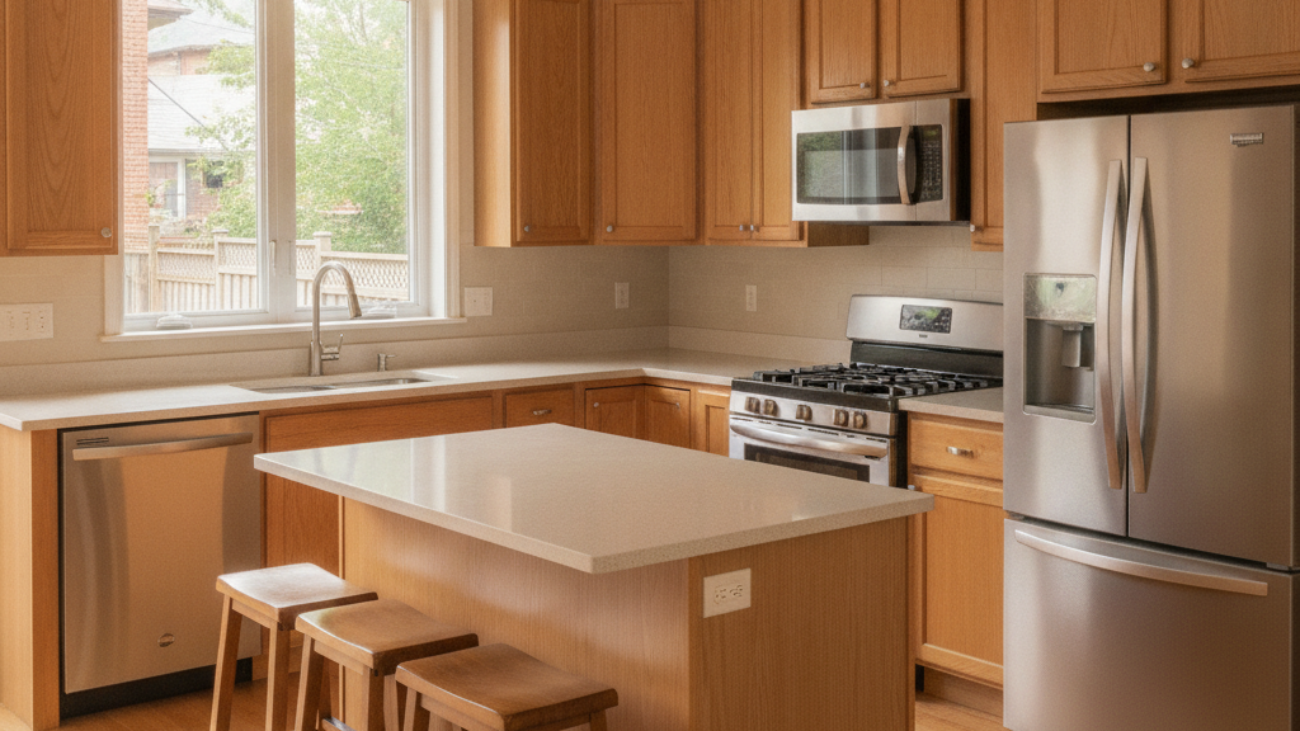
Cabinet refinishing is restoring worn cabinet surfaces with professional prep and a sprayed finish that cures hard for daily use. In York kitchens, the clearest signs cabinets need refinishing are peeling film near sinks, sticky grease that never wipes clean, yellowed maple that clashes with stainless, and chipped edges on high-traffic doors.
By Masoud Kakar, Paint2decor INC • Last updated: 2026-07-10
| In business since | 2008 |
|---|---|
| Service area | Toronto and the GTA (York-based) |
| Open hours | Mon–Sat 7:00 AM–9:00 PM; Sun 7:00 AM–8:00 PM |
| Key services | Kitchen cabinet refinishing, cabinet refacing, cabinet spray painting, cabinet respraying, bathroom cabinet refinishing |
| Awards | HomeStars Best of Awards (2020, 2021) |
York homeowner insight: aging maple from the 80s–90s
We see original maple with oil-based lacquer across York—especially in homes around Smythe Park—ambering to an orange tone. A strip, prime, and booth respray outperforms any brush-on topcoat here. It locks in color and handles humidity swings common near the Humber valley.
Quick Answer: Do Your Cabinets Actually Need Refinishing?
Yes—if film lifts at edges, doors feel sticky after a proper clean, maple reads orange, or faces look tired while boxes are solid. Peeling near sinks/dishwashers is urgent; water can wick into MDF and force door or panel replacement. Call this week if you see lifting by wet zones.
In our experience, once a fingernail can lift the edge, cleaning makes it worse. We test adhesion, check moisture under the sink, and map a spray plan that brings a factory-smooth finish back into your kitchen without touching your layout.
Overview
This guide ranks cabinet wear signals by urgency, explains why they show up fast in York kitchens, and details how a professional spray process solves them—prep, primers, coating type, cure time, and logistics—so you can plan confidently.
Paint2decor INC specializes in kitchen cabinet refinishing, cabinet refacing, cabinet spray painting, cabinet respraying, and bathroom cabinet refinishing across Toronto and the GTA. We match systems to wood species (maple, oak), traffic zones (sink, range), and ventilation habits so your finish stays cleanable and color-stable.
Explore related topics: wood cabinet finish restoration and how long cabinet paint lasts in Toronto kitchens.
Top Signs Cabinets Need Refinishing in York Kitchens (Ranked)
Triage first: treat peeling near water/heat as urgent, sticky residue as soon, yellowed color and light scuffs as planned, and worn doors with strong boxes as ideal for refinishing/refacing. Quick action protects boxes and avoids avoidable replacements.
- Urgent: Peeling or bubbling at sink/dishwasher or above the range—stop scrubbing and book refinishing.
- Soon: Sticky feel after cleaning—your coating is porous and trapping residue.
- Planned: Yellowed maple or dated color—cosmetic but transformative.
- Planned: Light scratches/chips—address before veneer tears spread.
- Ideal: Faces worn, boxes solid—perfect refinishing/refacing candidate.
Sign 1 — Peeling, Flaking, or Bubbling Finish
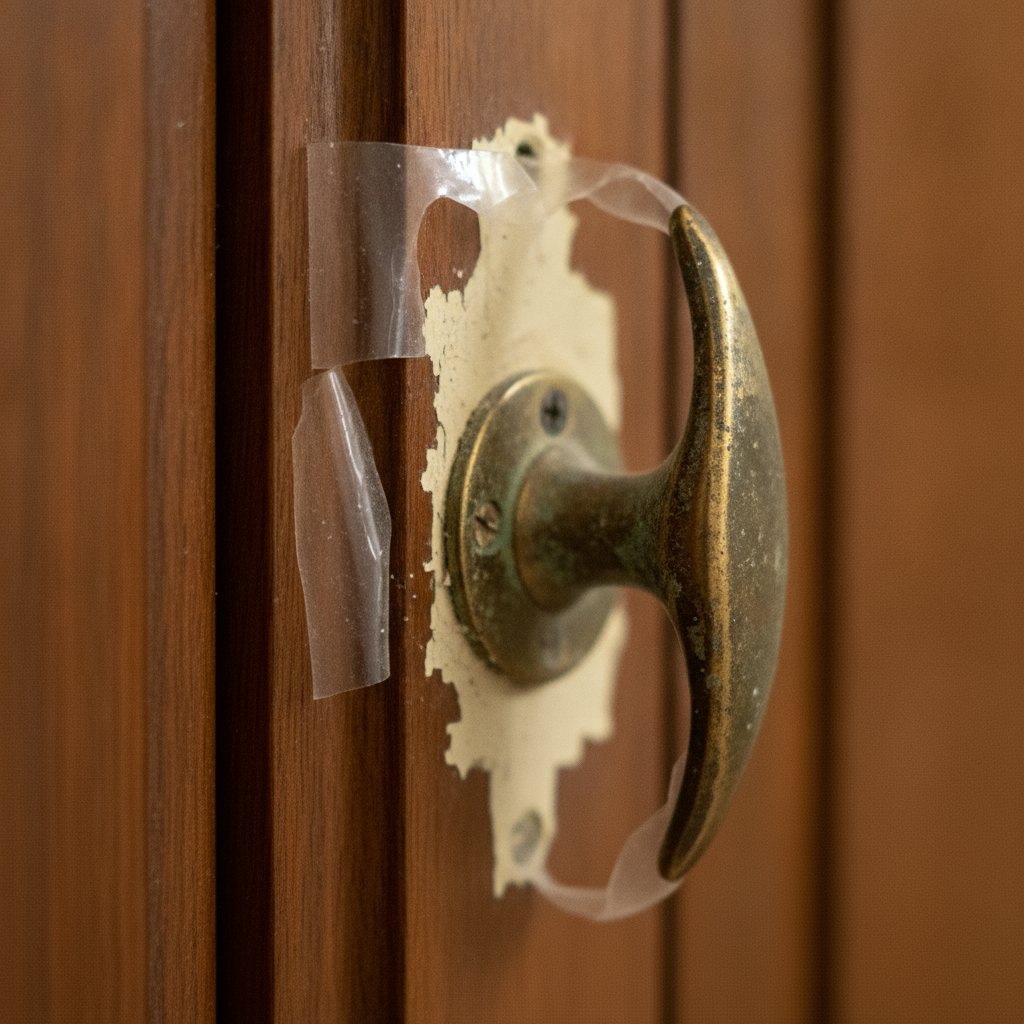
Peeling or bubbling means moisture has slipped under the film. Prioritize within a week—especially by sinks and dishwashers—to stop swelling at MDF edges. Refinishing strips failed layers, repairs edges, and sprays a kitchen-rated, two-component urethane/acrylic that cures hard in roughly 24 hours.
- What you see: Curled edges, chalky lines, or blushing (milky spots) near wet zones.
- Home test: If a fingernail lifts the finish, you’ve moved past DIY cleaners.
- Our process: Degrease, sand to sound substrate, adhesion primer, HVLP-sprayed topcoats for a uniform film.
Sign 2 — Stubborn Stains and Grease That Won’t Clean Off
- Check: Compare a shaded rail to the sunlit center panel to see drift.
- Finish: Non-yellowing urethane/acrylic in satin or matte sprays to a factory look.
- Style links: See white vs. gray cabinet choices and updating oak cabinets.
Sign 4 — Surface Scratches, Chips, and Minor Damage
Scuffs and corner chips are cosmetic but spread if ignored. We fill, sand, spot-prime, and spray to erase wear and armor high-touch spots. Address early and the repair blends invisibly.
- Hot zones: Trash pull-outs, base doors by the sink, utensil drawers.
- Install details: We label doors, bag hardware, and rehang to exact positions.
- Sheen tip: Satin masks texture better than gloss in bright, south-facing York kitchens.
Also see our wood finish restoration guide or plan a coordinated bath refresh via bathroom cabinet repainting.
Sign 5 — Doors and Drawer Fronts That Look Worn but Boxes Are Solid
Strong frames with tired faces are perfect for refinishing or refacing. You keep your layout, gain a like-new look, and skip demolition. We inspect hinges, confirm plumb/square, and schedule around your cooking routine.
- Refinish: Keep your current door style; renew the finish.
- Reface: New door profile plus sprayed or skinned faces on boxes.
- York reality: Many brick homes here have stout boxes—updating faces gives the biggest change per day of work.
Refinishing vs. Replacing: The Toronto Cost Reality
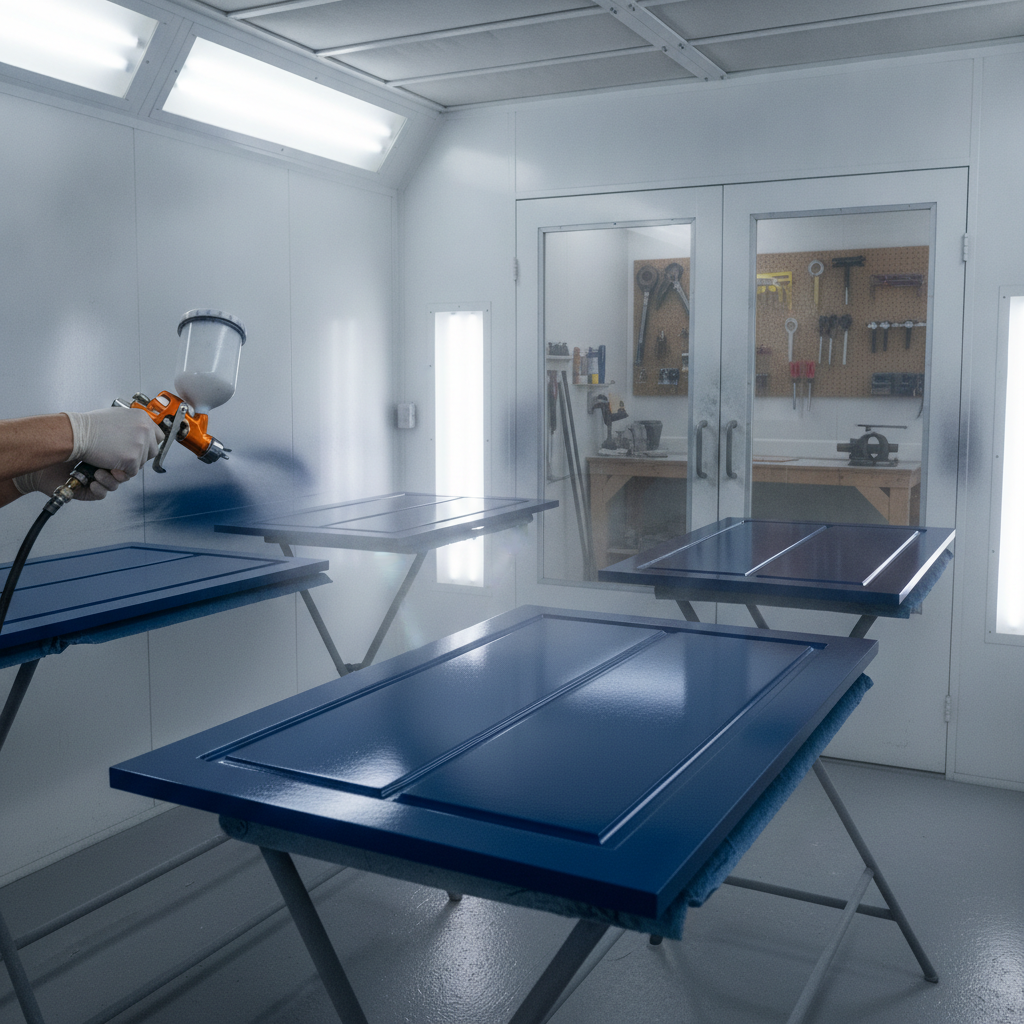
For sound boxes, refinishing or refacing beats replacement on speed and disruption. No plumbing moves or layout changes, and a booth-sprayed system delivers an even, durable film across every door for a factory-level result.
| Approach | Layout change | Disruption | Result | Best for |
|---|---|---|---|---|
| Refinishing | No | Low | Hard-curing sprayed film | Cosmetic wear |
| Refacing | No | Moderate | New doors + matched faces | Style change |
| Replacing | Yes | High | All-new system | Damaged boxes/redesign |
Ready for a refresh? Book a quick York assessment. We’ll check adhesion, box integrity, and color in your lighting, then plan a clean, spray-first workflow that fits your routine.
What to Do Next If You Spot These Signs in Your GTA Home
Photograph peeling, verify box strength, and schedule a pro consult. Ask about booth spraying, door labeling, low-odor coatings, and floor/counter protection. Choose sheen based on your windows and task lighting for color that reads right all day.
- Photograph: Edges near sinks, dishwashers, and ranges.
- Verify structure: Press near hinges; check under-sink panels for swelling.
- Plan logistics: Arrange a simple cooking workaround during door removal and booth spray.
- Choose system: Two-component waterborne urethane in satin is a reliable GTA choice.
- Ventilate: Follow EPA and Health Canada indoor air guidance during cure.
Local considerations for York
- Homes near Smythe Park and the Humber valley see bigger humidity swings—we tune cure time and recommend satin for easy wipe-downs.
- South- and west-facing kitchens amber faster; non-yellowing systems keep whites crisp.
- Weekday morning pickups let us stage doors into the booth the same day, shortening downtime.
Coordinating spaces? We handle bathroom cabinet updates and provide species-specific advice in our finish restoration guide, plus durability FAQs in Toronto cabinet paint longevity.
Frequently Asked Questions
How fast does a sprayed finish cure?
Two-component waterborne urethane systems set up quickly—typically handle-ready the next day—then harden over several days. You can use the kitchen with care while the film reaches full hardness. We’ll outline safe use during the first week.
Can you match my existing trim color?
Yes. We color-match to your trim, counters, or appliances and spray test panels so you can judge in your own lighting before we commit. Matching under your task lighting avoids surprises once everything is reinstalled.
What if my boxes have water damage?
If frames are soft or swollen, we repair or recommend refacing/replacement. Refinishing relies on a sound substrate. We’ll test under-sink panels and hinge areas first so the plan fits the condition of your boxes.
What’s the difference between refinishing and refacing?
Refinishing renews your existing doors and boxes with a sprayed finish. Refacing replaces doors and applies new faces to boxes while keeping your layout. Both are strong options when boxes are solid; we’ll recommend the right path after inspection.