
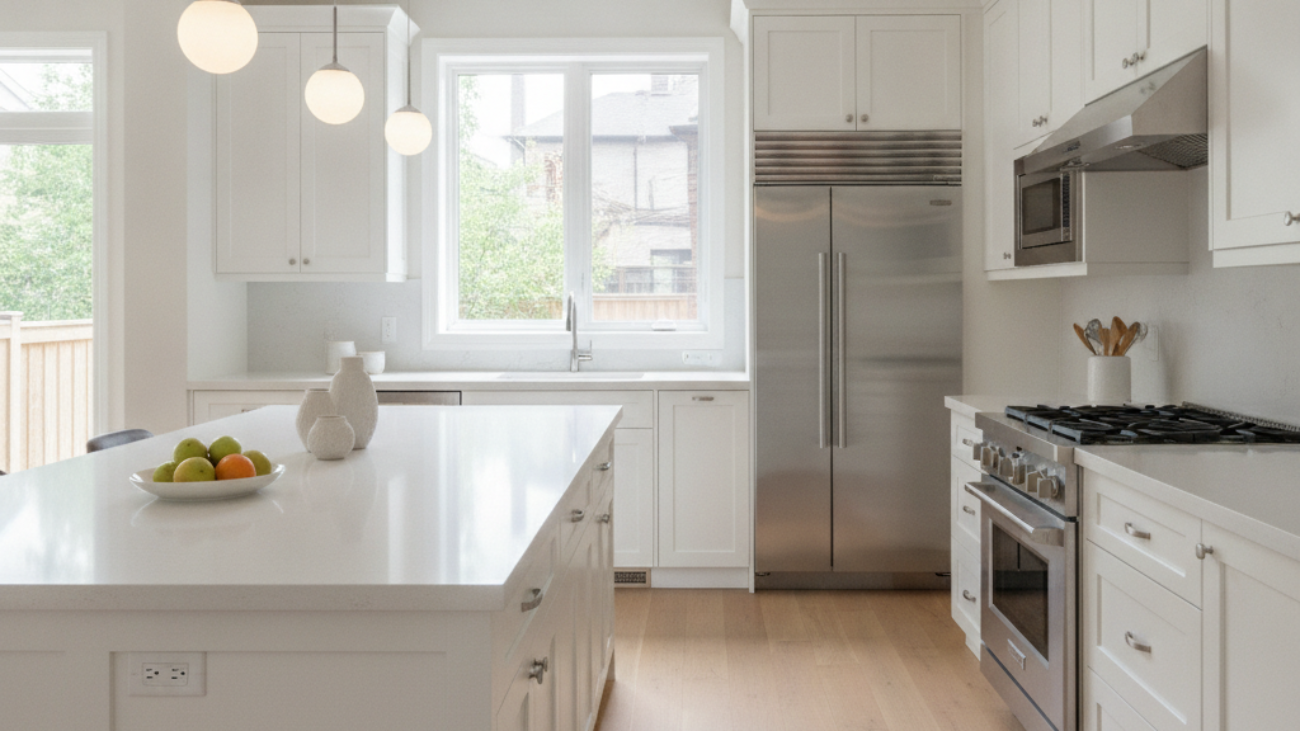
Toronto cabinet makeover cost factors are the real variables that raise or lower the investment for updating your cabinets: material type, scope of work, finish method, and room conditions. In York and across the GTA, older maple and oak, humidity swings, and logistics shape timelines and finish choices that last.
By Masoud Kakar — Last updated: 2026-07-12
| In business since | 2008 |
|---|---|
| Service area | Toronto & the Greater Toronto Area (based in York) |
| Primary services | Kitchen cabinet refinishing, cabinet refacing, cabinet spray painting, bathroom cabinet refinishing |
| Recognition | HomeStars Best of Awards (2020, 2021) |
| Hours | Open daily; most days 7:00–21:00 (Sunday until 20:00) |
| Free quotes | Yes — online or by phone |
Overview
A cabinet makeover updates the look and durability of existing cabinets without full replacement. In Toronto, four inputs set the plan: cabinet material, project scope, finish method, and room conditions. Tuning these choices delivers the finish you expect and a timeline that fits real life.
We wrote this for York homeowners comparing refinishing, refacing, and spray painting. You’ll see the trade-offs clearly and know which details change schedule, durability, and the final look.
York insider tip for smoother projects
Homes around Smythe Park and near the Toronto Public Library – Daniel G. Hill Branch often have pre-2000 oak or maple with heavy grain. A sprayed satin finish levels that grain best. Book door pickup early during wet spring weeks so drying and transport stay on track.
What is a cabinet makeover?
A cabinet makeover restores or resurfaces sound cabinet boxes and doors using refinishing, refacing, or professional spray painting. You keep the layout you like, replace or refinish the visible parts, and get a new color and sheen in days—not weeks.
- Refinishing: Clean, repair, prime, and professionally spray existing doors and visible box faces.
- Refacing: New doors/drawers plus matching panels or veneer on boxes for a style change.
- Cabinet spray painting: A sprayed coating system that updates color and sheen with a smooth, factory-like finish.
Since 2008, our team has focused on these methods for kitchens and bathrooms across the GTA.
Why a Toronto-specific guide matters
Toronto’s housing stock and seasons add real constraints. Pre-2000 oak and maple are common, summers get humid, and winter air dries wood. Ignoring these realities leads to peeling, orange peel texture, or drawn-out schedules. Local process and timing prevent that.
- Real homeowner stress: The call we hear every February is from someone whose doors were brush-rolled in November and are lifting at the edges. That’s preventable with proper prep and cure.
- Humidity swings: Coatings must flex and cure right to handle July stickiness and January dryness.
- Logistics: Pickup/return windows and spray-shop capacity affect downtime more than people think.
Our York location shortens transport, which helps keep reinstallation on the day we promise.
How a Toronto cabinet makeover works
Most projects follow a 72-hour flow: Day 1 door pickup and box prep, Day 2 professional spray in a controlled booth, Day 3 reinstallation and final touch-ups. Clear photos and counts upfront keep this timeline tight.
- Document: Share door/drawer counts and straight-on photos of each run (10–30 doors is typical).
- Pickup & label: We label hinges and doors, protect edges, and transport to our York spray shop.
- Prep & prime: Degloss, repairs, bonding primer; grain control where needed.
- Spray finish: Booth-sprayed topcoats for consistent sheen and film build; boxes finished on-site.
- Reinstall: Hardware reassembly, alignment, felt bumpers, and a handling walkthrough.
You can usually cook again the same evening after reinstall, while coatings continue to harden over the next days.
What drives Toronto cabinet makeover costs (the 4 real factors)
Four choices drive Toronto cabinet makeover cost factors: your cabinet material, the scope you select, the finish method, and the room conditions. Get these right and you’ll control downtime and get a finish that holds up.
Factor 1 — Cabinet material
- Maple & oak: Dense or open-grain woods need bonding primers and, for oak, grain-leveling to avoid telegraphing texture.
- MDF & thermofoil: Stable substrate, but edges and past delamination need repair and edge sealing.
- Veneer: Thin face layers limit sanding; careful prep and spray technique matter.
Factor 2 — Scope of work
- Doors-only spray: Targets the most visible surfaces for a fast refresh.
- Full refinishing: Doors, drawers, and visible boxes sprayed for a unified look.
- Refacing: New doors/drawers and matching panels change profiles and lines.
Factor 3 — Finish method
- Pro spray (HVLP): Controlled booth, smoother film, consistent sheen.
- Brush-and-roll: Useful for fixed box faces; needs expert leveling to avoid texture.
Factor 4 — Room conditions
- Kitchen: Heat and grease demand tougher topcoats and thorough cure.
- Bathroom: Steam requires moisture-resistant systems and good ventilation.
These aren’t abstract ideas—we build quotes and schedules around them every week.
Cabinet material: why maple is different from MDF
Maple and oak need grain control and bonding primers for glass-smooth results; MDF needs edge sealing and gentle handling. Matching prep to substrate is the single biggest driver of durability and finish quality in Toronto’s older homes.
In our experience:
- 1990s oak in York: We use grain-filling primers to level heavy texture before spraying satin. The door feels smooth to the touch, not ridged.
- Maple shaker doors: Dense fibers call for bonding primers and measured cure time to avoid print-through at rails.
- MDF panels: We seal milled edges so they don’t fuzz or swell, then spray for a crisp edge line.
For longevity context, see our guide on how long cabinet paint lasts in Toronto kitchens. If your doors need repair first, our wood cabinet finish restoration article shows the steps we take before color.
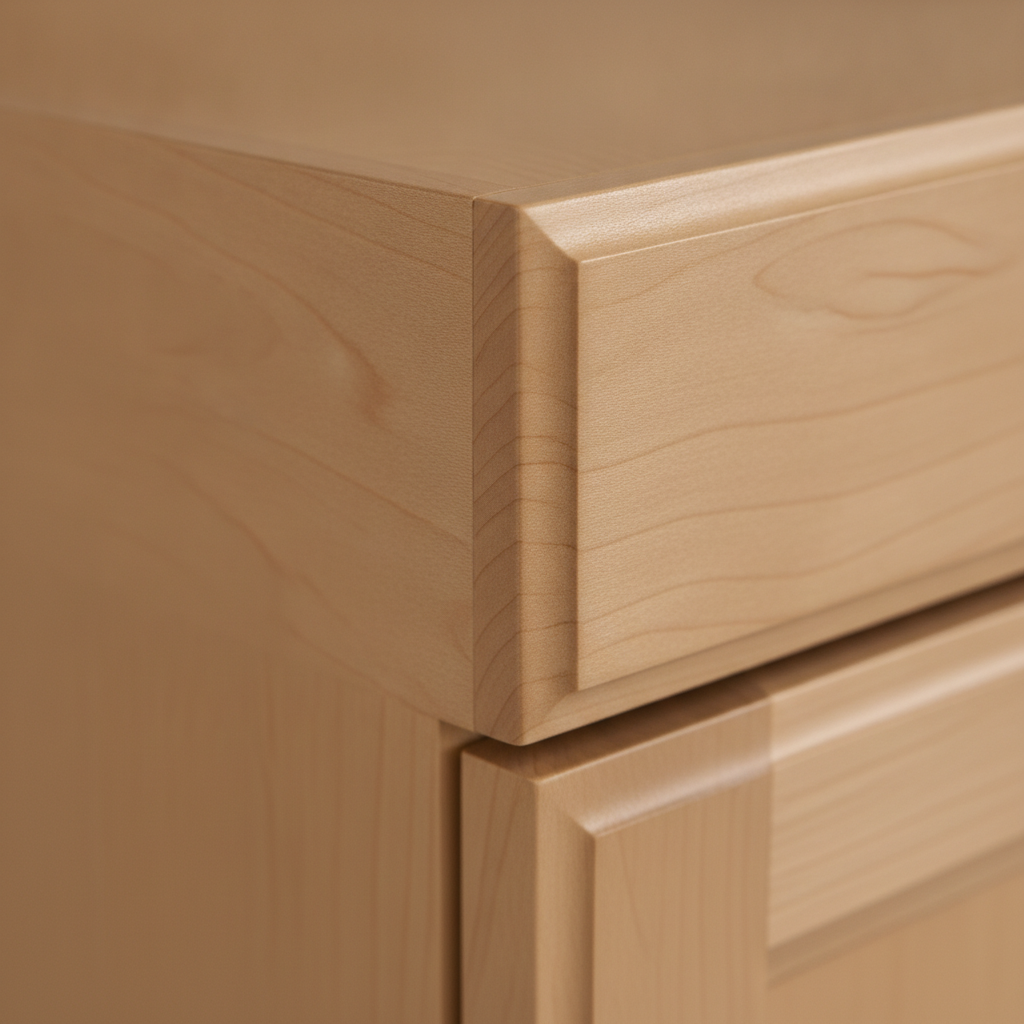
Scope of work: doors-only spray vs. full refinishing vs. refacing
Scope decides how far your makeover goes: doors-only targets visible fronts, full refinishing updates doors and boxes, and refacing swaps doors and adds matching panels. Choose scope based on goals, cabinet condition, and how much disruption you can accept.
| Option | What changes | Disruption | Cabinet condition needed | Best for |
|---|---|---|---|---|
| Doors-only spray | Color/sheens on doors & drawer fronts | Low (1–2 days) | Boxes in good shape | Fast refresh of style and color |
| Full refinishing | Doors, drawers, visible boxes sprayed | Moderate (2–3 days) | Sound boxes; minor repairs ok | Unified, factory-smooth look |
| Refacing | New doors/drawers + box skins | Moderate (3–5 days) | Boxes structurally solid | Profile/style change |
Exploring a vanity instead? Our bathroom cabinet repainting tips cover steam-smart prep. Classic oak? This updating oak cabinets walkthrough shows what to expect.
Free expert assessment: Send door photos and a count of doors/drawers. We’ll outline the best-fit scope and a realistic timeline for your York home—no obligation.
Finish method: brush-and-roll vs. professional spray
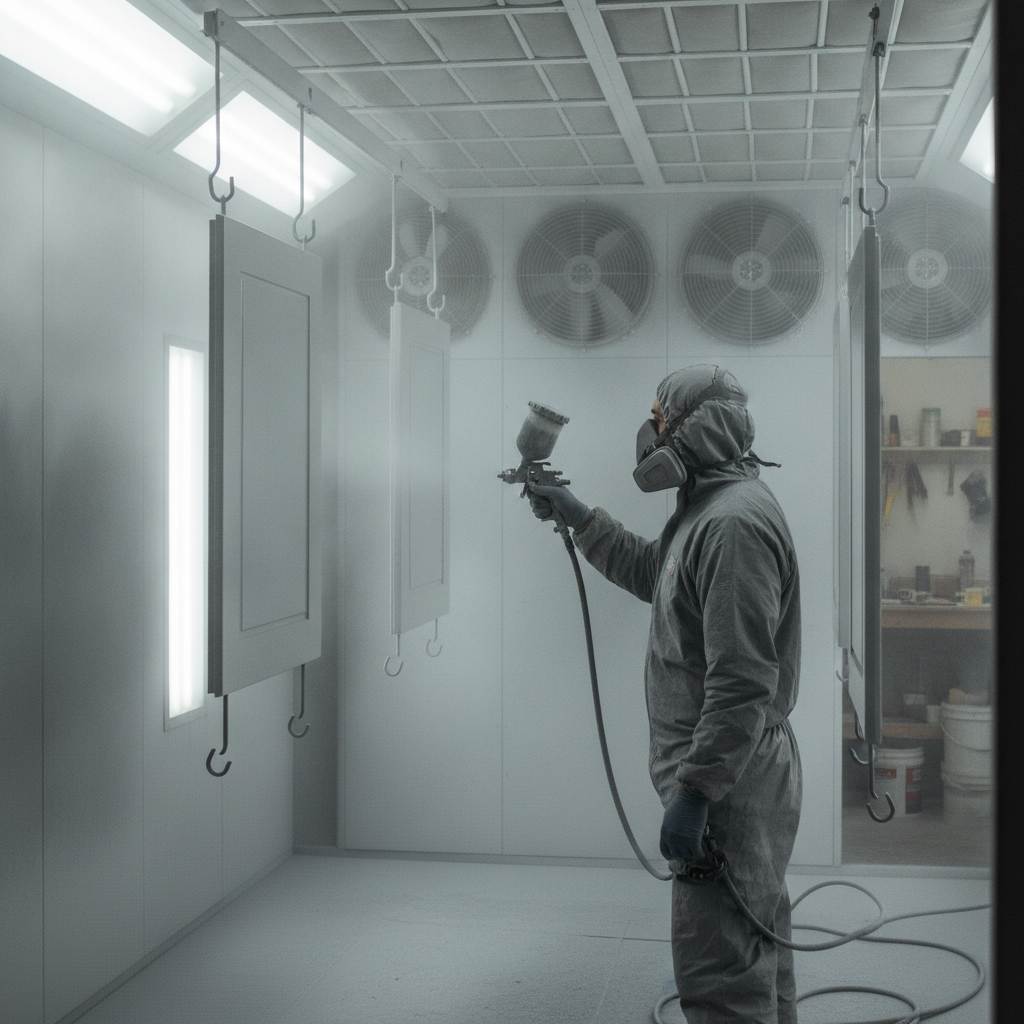
Spray finishing in a controlled booth yields a factory-smooth surface and consistent sheen; brush-and-roll depends more on technique and can show texture on dense woods. Both can be durable with proper prep and cure—pick based on finish level, access, and schedule.
- Spray booth advantage: Controlled airflow, dust capture, and repeatable film builds create the premium look many Toronto homeowners want.
- On-site brush/roll: Useful for fixed box faces where booth work isn’t feasible; requires expert leveling and drying windows.
- Coating systems: We pair primers/topcoats to kitchens and baths for cleanability and moisture resistance.
Color planning matters. Our white vs. gray kitchen cabinets primer covers undertones and lighting so your choice reads right in daylight and evenings.
Kitchen vs. bathroom: how room type shifts the plan
Kitchens take heat, grease, and constant handling, so they need tougher, scrub-resistant finishes; bathrooms need moisture- and steam-tolerant systems and longer cure times. Matching chemistry and timing to each room is the difference between “looks great” and “holds up.”
- Kitchens: High-touch doors near ranges and sinks benefit from upgraded topcoats and careful reassembly.
- Bathrooms: Compact rooms trap steam—doors cure off-site; boxes get extra airflow during coating.
- Vanities: Satin or matte hides water spotting and fingerprints better than high-gloss.
Planning a vanity refresh? Start with our bathroom cabinet repainting checklist.
Toronto-specific cabinet makeover cost factors
Local labor logistics, older wood species, and seasonal humidity influence prep, coatings, and scheduling in Toronto. Accounting for these upfront keeps projects on a 72-hour track and helps the finish survive summer stickiness and winter dryness.
- Older woods: Many York kitchens still have early-2000s oak or maple—grain leveling and bonding primers matter.
- Seasonality: Summer humidity changes cure windows; winter dryness affects wood movement. We adjust timing so doors harden correctly.
- Pickup/return rhythm: A typical week: Tuesday pickup, Wednesday spray, Thursday reinstall. Clear counters speed rehang day.
Local considerations for York
- Near Smythe Park, garages can be cooler and damp—store doors indoors before pickup so moisture doesn’t delay spraying.
- Spring and fall book first; plan around long weekends to minimize kitchen disruption.
- Weekday morning pickups usually avoid the neighborhood rush, keeping reinstallation on schedule.
Best practices to control scope and quality
Decide the result you want, then choose the lightest scope that achieves it. Confirm substrate condition, spray where appearance matters most, and schedule around cure windows. This sequence maximizes quality and minimizes downtime.
- Start with goals: Color only? Profile change? Box damage? Your goals set scope.
- Inspect edges and rails: Chips and swollen MDF edges need repair before finish.
- Prioritize doors: Doors and drawer fronts yield the biggest visual payoff from booth spraying.
- Hardware plan: New pulls/hinges change hole patterns—decide before finish.
- Ventilation & cure: Build in dry time for kitchens and steam-prone baths.
Tools and resources
Use checklists and trustworthy planning articles to clarify substrate, scope, and method before you set dates. A little prep work avoids back-and-forth and keeps your kitchen offline for fewer days.
- Planning context from a renovator on avoiding costly cabinet mistakes.
- Broader remodeling context in a kitchen renovation planning guide to understand sequencing.
- Paint-focused overview on cabinet painting process to visualize prep and finish steps.
- For specific substrates, see our tips on painting IKEA cabinets.
Mini case studies (Toronto examples)
Short, real scenarios show how the four factors play out. These York-focused examples help you map scope and finish to your home with confidence.
- York maple shaker, mid-2010s: Corner dings repaired; doors sprayed satin in the booth; box faces leveled and rolled. Result: uniform sheen; kitchen offline ~48 hours.
- Pre-2000 oak, raised panel: Grain-leveling primer + sprayed satin fronts; hardware upgraded. Result: modern, smooth touch with classic rails preserved.
- Compact bathroom vanity near Smythe Park: Off-site spray; moisture-resistant topcoat; extra cure before rehang. Result: low-sheen surface that hides water spots.
How to get an accurate quote from a Toronto cabinet specialist
The fastest way to a precise quote is to share counts, condition, and your finish goal. Clear photos of each run, a door/drawer tally, and notes on repairs let us confirm scope and schedule in a single call.
- Count & photo: Doors, drawers, and any glass fronts—one straight-on photo per run.
- Note condition: Chips, swelling, peeling finish, or loose hinges.
- Pick a finish: Color family and sheen (satin is most requested in Toronto kitchens).
- Share timing: Target week and any events you’re planning around.
- Confirm scope: Doors-only, full refinishing, or refacing based on your goals.
Once we have this, we align material, method, and scope—then provide a clear plan for your York home. We typically respond within one business day.
Frequently Asked Questions
These are the most common questions Toronto homeowners ask as they choose a makeover path. Each answer is short and direct so you can move forward confidently.
Do you remove cabinet doors to spray them?
Yes. We label and remove doors and drawer fronts, spray them in a controlled booth, and finish the fixed box faces on-site. This approach gives a consistent sheen while keeping kitchen downtime short.
Which finish holds up best in busy Toronto kitchens?
Durable, scrub-resistant sprayed finishes paired with the right primer system perform best in high-touch zones around sinks and ranges. Satin is the most requested sheen because it hides minor wear and cleans easily.
Is refacing or refinishing better for damaged doors?
If doors are warped, cracked, or swollen at edges, refacing with new doors is usually the smarter path. If doors are structurally sound, refinishing or spray painting restores appearance with less disruption.
How soon can I use my kitchen after a spray finish?
Doors are sprayed off-site and rehung after a professional cure window. You can usually resume light use shortly after reinstallation while the coating reaches full hardness over time. We outline handling guidance during your walkthrough.
Conclusion
Successful cabinet makeovers in Toronto come down to four choices: material, scope, finish method, and room conditions. Set these correctly, and you get a durable, modern finish with less downtime than replacement—tailored to your York home.
Key takeaways
- Material dictates prep: oak/maple need grain control; MDF needs edge sealing.
- Scope follows goals: doors-only, full refinishing, or refacing each solve different problems.
- Spray booth finishing delivers the most uniform, factory-like look where it counts.
- Kitchens and baths need different coating systems and cure timing.
- Local planning reduces downtime and improves finish longevity.
Ready to plan your Toronto project? Share photos and counts for a fast, precise assessment. We serve York and the GTA with professional cabinet refinishing, refacing, and spray painting.