
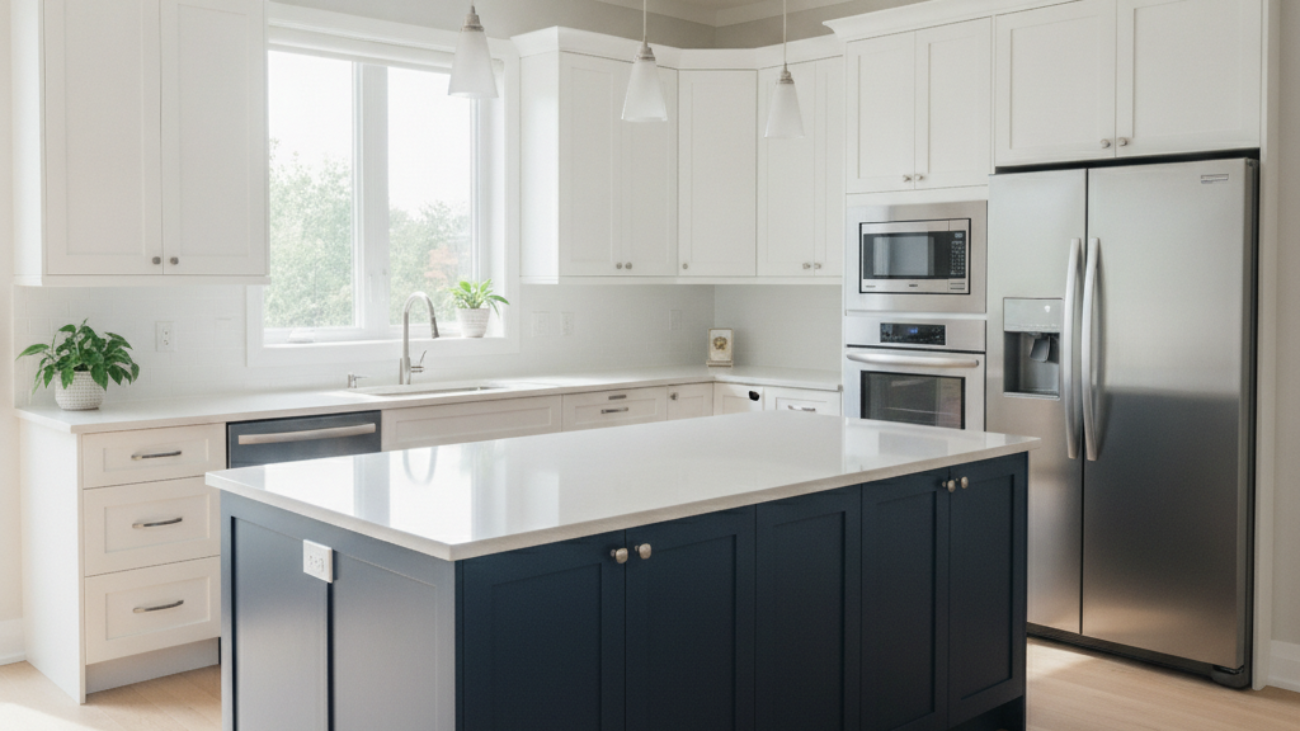
Toronto cabinet spray painting finish options are the professional topcoats and systems used to spray kitchen and bathroom cabinets for a durable, furniture-grade result. The right finish resists grease, humidity, and daily wear in York homes. Paint2decor INC matches the finish to your wood species, sheen, and usage for long-lasting performance.
By Masoud Kakar • Last updated: July 12, 2026
| In business since | 2008 |
|---|---|
| Neighborhood base | York (Greater Toronto Area) |
| Service area | Toronto and the GTA |
| Hours | Mon–Sat 7:00–21:00; Sun 7:00–20:00 |
| Primary services | Cabinet refacing, kitchen cabinet refinishing, cabinet spray painting, cabinet respraying |
| Awards | HomeStars Best of Awards (2020, 2021) |
| Free quotes | Yes |
Real York insight from our shop floor
Post-war bungalows around York often have oak face frames with heavy cooking buildup. We scrub, degloss, then prefer catalyzed or conversion systems on frames because they shrug off repeat degreasing. Near Smythe Park, summer humidity pushes us to waterborne stacks that cure clean without solvent bloom.
Which Finish Type Actually Holds Up in a Toronto Kitchen?
Satin waterborne lacquer or 2K waterborne polyurethane usually holds up best in Toronto kitchens. Both resist grease, fingerprints, and humidity and feel silky-smooth under your fingertips. For trash pull-outs and dishwasher zones, catalyzed lacquer or conversion varnish adds measurable abrasion and chemical resistance.
We’ve tested these systems across hundreds of GTA kitchens since 2008. The winning combo for most families is a satin film that hides prints but still wipes clean. A too-glossy door will show every smudge; a dead-flat sheen can burnish at handles. Satin splits the difference.
- Feel: Satin 2K poly feels like a hard, cooled stone—slick but not slippery. Urethane enamel feels slightly warmer and more flexible at edges.
- Smell during cure: Waterborne stacks have a mild, short-lived odor; catalyzed and conversion products need controlled ventilation.
- Failure we avoid: Pre-cat lacquer sprayed too thick in a humid July garage once blushed white under light. We now pull doors to the booth, always.
Want realistic lifespan expectations by household type? Our guide on cabinet paint durability in Toronto explains care and cleaning rhythms that protect the sheen.
The 5 Cabinet Spray Finish Options Paint2decor Uses (and When to Choose Each)
Our five go-to cabinet finishes are waterborne lacquer, catalyzed lacquer, conversion varnish, 2K waterborne polyurethane, and urethane enamel. Choice depends on substrate, traffic, sheen, and indoor air needs. We publish these preferences so you know exactly why we recommend a system for your kitchen.
1) Waterborne Lacquer (Acrylic/Alkyd hybrids)
- Where it shines: Most kitchens and vanities needing low odor and a factory-smooth satin.
- Tactile feel: Smooth, cool-to-touch surface with a soft satin glow—no plastic tack.
- Real talk: It levels beautifully, but edges of MDF must be sealed or they’ll drink the first coats and sand fuzzy.
2) Catalyzed Lacquer (Pre-cat)
- Use it for: Busy family kitchens that see daily wipe-downs.
- Feel & look: Hard, tight film that reflects light evenly; micro-scratches hide well in satin.
- Non-negotiable: Keep passes thin. Too heavy in humidity and you risk blush. We measure flash times and move to the booth if indoor conditions drift.
3) Conversion Varnish (Post-cat)
- Use it for: Trash zones, sink bases, dishwasher surrounds—anywhere water and cleaners live.
- Feel & resilience: Extremely tough shell; wipes clean without softening. Odor during cure is stronger—good ventilation is required.
- Clear warning: Touch-ups are rarely invisible. If a door chips in two years, expect a controlled respray of that component, not a dab-and-go.
4) 2K Waterborne Polyurethane
- Use it for: Premium durability with low odor; ideal for rentals and high-traffic homes.
- Shop reality: Once mixed, you have a working pot life. We stage parts and hardware so no material is wasted and film builds are even.
- Feel: Slick, glassy-satin that resists black heel marks from fingernails at pulls.
5) Urethane Enamel (Waterborne)
- Use it for: Movement-prone doors or darker colors that need great blocking and flow.
- What you’ll notice: Slightly warmer film underhand; edges flex instead of chipping sharp.
- Pro tip: We target 3–4 light coats rather than heavy passes to keep corners crisp.
We weave these systems into real services: maple cabinets refinishing is a staple in Toronto—dense maple lets us sand to 320 grit and spray a film so smooth clients often ask if we replaced the doors. Our crews also handle laminate/IKEA updates and full repair and refinishing when doors need structural fixes.
How Toronto’s Climate and Cabinet Material Affect Your Finish Choice
Toronto’s humid summers and dry winters move wood. Finishes must be hard enough to resist wear but flexible enough not to crack at joints. Maple and MDF love smooth films with the right primer. Thermofoil demands aggressive adhesion steps and testing before topcoat.
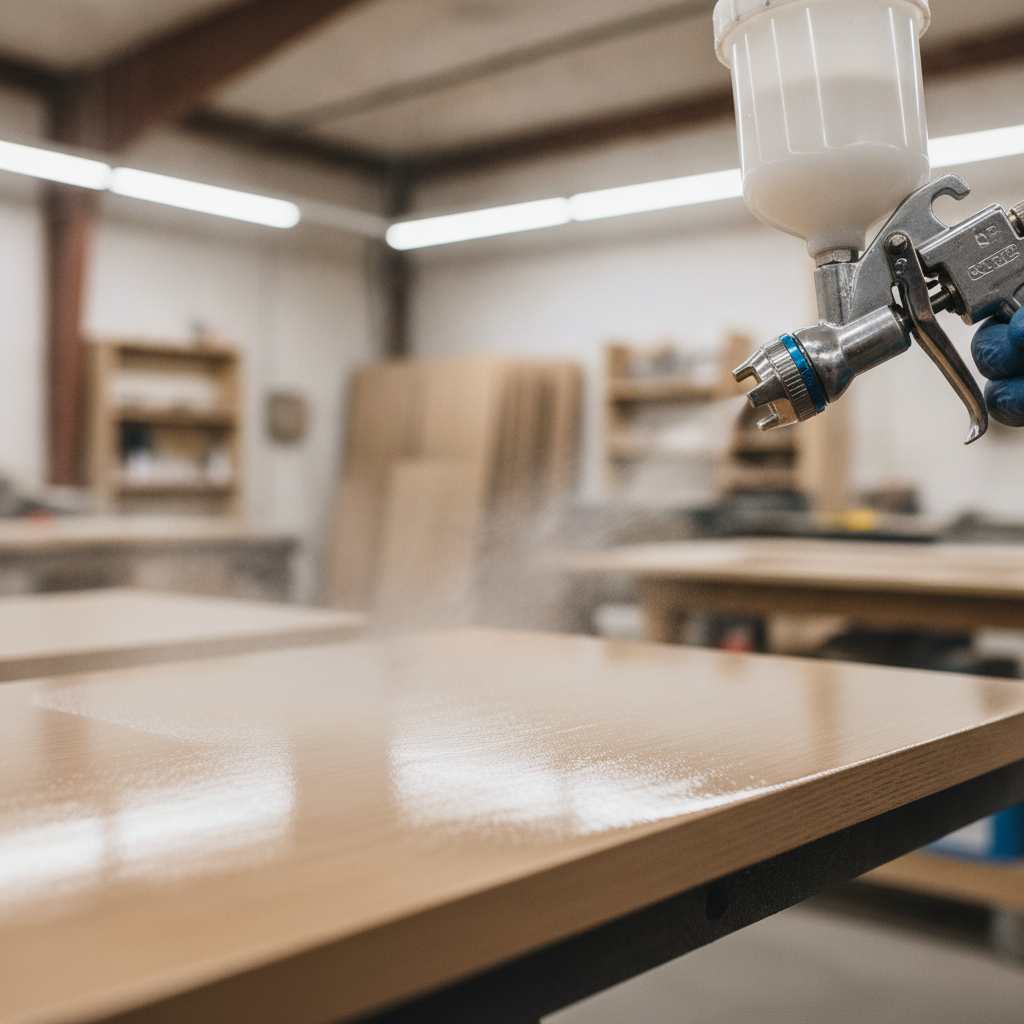
- Maple: Likely the most common door we see. We sand to 320 grit, seal, and spray satin for a factory feel—our maple cabinets refinishing service is built on this workflow.
- MDF: Edge sealing is non-negotiable. We sand between coats to knock down fuzz and lock in a glassy edge.
- Oak: Decide early—keep the texture with pre-cat lacquer or fill the pores for a sleeker contemporary look.
- Thermofoil/laminate: Degloss, deep clean, adhesion primer, and test panels. Some doors are better candidates for cabinet refacing.
Local considerations for York
- Older semis near the Weston corridor often have oak frames saturated with cooking oils; we default to catalyzed systems on frames for reliable cleanability.
- Summer jobs near Smythe Park get extra flash time between coats to prevent moisture blush and ensure proper leveling.
- Winter dryness shrinks joints; we select satin sheens that disguise micro-lines that appear as wood moves.
We’ve also published guidance on repair and refinishing if your doors need filler work or hinge re-seating before spraying.
Finish Options by Cabinet Type: Maple, MDF, Thermofoil, and More
Maple and MDF pair best with waterborne lacquer or 2K waterborne polyurethane in satin. Oak works either textured with catalyzed lacquer or pore-filled with waterborne stacks. Thermofoil needs rigorous adhesion prep; some doors are better refaced than sprayed.
- Maple doors: Satin waterborne lacquer for a cool, silky touch; 2K poly when kids and rentals are in the picture.
- MDF shaker: Waterborne lacquer plus edge sealing; catalyzed lacquer for extra scrub tolerance.
- Oak raised panel: Keep grain with pre-cat lacquer or fill and sand for a smoother contemporary style.
- Vanities: Use catalyzed lacquer or 2K poly; see our bathroom cabinet repainting notes for moisture-heavy spaces.
If hinges are loose or corners are dinged, our cabinet repair and refinishing step comes first—finish is only as strong as the substrate beneath it.
What the Finish Process Looks Like When Paint2decor Sprays Your Cabinets
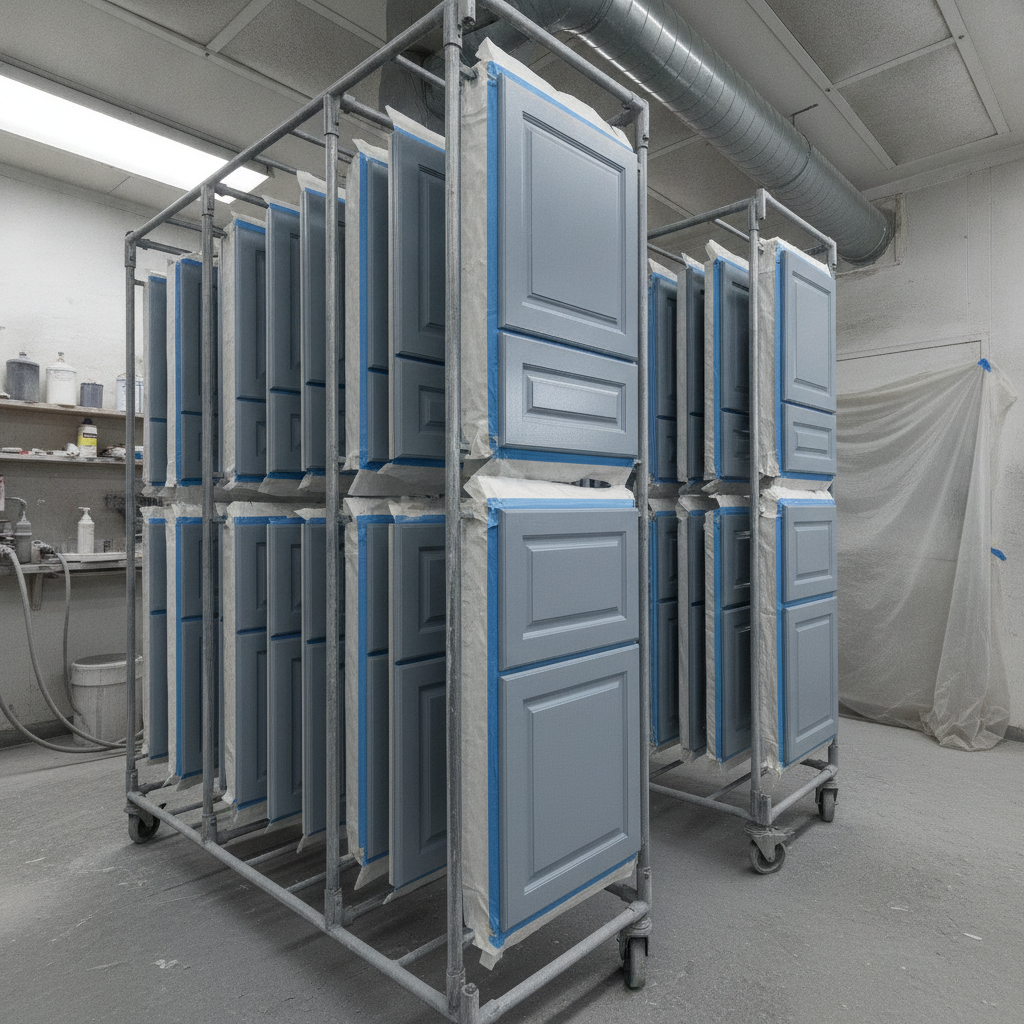
We remove and label, degrease and sand, prime for adhesion, then spray thin, even topcoats in a controlled booth. Frames are masked and finished on-site. Finally, we reassemble, fine-tune hinges, and hand over a care guide so your finish cures hard and stays clean.
- Inspection: Identify substrate, select finish stack, confirm sheen in your lighting.
- Disassembly & labeling: Hardware bagged; doors move to the booth; frames protected on-site.
- Prep & prime: Degrease, sand, fill; apply bonding and/or stain-blocking primers.
- Spray schedule: Multiple thin coats, climate-tuned flash times to avoid blush and sags.
- Reassembly & QA: Doors aligned, edges inspected, touch-points tested for block resistance.
Coordinating kitchen and bath? Our bathroom cabinet refacing post shows how we stage both spaces with minimal downtime.
Free finish assessment: Book a quick consultation. We’ll specify the exact primer, topcoat, and sheen for your doors, frames, and daily routine—based on Toronto conditions and your cabinet material.
Cost and Durability Trade-offs at a Glance
Pick a finish by matching traffic, sheen, and maintenance. Waterborne lacquer balances performance and indoor air needs. 2K waterborne polyurethane and conversion varnish deliver premium wear where you handle doors most. Catalyzed lacquer gives daily cleanability with a smooth hand feel.
| Finish | Durability | Odor during cure | Touch-up reality | Best uses |
|---|---|---|---|---|
| Waterborne lacquer | Strong | Low | Good; localized fixes blend well | Most kitchens, faster return to service |
| Catalyzed lacquer | Stronger | Moderate | Moderate; thin coats prevent blush | Busy households, daily cleanups |
| Conversion varnish | Very high | Higher | Low; component respray preferred | Sinks, dishwashers, trash zones |
| 2K waterborne polyurethane | Very high | Low–Moderate | Moderate; plan around pot life | Premium durability, rentals |
| Urethane enamel | Strong | Low | Good; forgiving on edges | Movement-prone doors, dark colors |
For independent perspectives on prep and spray environments, you can review this process overview and hands-on cabinet painting tips. For style pairing, see these cabinet makeover ideas.
FAQs About Cabinet Spray Painting Finish Options in Toronto
Homeowners ask about humidity, thermofoil, dark colors, and return-to-service time. These answers reflect the actual trade-offs we see every week in Toronto kitchens.
Which finish is best for a busy Toronto family kitchen?
Satin waterborne lacquer or 2K waterborne polyurethane. Both resist daily wiping and feel smooth at pulls. In splash zones, we upshift to catalyzed or conversion systems so cleaners don’t soften the film.
Can you spray thermofoil or laminate cabinets?
Yes—after aggressive deglossing, deep cleaning, and an adhesion primer. We run a test panel before topcoat. If adhesion is questionable, we’ll recommend cabinet refacing instead of spraying to protect the result.
Do darker cabinet colors need a different topcoat?
Dark colors highlight prints and micro-scratches. We stick to satin sheens and harder chemistries—catalyzed lacquer or 2K waterborne polyurethane—so doors wipe clean without telegraphing wear.
How soon can I use my kitchen after spraying?
Gentle use typically resumes within days, with full cure following the product’s window. We stage drying and reassembly so frames and doors come back quickly, and we provide a care guide for the first weeks.