
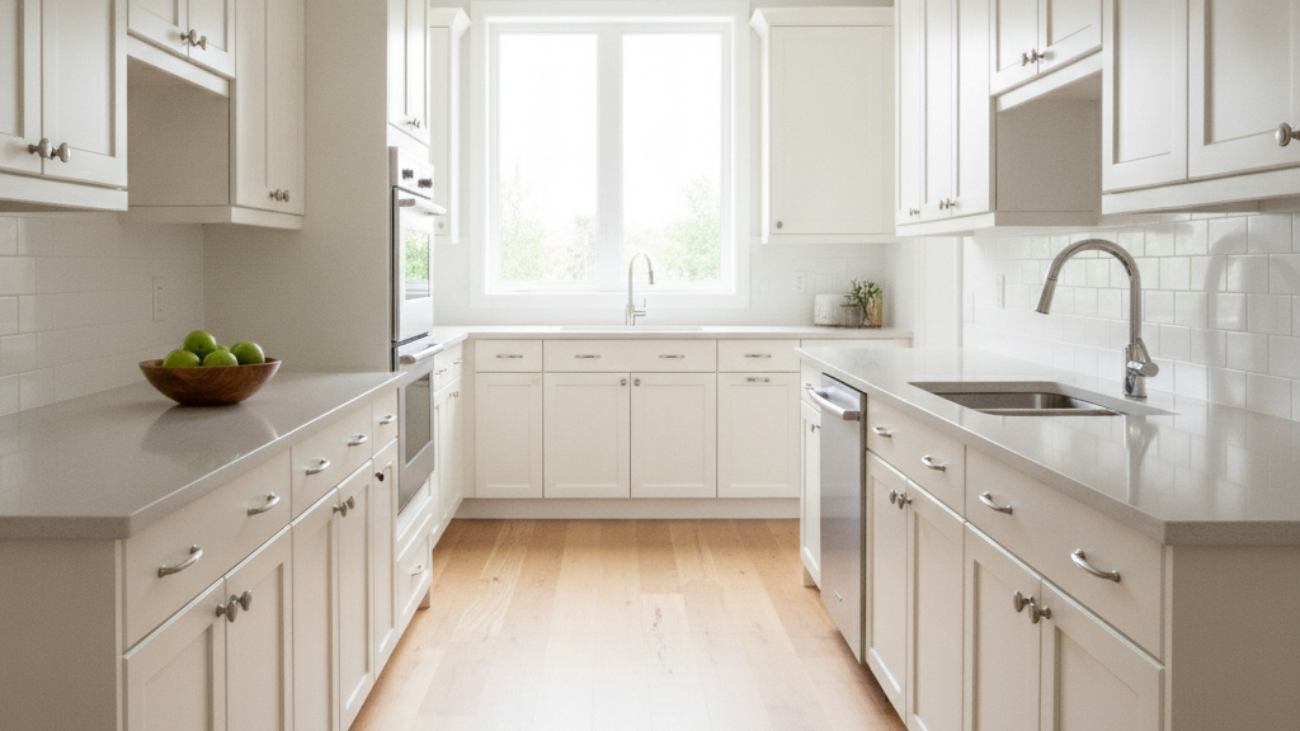
Cabinet refacing is the process of replacing doors and drawer fronts while applying new veneer to existing cabinet boxes, keeping your layout intact. This Toronto cabinet refacing decision guide explains when refacing beats refinishing or replacing, what the step-by-step looks like, expected timelines, and how to judge finish quality for York homes.
By Paint2decor INC • Last updated: 2026-07-07
Quick Summary
Refacing swaps doors/drawers and adds fresh veneer to cabinet boxes without changing your kitchen layout. It delivers a fast visual transformation, minimal disruption, and durable, factory-style finishes when done in a pro spray booth—ideal for many Toronto kitchens that have solid cabinet boxes but dated styles.
This overview highlights the decisions that matter most, especially if you live in York and want minimal downtime. Use it to choose among refacing, refinishing, and full replacement with confidence.
- What cabinet refacing is—and how it differs from refinishing and replacing
- When refacing is the right call for Toronto homes (and when it isn’t)
- Step-by-step refacing workflow and homeowner prep checklist
- Finish quality signals: adhesion, sheen, and spray-booth standards
- Local tips for York schedules, condo rules, and seasonal planning
What Is Cabinet Refacing?
Cabinet refacing replaces doors and drawer fronts and applies matching veneer to face frames and exposed panels while keeping existing cabinet boxes. Hardware is updated, edges are banded, and finishes are spray-applied for a cohesive, “new-kitchen” look without tearing out your layout or counters.
In practical terms, refacing preserves what’s solid and upgrades what you see and touch every day. For many Toronto kitchens with sturdy frames, it’s a smart middle path between simple repainting and full cabinet replacement.
Core elements of refacing
- New doors and drawers: Shaker, slab, raised panel, or modern profiles sized to your boxes.
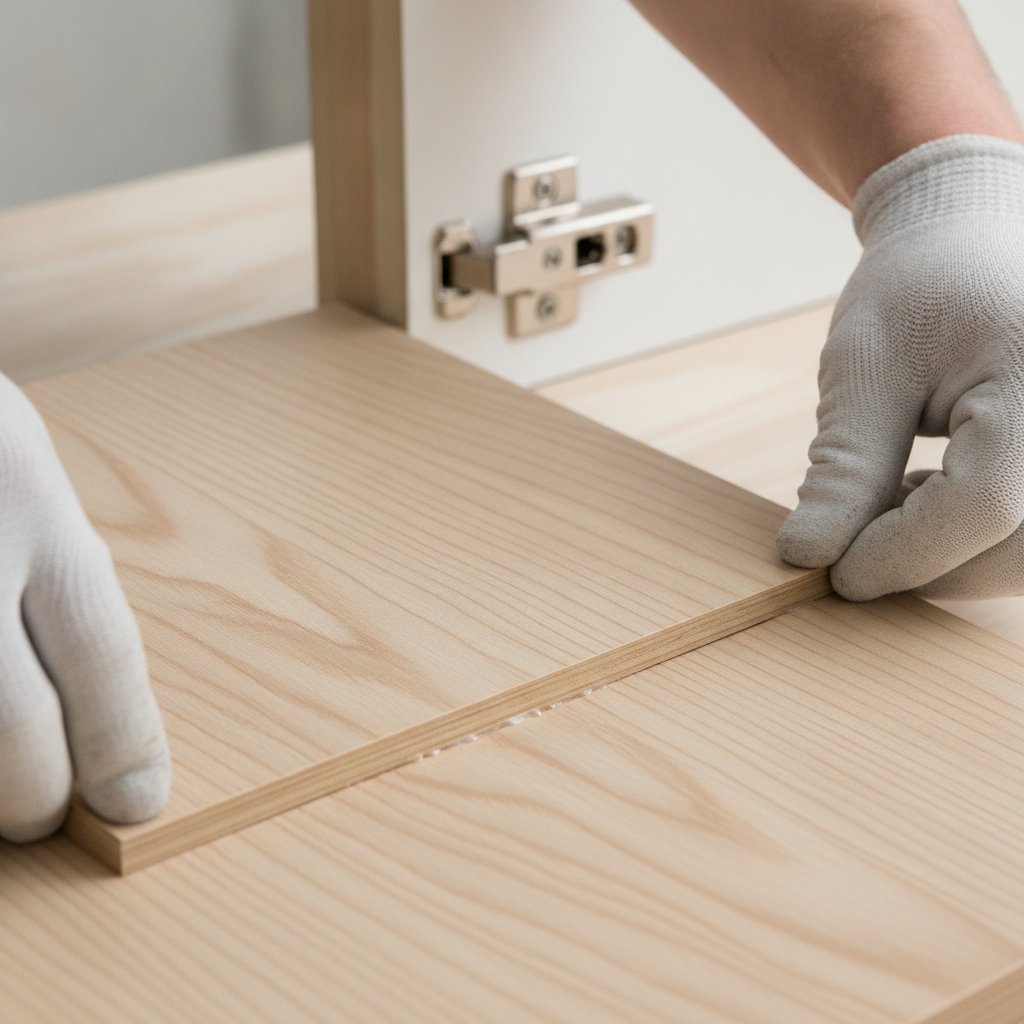
- Veneer application: Real-wood or engineered veneer bonded to face frames and visible panels.
- Edge banding: Clean, durable edges that match your selected finish.
- Hardware upgrades: Concealed hinges, soft-close slides, and updated pulls/knobs.
- Pro finishing: HVLP spray systems for consistent color, sheen, and durability.
Because your base cabinets stay in place, you avoid countertop removal and major demolition. That’s why many York homeowners pair refacing with new hardware and a backsplash to complete the makeover.
Why Cabinet Refacing Matters for Toronto Kitchens
Refacing modernizes style fast, limits disruption, and reuses sound cabinet boxes—key advantages in Toronto where many kitchens have good bones but dated doors. It’s efficient for busy York households, condo timelines, and anyone aiming for a sleek, durable finish without a full remodel.
We’ve found many Greater Toronto Area kitchens were built with solid maple or plywood boxes. Those structures often outlast the fashion of their doors and finishes. Refacing updates the visible surfaces and hardware while keeping that strength in place.
- Speed: Site time is compressed because boxes stay, counters remain, and spray finishing occurs off-site.
- Lower disruption: Normal cooking areas can often remain partially usable during phases.
- Design flexibility: Door profiles, veneers, edge details, and sheens are highly customizable.
- Sustainability: Reusing boxes reduces material waste compared with full tear-outs.
For homeowners comparing options, start by confirming your cabinet boxes are strong, square, and dry. If they are, refacing deserves a close look alongside cabinet refinishing best practices.
How Cabinet Refacing Works: Step-by-Step
A professional refacing project follows a predictable path: assess boxes, confirm door style and veneer, remove doors/drawers, prep surfaces, apply veneer and edge banding, spray-finish doors in a booth, reinstall with upgraded hardware, then final-adjust and quality check.
Here’s how Paint2decor INC structures a refacing engagement for York and Toronto clients.
- Assessment and planning: Inspect boxes for structural integrity, moisture, and squareness. Confirm scope and selections.
- Style selections: Choose profiles (Shaker, slab, etc.), veneer species/texture, and finish sheen.
- Site prep: Protect floors and counters; set light dust containment; remove doors, drawers, and hardware.
- Surface prep: Clean, degloss, and scuff-sand face frames and end panels for strong veneer adhesion.
- Veneer + edge banding: Apply matching veneer; trim and roll for bond; band exposed edges.
- Spray finishing: Doors/drawers are spray-finished off-site in a pro booth for consistency and durability.
- Reinstallation: Fit new doors/drawers; add concealed hinges and soft-close slides; align reveals.
- Final QA: Level, shim if needed, and verify hardware action and finish uniformity.
In our experience, this approach keeps kitchens functional and ensures a uniform, factory-like look. For deeper finishing context, see our refinishing contractors guide.
Refacing vs. Refinishing vs. Replacing: Which Fits Your Kitchen?
Reface when boxes are solid but styles are dated. Refinish when boxes and doors are sound and you like the profile. Replace when boxes are damaged, layouts change, or you’re adding cabinetry. The right choice balances structure, style goals, timeline, and finish expectations.
Use this quick comparison to align your goals with the best path. When you’re done, you can dig deeper into our Toronto refacing contractor guide or review refinishing fundamentals.
| Path | Best When | Keeps Layout? | Primary Changes | Disruption Level |
|---|---|---|---|---|
| Refacing | Boxes are strong; doors are dated | Yes | New doors/drawers + veneer + hardware | Low–Medium |
| Refinishing | Boxes/doors are sound; keep door profile | Yes | Clean, sand, prime, spray new finish | Low |
| Replacing | Boxes are failing or layout must change | No (often changes) | New cabinetry and possibly counters | High |
For a third-party perspective contrasting replacement and refacing, you can compare replacement vs. refacing here. For broader renovation choices, this article on remodel vs. cabinet replacement offers additional context.
Materials, Finishes, and Methods That Matter
Refacing results hinge on material quality and finishing method. Durable veneers, precise edge banding, and pro spray-booth finishing deliver a consistent, hard-wearing surface. Ask about adhesion systems, primer types, and hardware upgrades to ensure your kitchen looks new and works smoothly.
Paint2decor INC focuses on materials and methods that stand up to Toronto living—winter dryness, summer humidity, and everyday family use.
Material choices
- Veneer types: Real-wood species (maple, oak) for natural grain or engineered options for uniformity.
- Door construction: Five-piece Shaker for classic lines or slab for a contemporary look.
- Hardware: Soft-close hinges, concealed slides, and ergonomic pulls in finishes that suit your style.
Finishing systems
- Prep and adhesion: Thorough cleaning, sanding, and bonding primers reduce chipping and peeling risk.
- HVLP spray-booth finishing: Even atomization and controlled airflow create factory-style results.
- Sheen selection: Matte hides fingerprints; satin balances cleanability; semi-gloss adds reflectivity.
For homeowners researching painted options, this third-party overview of painting kitchen cabinets in Canada discusses common process elements, though exact products and steps vary by specialist.
Best Practices for Durable, Factory-Style Results
Insist on pro-grade prep, spray-booth finishing, and a documented workflow. Look for clean edges, aligned reveals, and smooth hardware action. Strong ventilation, proper cure time, and final quality checks produce long-lasting, uniform cabinet surfaces that look like new.
Here’s the checklist our team follows to deliver consistent outcomes across York and the GTA.
- Rigorous prep: Deglossers, scuff-sanding, and clean rooms before veneer application or paint.
- Controlled finishing: Off-site spray booths with HVLP equipment for uniform film build.
- Hardware alignment: Square doors, even gaps, soft-close action verified on every opening.
- Adhesion checkpoints: Edges and high-touch zones inspected under raking light.
- Cure and reassembly: Adequate cure time before transport; padded handling to prevent marring.
- Documented QA: Final walkthrough with adjustments and homeowner care guidance.
If you’re exploring repainting instead, our kitchen cabinet refinishing guide explains how prep, primers, and spray technique affect durability.
Tools and Homeowner Resources You Should Expect
A reliable refacing provider offers clear scopes, finish samples, door profiles, and a predictable schedule. You should receive surface-care guidance, hardware options, and progress updates so you always know what’s happening and when your kitchen will be fully back online.
At Paint2decor INC, we use a consistent, homeowner-friendly toolkit.
- Design kit: Door samples, veneer swatches, sheen chips, and hardware boards.
- Scope map: A room-by-room plan showing which faces, ends, and panels get veneer.
- Milestone schedule: Removal day, spray-booth finishing window, and reinstallation date.
- Care guide: Simple cleaning instructions and early-life handling tips.
- Update cadence: Proactive communication so you’re never guessing about next steps.
For more depth on decision drivers, see our perspective on what affects refinishing value and how scope, prep, and finish level shape outcomes.
Case Studies: Real-World GTA Examples
When boxes are still solid, refacing delivers a near-instant style reset. In York semis, downtown condos, and suburban homes, we’ve used refacing to modernize dated doors, integrate soft-close hardware, and match veneers to new backsplashes—often with minimal downtime.
Three brief examples from recent projects (names and addresses omitted for privacy):
- York semi-detached refresh: Shaker doors in warm white, satin sheen, matching veneer on face frames, and brushed-nickel hardware. Homeowner paired it with a new backsplash for a cohesive update.
- Condo efficiency play: Slab doors with integrated pulls; spray-booth finish for high uniformity. Elevators and quiet hours shaped the schedule without extending site time.
- Family home in the west end: Oak-look veneer to coordinate with flooring; soft-close slides to tame busy morning traffic; discrete child-safety latches at two base cabinets.
These outcomes share a theme: retain strong structure, overhaul touchpoints, and keep everyday routines running.

Planning Timeline and Homeowner Prep
Plan your refacing in phases: selections, removal, finishing, and reinstallation. Clear counters, empty the first few drawers, and stage a small temporary prep area. Good prep shortens site time and protects your belongings during veneer work and reassembly.
Here’s a homeowner-friendly plan to keep everything smooth.
- Selections: Confirm door style, veneer, sheen, and hardware. Note any appliance clearances or trim quirks.
- Staging: Clear counters; box items from frequently used drawers; plan an alternate coffee/meal station.
- Removal day: Doors/drawers and old hardware come off; protection goes down; dust control goes up.
- Off-site finishing: Doors and drawers receive multiple spray passes for even build and sheen.
- On-site veneering: Face frames and end panels are cleaned, prepped, and veneered; edges banded.
- Reinstall + QA: Doors/drawers return; hardware is installed and aligned; final walkthrough follows.
If you’re still weighing repainting, our overview of Toronto cabinet refinishing details timelines and prep that parallel refacing projects.
How Paint2decor INC Delivers in York and the GTA
We specialize in cabinetry refinishing, refacing, painting, and respraying for Toronto homeowners. Our award-recognized approach pairs efficient scheduling with spray-booth finishing and meticulous reassembly, giving York households a fast transformation and a consistent, durable finish.
Positioned as the GTA’s Cabinetry Refinishing Specialists, we help budget-conscious, quality-focused homeowners choose the right path. Whether it’s refacing, refinishing, or repainting, we align scope, finish, and schedule to your daily routine.
- Local specialization: Toronto and GTA projects shaped around condo rules, drive times, and family schedules.
- Award recognition: HomeStars Best of Awards and “Toronto’s Best Cabinetry & Millwood Company” credibility.
- Consultative guidance: Straightforward recommendations based on structure, use, and style goals.
Local considerations for York
- If you’re near Smythe Park, schedule door/drawer pickup earlier in the day to avoid school-hour traffic on connecting roads.
- High summer humidity can affect dry times; a spring or early fall slot often aligns best with smooth curing.
- Transit-heavy corridors like Jane St at St Clair Ave West get busier midafternoon—aim for morning site access windows.
Ready to talk through your space? Our Toronto refacing contractor guide pairs well with a short consultation to map scope and finish targets.
Thinking refacing is right for you? Let’s verify box condition, door style, and finish expectations together. A quick assessment ensures the plan fits your kitchen and schedule.
Start with our contractor checklist, then get in touch to discuss your York project.
FAQ: Cabinet Refacing in Toronto
Find clear answers to the most common refacing questions for Toronto and York homeowners—from suitability and durability to finish care and timelines.
How do I know if my cabinets are good candidates for refacing?
Check that cabinet boxes are sturdy, square, and dry, with secure face frames. If doors are dated but boxes are solid, refacing is usually an excellent fit. If you plan to change the layout or add many cabinets, replacement may be better.
Will the new finish look like factory cabinetry?
With proper prep, bonding primers, and pro HVLP spray-booth finishing, refaced doors can achieve a consistent, factory-style appearance. Veneered face frames are color-matched, and hardware upgrades complete the cohesive look.
How long does a typical refacing project take on-site?
Because cabinet boxes remain, on-site phases are streamlined. After selections, removal and veneering happen while doors are spray-finished off-site. Reinstallation and final adjustments follow. Homeowners often keep basic kitchen use throughout most of the process.
What maintenance is recommended for refaced cabinets?
Use a soft cloth and mild soap; avoid abrasive pads and harsh chemicals. Wipe spills promptly, and add felt bumpers where doors meet frames. Proper care preserves sheen and prevents premature wear at high-touch edges.
Conclusion and Key Takeaways
If your cabinet boxes are strong, refacing delivers a fast, durable style upgrade with minimal disruption. Pair quality doors, veneer, and spray-booth finishing with precise hardware installation to achieve a cohesive, “new-kitchen” result across Toronto and York homes.
- Refacing modernizes style while keeping your layout and counters.
- Finish quality depends on prep, primers, and professional spray technique.
- Choose between refacing, refinishing, or replacing based on structure and goals.
- Local scheduling and condo rules in York and Toronto shape on-site planning.
Next step: explore our refacing contractor guide and refinishing insights, then book a short conversation to map your York project.