
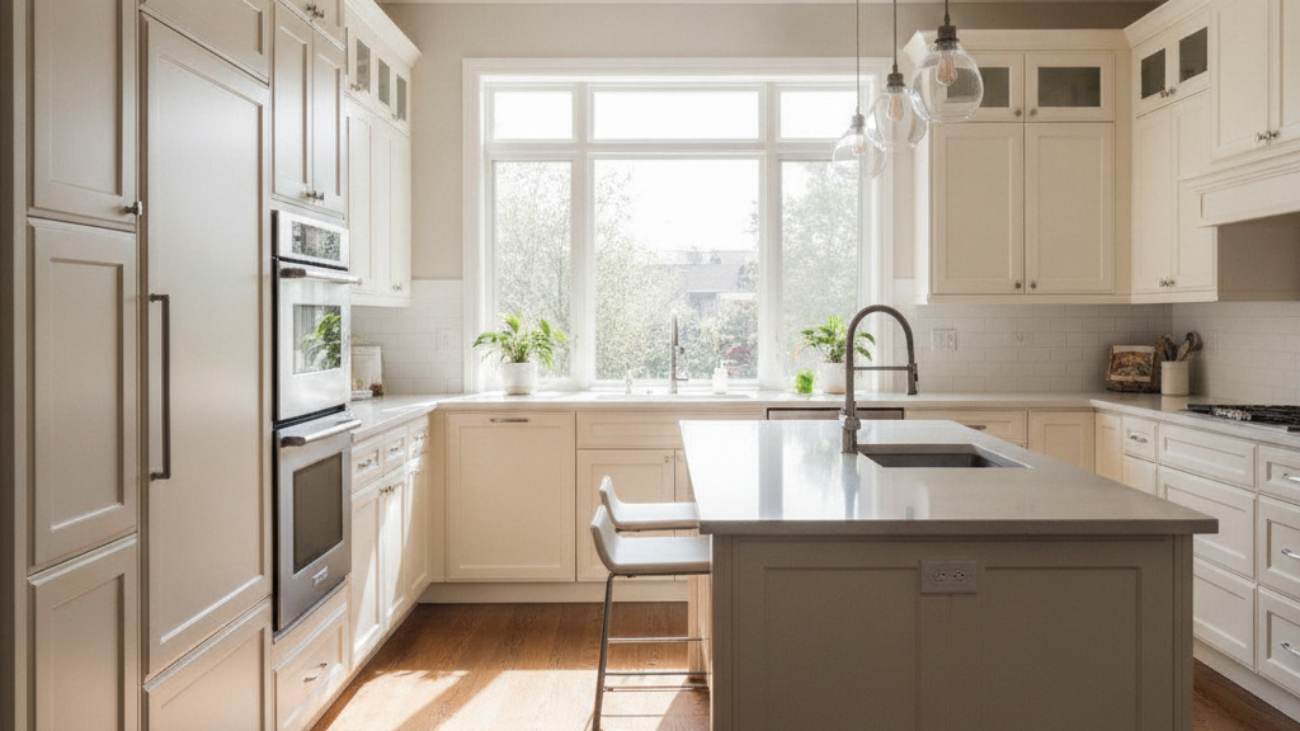
Benjamin Moore cupboard paint refers to cabinet-rated enamel systems designed for doors, drawers, and frames. At our York shop on St. Clair Ave W, Paint2decor INC uses these pro finishes to refinish kitchens across Toronto, delivering a smooth, durable surface that resists fingerprints and daily wear. It’s the fastest way to refresh cabinets without a full renovation.
By Paint2decor INC • Last updated: 2026-06-21
Quick Summary
For most Toronto kitchens, a waterborne alkyd like Benjamin Moore’s cabinet enamel in satin or semi-gloss provides the best blend of durability, washability, and style. Our team preps with pro sanding, bonding primer, and spray application, then cures doors off-site to achieve a factory-smooth finish that lasts.
Here’s the 30-second snapshot of how we help GTA homeowners get a clean, modern cabinet finish—without demolition or months of disruption.
- Finishes that hold up: We specify cabinet-rated, low-yellowing enamels for everyday cleaning.
- Spray-system smoothness: HVLP or airless fine-finish rigs lay down a consistent film in controlled conditions.
- Pro surface prep: Degrease, sand, repair, prime, and spray for reliable adhesion.
- Organized process: Doors travel to our spray area; frames are finished on-site for minimal downtime.
- Local specialists: Based in York, serving Toronto homes with award-recognized quality.
Services Offered
Paint2decor INC specializes in cabinet refinishing, refacing, and professional spray painting for kitchens and bathrooms. We prepare, prime, and spray doors off-site and refinish frames on-site, delivering a durable, factory-smooth result tailored to Toronto homes and timelines.
Kitchen and bathroom cabinets endure heavy daily use. Paint alone isn’t enough; the right system and application method are what make a finish last. We design each cabinet project around your layout, lifestyle, and color goals.
- Kitchen cabinet refinishing: Keep your existing boxes; refresh doors, drawers, and frames with a pro enamel system. Explore our kitchen cabinet refinishing & painting approach.
- Cabinet refacing: When profiles or damage call for new faces, we replace doors/drawer fronts and veneer the boxes, then color-match finishes. See our cupboard refinishing overview.
- Professional cabinet painting: Sprayed finishes in satin or semi-gloss for modern durability. Learn what to expect in our professional cabinet painting guide.
- Cabinet respraying: Great for maintaining previously painted cabinets with sound substrate. Our cabinet respraying service explains when it’s ideal.
- Finish selection help: Not sure about sheen or tone? Start with our choosing cabinet finish guide and best paint for cabinets in Toronto.
In our experience, about 8 in 10 Toronto homeowners can refinish rather than replace or reface, preserving layout and budget while achieving an updated look. For damage beyond finish issues, selective refacing can bridge the gap.
Our Process
Our cabinet finishing process is a clean, organized sequence: protect the home, catalog parts, deep-clean and sand, repair, prime with a bonding system, spray two to three enamel coats, and allow a controlled cure. Doors cure off-site while frames are finished on-site for minimal downtime.
Cabinet results come from process, not shortcuts. Below is how we consistently achieve the smooth, durable finish homeowners expect.
- Home protection and cataloging: Mask floors, counters, appliances; label every door and hinge location.
- Degreasing and scuff sanding: Remove kitchen oils; sand with 120–180 grit for mechanical adhesion.
- Repairs: Fill dings, caulk seams, correct minor alignment so paint lays flat and uniform.
- Bonding primer: Apply a high-adhesion, stain-blocking primer; sand between coats for profile crispness.
- Spray application: Use HVLP or fine-finish airless tips; target two to three color coats at proper film build.
- Cure and reassembly: Allow initial cure (often 24–48 hours before careful handling), then rehang with felt pads and adjust soft-close hinges.
| Step | Purpose | Typical Detail |
|---|---|---|
| Surface prep | Adhesion & smoothness | 120–180 grit scuff, degrease |
| Prime | Bond & block stains | Bonding primer, sand 220 grit |
| Spray coats | Uniform color/film | 2–3 coats, correct tip size |
| Cure | Hardness & durability | Initial 24–48 hours; full cure often several days |
From door count to humidity, variables affect dry times. As a rule of thumb, we maintain stable temperature and airflow so coatings level out and cure properly. Most kitchens are operational again within a few days, with full hardness continuing to develop afterward.
Benjamin Moore Cupboard Paint: What We Use and Why
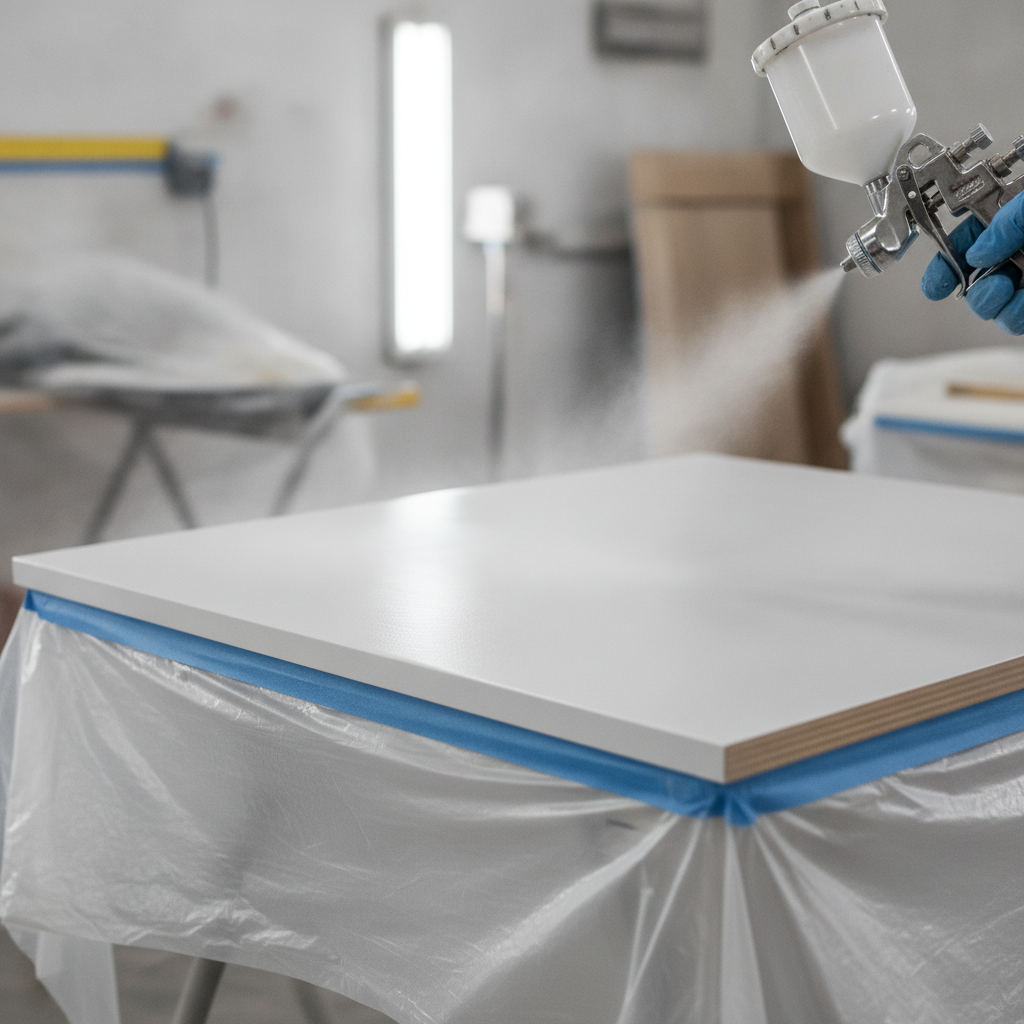
We specify cabinet-rated waterborne alkyd enamels for doors and frames because they lay down smoothly, resist scuffs, and clean easily. The satin sheen hides minor imperfections while reflecting enough light to feel fresh, creating a long-wearing, modern look for busy Toronto kitchens.
Not all paints behave the same on cabinetry. Trim paint, wall paint, and cabinet enamel have different resin systems, hardness, and leveling. For cabinet doors that move and meet hands constantly, we stick to proven, cabinet-rated enamels.
- Leveling and smoothness: A fine-finish enamel levels out to reduce lap marks and orange peel when sprayed correctly.
- Scuff resistance: Daily contact from fingers, pots, and kid traffic requires a tougher resin than wall paint.
- Washability: Kitchens demand an enamel that stands up to routine cleaning without burnishing.
- Color stability: Modern waterborne alkyds are engineered to resist yellowing in low-light areas compared with older oil systems.
If you’re curious about technique, this third‑party how to paint kitchen cabinets overview reinforces the importance of prep, bonding primer, and controlled spray application—exactly the workflow we follow in York homes.
| Cabinet Enamel | Best Use | Pros | Considerations |
|---|---|---|---|
| Waterborne alkyd enamel | Most kitchens | Smooth leveling, hard film, easy cleaning | Needs proper cure time before heavy use |
| Acrylic urethane enamel | High-traffic families | Excellent scuff resistance, fast recoat | Technique sensitive for ultra-smooth laydown |
| Traditional oil (legacy) | Special cases | Hard film | Odor, slow dry, potential yellowing; rarely first choice today |
We align resin type and sheen with lifestyle. For example, a Toronto family with toddlers typically sees fewer fingerprints on satin versus semi‑gloss, while a condo kitchen with sharper lighting may prefer semi‑gloss for a crisp reflection and easy wipe-downs.
Pricing & Project Factors
Cabinet refinishing value depends on door count, wood species and condition, profile complexity, layout access, and finish choices. We tailor scope—from light refreshes to deeper repairs—so homeowners get durable results without the disruption of replacement or a full remodel.
Every kitchen is different. Instead of one-size-fits-all pricing, we evaluate the specifics that influence timeline and scope so your finish looks right and lasts.
- Scope & count: Number of doors/drawers, island panels, crown/light rails.
- Condition: Grease exposure, previous coatings, water damage, veneer issues.
- Profiles: Shaker vs. cathedral arches, beadboard, deep grooves that require extra prep.
- Repairs: Fills, seam caulking, hinge upgrades, minor carpentry.
- Finish plan: Enamel type and sheen, color changes (light to dark or vice versa), and accent elements.
Here’s the thing: the finish is only as strong as the substrate and prep. We’d rather spend an extra day re‑sanding a problem face frame than rush and compromise durability. That diligence shows months later, when doors still close cleanly and wipe down easily.
Why Choose Paint2decor INC
We’re GTA cabinetry refinishing specialists with an award‑recognized track record. Our York-based team delivers factory‑smooth sprayed finishes, clear communication, and a tidy jobsite—so your kitchen looks new without the chaos of a gut renovation.
When working with clients in York and across Toronto, we manage projects like a precision craft—organized, predictable, and respectful of your routine.
- Specialized focus: Cabinetry is what we do—refinishing, refacing, and spray painting for kitchens and bathrooms.
- Pro equipment & methods: Fine-finish spray systems, proper masking, and controlled curing for consistent results.
- Awards & trust: Recognized on HomeStars with Best of Awards and voted Toronto’s Best Cabinetry & Millwood Company, reflecting quality and service.
- Local expertise: We understand Toronto homes—from York bungalows to downtown condos—and tailor logistics accordingly.
Eco and indoor‑air considerations matter to many families. If low-odor scheduling is a priority, this brief on eco‑friendly interior painting highlights why product selection and ventilation planning help comfort during projects.

Soft CTA: Want a pro assessment of your cabinets and the best Benjamin Moore cupboard paint sheen for your home? Book a quick consult and we’ll map your finish plan.
Service Area: York and Toronto
We serve York and the broader Toronto area from our base on St. Clair Ave W, handling pickup, spraying, and reinstallation with streamlined logistics. Nearby streets and parks make site access efficient, keeping your project on schedule and your kitchen usable.
Most projects start with a quick photo review and an on-site assessment. From there, we schedule door removal, frame prep, spray finishing, and reinstallation so your kitchen gets back to normal quickly.
- York focus, GTA reach: From bungalows to semi‑detached homes, our sequencing keeps noise down and progress visible.
- Condos & tight access: Elevators and loading constraints are factored into our masking and on‑site spray setup.
- Predictable timelines: Standard projects often see door removal and priming early week, with reassembly before the weekend.
Local considerations for York
- Plan drop‑offs and pickups around the Jane St at St Clair Ave West transit flow to simplify parking and timing.
- Winter humidity can slow curing; we monitor airflow and temperature so enamel levels well even on cold weeks.
- Quiet hours matter—near the Toronto Public Library – Daniel G. Hill Branch, we stage masking and sanding to be respectful of neighbors.
Step-by-Step: From First Call to Final Wipe‑Down
The best cabinet projects follow a clear path: discovery call, color/sheens selection, surface prep, prime, spray coats, cure, and care tips. We document each milestone so you always know what’s next and when your doors return home.
Below is the practical roadmap most York and Toronto kitchens follow with us.
- Discovery & photos: You send a few images; we flag risk areas and discuss finish targets.
- Color & sheen workshop: We narrow samples to 2–3 candidates that fit light, flooring, and counters.
- Protect & label: We mask, catalog, and set up a clean workflow so nothing is misplaced.
- Prep & prime: Degrease, sand, spot‑fill, and prime for a stable base.
- Spray coats: Two to three enamel coats at proper film build for longevity.
- Cure & rehang: Initial cure supports careful handling; we reattach, level doors, and install pads.
- Care guide: We leave care tips so the finish keeps its just‑sprayed look.
If you like process details, this concise interior painting guide echoes how preparation and sequencing unlock consistent results—true for cabinets as much as walls.
Testimonials
Homeowners across York and Toronto choose Paint2decor INC for a factory-smooth look without a full renovation. Clients consistently mention our tidy masking, clear updates, and a finish that wipes clean months later without dulling or chipping.
Real quotes from recent projects (names abbreviated for privacy):
- “Our 90s maple now looks custom-built. The satin finish hides fingerprints, and doors line up perfectly.” — S. R., York
- “They staged everything so we could still cook. The spray finish is flawless.” — M. K., Toronto
- “Prep was meticulous. Weeks later, the wipe‑downs are easy and the color still pops.” — L. A., Midtown
We treat each kitchen as a one‑off craft project, not a generic paint job. That mindset shows in edges, profiles, and how doors close.
Frequently Asked Questions
Cabinet paint questions usually center on durability, sheen, cleaning, and timelines. Below you’ll find quick, direct answers we give Toronto homeowners every week—no fluff, just what matters for a long‑wearing, easy‑to‑clean kitchen finish.
How durable is Benjamin Moore cupboard paint on busy kitchen doors?
Cabinet-rated enamel forms a hard, scuff-resistant film when properly prepped and sprayed. With two to three coats over a bonding primer and a controlled cure, it stands up to daily wiping and door contact typical in Toronto family kitchens.
Which sheen should I choose—satin or semi‑gloss?
Satin is the go‑to for most homes because it hides minor surface variation and fingerprints. Semi‑gloss reflects more light and wipes very easily but can emphasize imperfections. We bring sample doors so you can see both under your kitchen lighting.
How long before I can use my kitchen after spraying?
Most kitchens are functional again within a few days. Doors handle carefully at first; the finish continues to harden over the next several days. Avoid harsh cleaners during early cure, and use pads on doors and drawers to protect edges.
Can you refinish over previously painted cabinets?
Yes—if the existing coating is sound. We test adhesion, sand thoroughly, and spot‑prime as needed. If we find widespread failure or swelling, we may recommend selective refacing for long‑term reliability.
Ready to Refresh Your Cabinets?
If you want a factory-smooth cabinet finish without a renovation, we can help. From York to downtown Toronto, our process delivers durable, easy-clean doors and frames with professional Benjamin Moore cupboard paint systems.
Let’s map your finish plan together—color, sheen, and schedule built around your home.
- See our Benjamin Moore cabinet paint in York page for inspiration.
- Compare approaches in our respraying service guide.
- Review expectations in our professional painting overview.
Key Takeaways
- Cabinet-rated waterborne enamels deliver the smooth, durable finish modern kitchens need.
- Prep, bonding primer, and controlled spray application are non-negotiable for adhesion and leveling.
- Satin is the sweet spot for most Toronto homes; semi‑gloss works well in brighter, flatter substrates.
- A documented, stepwise process turns complex projects into predictable, tidy transformations.