
Kitchen cupboard painting explainer
Toronto Kitchen Cupboard Painting Benefits Explained
Short answer: painting can refresh the colour and sheen of structurally suitable kitchen cupboards while keeping the existing boxes, layout and door profile. That narrower scope may reduce demolition and replacement work, but it does not repair failing materials, change the layout or guarantee a lower price, faster schedule or longer life. The real benefit depends on condition, preparation, coating choice and use.
The practical benefits of painting kitchen cupboards
The existing layout can stay in place
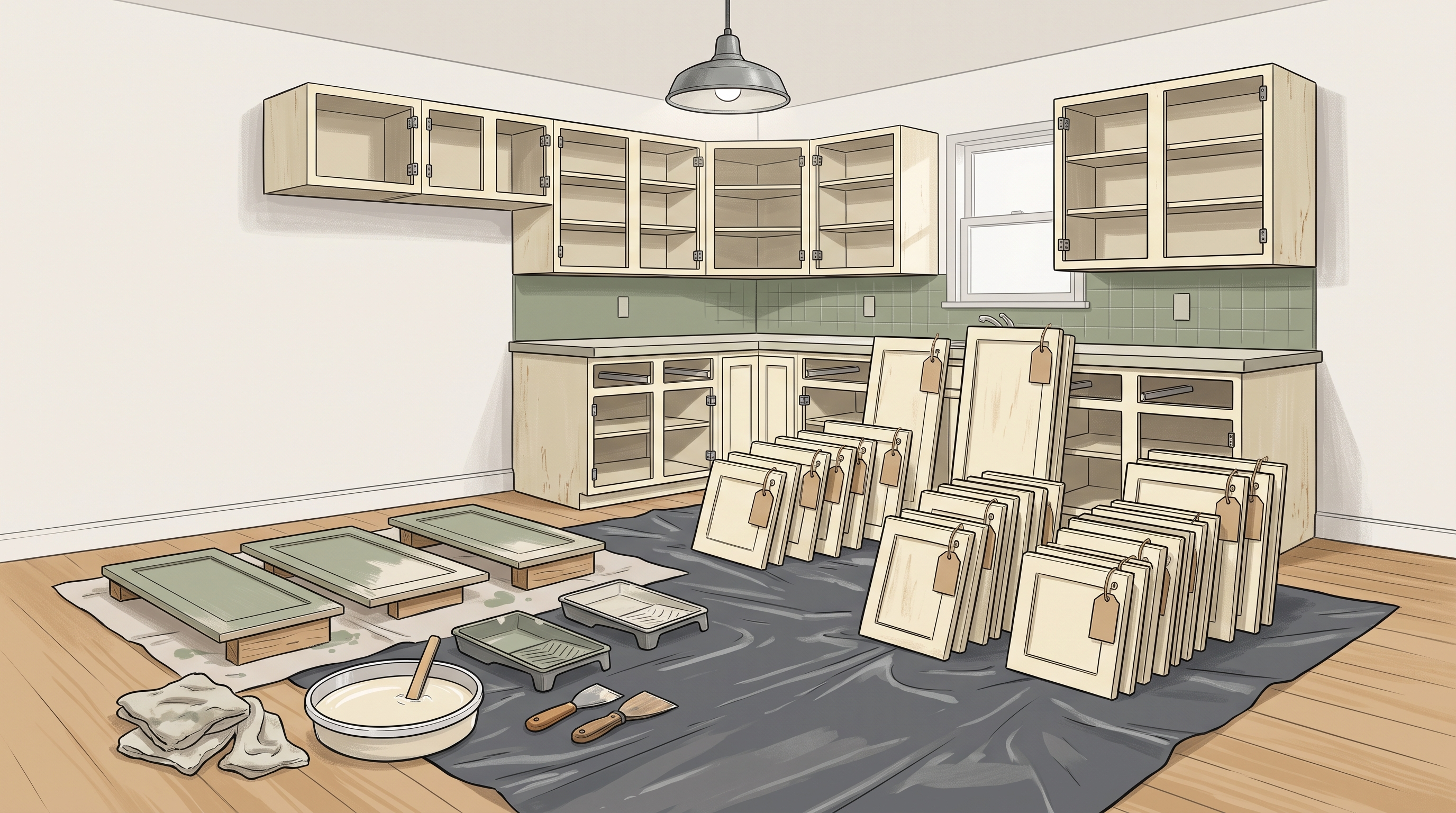
If the cabinet boxes, doors and drawers are serviceable and the layout already works, painting focuses on the visible surfaces rather than rebuilding the kitchen. That can preserve plumbing, counters, backsplash and storage relationships that the homeowner wants to keep. Whether adjacent finishes can remain untouched must be confirmed during an assessment.
Colour and sheen can change without changing every component
An opaque coating can alter the visual relationship between cupboards, walls, counters and flooring. The benefit is design flexibility within the existing door style and construction. A colour sample should be reviewed in the kitchen’s actual daylight and artificial lighting before the final selection.
The project scope may be narrower than replacement
Painting usually involves fewer replacement components than a full new-cabinet project. A narrower scope can mean less removal and fewer design decisions, but the actual disruption and total price depend on preparation, repairs, access, coating, hardware, off-site work and cure requirements. Compare written quotes rather than assuming a fixed saving or timeline.
Serviceable materials can remain in use
Keeping usable cabinet components can avoid replacing them solely for a colour change. That is a practical reuse benefit, not proof that painting has the lowest environmental impact in every project. Product, transport, energy, lifespan and future maintenance also affect the complete comparison.
The decision can leave budget for other priorities
When painting is the appropriate scope, a homeowner may choose to direct resources toward lighting, counters, organization or repairs. This is a planning option, not a promise of savings. Only like-for-like quotes can show the actual difference.
When cupboard painting is a reasonable option
Painting is most likely to fit when the cabinet layout works, boxes are stable, doors and drawers operate properly, surfaces can accept the specified coating system, and the desired change is mainly colour or sheen. A qualified assessment should still identify the substrate and existing finish.
Check every door, drawer front, exposed box side, toe kick and trim. Look for swelling, delamination, peeling, grease contamination, failed joints, loose hinges, water damage, deep impact damage and unstable previous coatings. A small problem may be repairable, while widespread failure may change the recommended scope.
Ask what result the existing door profile allows. Paint can change colour; it does not turn a raised-panel door into a flat slab or create a new layout. If the homeowner wants different door construction but sound boxes, refacing may deserve comparison. If storage, structure or layout is the main issue, replacement or carpentry may be more appropriate.
What cupboard painting cannot fix
- It cannot correct a kitchen layout that no longer works.
- It cannot make swollen, crumbling or delaminating material structurally sound.
- It cannot erase every grain pattern, joint line or existing surface characteristic unless the approved specification and preparation support that result.
- It cannot guarantee resistance to heat, moisture, grease, impact or cleaning without reference to the exact coating system and maintenance instructions.
- It cannot provide a universal “factory finish” or lifespan.
- It cannot make hinges, slides, counters or backsplash new unless those items are separately included.
- It cannot remove the need for cure time and careful early use.
The best explainer includes these limits because they protect the decision. A homeowner who expects a different door style, new storage or repair of failing substrate may be disappointed even if the coating itself is applied well.
How a professional cupboard-painting process works
- Inspect and define the substrate. Identify door and box materials, the existing finish, damage, contamination and repairs.
- Document the scope. List doors, drawer fronts, exposed frames, panels, trim, islands, interiors, hardware and adjacent protection. “Paint the kitchen” is too vague.
- Select a compatible system. The cleaner, abrasive method, repair materials, primer and coating should work together and follow current manufacturer instructions.
- Create a sample. Approve colour, sheen and an acceptable surface example before full production where practical.
- Remove and label components. Track each door, drawer front and hardware position so reassembly is controlled.
- Clean, prepare and repair. Preparation depends on substrate and condition. Paint should not be used to hide unresolved failure.
- Prime and coat. Apply within the selected product’s conditions, spread rate and recoat requirements.
- Cure and reinstall. Dry-to-touch, recoat and cure are different milestones. Follow the exact label or technical data sheet.
- Review and hand off. Inspect the agreed scope and provide product, cure, cleaning and maintenance information.
Paint2decor publishes a general process page and a Toronto cabinet painting process guide. Use them as inquiry context, then ask which exact steps, products and locations apply to the quoted kitchen.
Health Canada lists paint and varnish among potential indoor sources of volatile organic compounds and recommends ventilation and following product directions. Its VOC guidance supports asking about product labels, ventilation and household sensitivities. Environment and Climate Change Canada also describes federal VOC limits for architectural coating categories. Neither source establishes the product used on a particular job.
Painting, refacing and replacement solve different problems
| Option | Strongest fit | What remains | Key question |
|---|---|---|---|
| Paint or refinish | Sound cabinets; layout and door style are acceptable; colour or sheen is the main change | Existing boxes, layout and door profile | Can the substrate accept the proposed system? |
| Reface | Sound boxes; a different door or exterior surface is wanted | Most cabinet boxes and layout | Which doors, veneers, panels and hardware are replaced? |
| Replace | Layout, storage, structure or widespread condition needs major change | Little or none of the existing cabinetry, depending on scope | What connected work is triggered? |
Paint2decor also publishes a spraying-versus-refacing guide. For a decision, ask for separate scopes and assumptions. A low painting quote that omits repairs or interior surfaces is not comparable with a refacing quote that includes new doors and hardware.
Questions to ask before accepting a quote
- What are the boxes, doors and existing finish made from?
- Which condition issues could make painting unsuitable?
- Which exact surfaces, edges, backs and interiors are included?
- Which repairs and hardware work are included or excluded?
- What preparation, primer and coating system is proposed?
- Where will doors and drawer fronts be prepared and coated?
- How are the kitchen, counters, floors, appliances and ventilation protected?
- Which product conditions control application, recoat, cure and cleaning?
- What access will the household have during each stage?
- How are change orders, touch-ups, inspection and warranty terms documented?
Request a written scope with quantities. Count doors and drawer fronts, but also identify exposed end panels, crown, light valance, islands, open shelves and filler strips. These details often explain why two quotes differ.
Common mistakes when judging the benefits
- Assuming every cupboard material can be painted successfully.
- Choosing by colour alone without checking existing damage and adhesion.
- Comparing price without matching surfaces, repairs, hardware and product scope.
- Believing a spray method eliminates the need for cleaning and preparation.
- Using a generic cure time instead of the selected product’s instructions.
- Returning doors to normal use before the coating reaches the required stage.
- Expecting paint to change a dated or unsuitable door profile.
- Calling painting “maintenance-free” or assigning a universal lifespan.
- Skipping a colour and sheen sample in the kitchen lighting.
- Treating a website photo as proof of the result possible on a different substrate.
Frequently asked questions
Is painting always cheaper than replacing cupboards?
No. The scope is often narrower, but condition, preparation, repairs, coating, hardware and connected work affect price. Compare current written quotes for the same requirements.
How long will painted kitchen cupboards last?
There is no responsible universal number. Substrate, preparation, coating system, application, cure, cleaning, heat, moisture and daily wear all matter. Ask for product-specific maintenance and written warranty terms.
Can laminate or previously painted cupboards be painted?
Sometimes, but the exact surface and condition must be assessed. Compatibility and adhesion should not be assumed from a generic material name.
Will painting hide wood grain or damage?
An opaque coating changes colour, but the degree to which texture or grain remains depends on the substrate and specification. Damage requires appropriate repair; paint alone is not structural repair.
Request a condition-based cupboard assessment
Use Paint2decor’s contact page to request an assessment of the cabinet material, existing finish, damage, desired colour and included surfaces. Ask for a written painting scope and, where relevant, a comparable refacing option. Confirm product, preparation, schedule, price and warranty before deciding which benefit applies to your kitchen.