


Questions to ask before choosing kitchen cabinet painting York, ON
Hiring a contractor for kitchen cabinet painting in York, ON is a high‑impact decision. The right preparation, finish and contract terms determine how long the job lasts, how much disruption you face and whether the result looks professionally done. This article gives a focused checklist of specific questions and common mistakes to avoid so you can vet contractors with confidence.
Credentials, local reputation and references you must check
Start by verifying that the company serves York and the Greater Toronto Area and that it has verifiable local proof: a portfolio of nearby projects, client references and any industry recognition. Local awards and review sites provide additional context, but you should still ask for direct references from projects similar to yours.
Questions to ask
- Do you have recent project photos from Toronto or the GTA I can see?
- Can you provide two local references with a similar scope I can call or email?
- Are you listed on review sites or awards pages I can check?
- Where is your workshop or office located and can you provide proof of that address?
Why this matters
Local projects are easier to verify in person and to inspect for how finishes hold up in Toronto’s climate. A contractor unwilling to share references, portfolio photos or a local address introduces unnecessary risk.
Shop prep versus onsite spraying: which method should you expect
There are two common workflows. One removes doors and drawer fronts and paints them in a controlled shop environment, the other sprays and finishes cabinetry onsite. Many experienced professionals favour shop‑based finishing for doors and drawer fronts because a controlled environment reduces dust, ensures even coating and improves cure consistency. Industry guidance notes that shop removal and offsite finishing is a standard option that reduces onsite overspray and household disruption.
Questions to ask
- Will you remove doors and drawer fronts and paint them in a shop, or will you spray onsite?
- If you use a shop, where is it located and how are parts protected in transit?
- How do you protect cabinet interiors, appliances and countertops if you spray onsite?
- How are edges, dovetails and cabinet interiors finished when doors are painted offsite?
Pros and cons at a glance
- Shop prep: better containment, controlled environment and higher consistency, but requires transporting parts offsite and temporary loss of cabinet access.
- Onsite spraying: less handling of parts and sometimes faster, but higher risk of overspray, odour and variable conditions that can affect finish quality.
Finish types, durability and cure time you should confirm
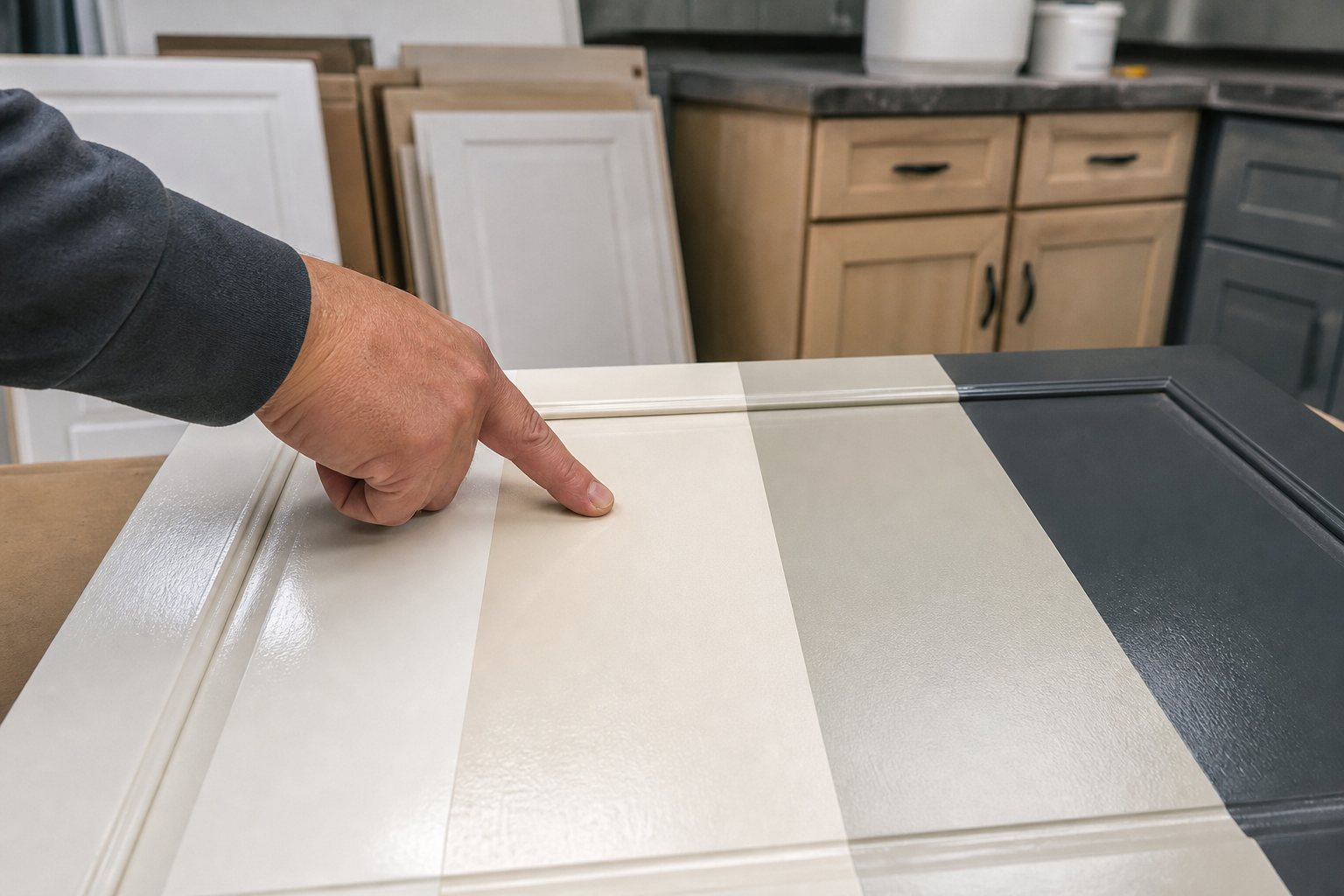
Not all coatings perform the same. Professional contractors often use manufacturer grade systems rather than consumer wall paint. Water‑based lacquer is a common professional option because it balances durability, appearance and lower long‑term yellowing, but contractors should name the exact product and provide manufacturer cure times and maintenance guidance.
Questions to ask
- Which exact brand and product will you use for primer, sealer and topcoat?
- How many coats do you apply and do you use a primer or adhesion coat?
- What is the recommended cure time before I can use cabinets and clean them fully?
- How will the finish resist scratches, stains and heat from appliances?
What to expect about odour and kitchen use
Ask for manufacturer cure times and whether windows, fans or temporary relocation are recommended. Shop‑based finishing typically produces less onsite odour. Request written care instructions and avoid using solvents or abrasive cleaners during the cure period to prevent premature damage.
Warranties, guarantees and insurance: questions that expose risky contractors
Every professional project should include a written scope, a warranty or guarantee of workmanship and proof of insurance. Clear contract terms protect you if issues appear after completion and give you a defined remedy path.
Questions to ask
- Do you provide a written contract and a written warranty, and what does the warranty cover?
- Can you provide proof of liability insurance and workers compensation for your crew?
- How do you handle touch‑ups, colour mismatch or finish failures after completion?
- Will the final agreement list materials, number of coats, whether boxes are painted, and hardware reinstallation?
Warning signs
Refusal to write a scope, vague warranty terms or inability to show insurance documents during the estimate are legitimate reasons to pause. A contractor who demands a large upfront payment without milestones or refuses to commit remedy steps in writing is higher risk.
Project workflow and disruption: what to expect and what to demand in writing
Knowing how long prep and painting take and what parts of the job affect daily life helps you plan. If parts go to a shop you will typically be without doors and some storage for a few days. If work is onsite you will be managing containment and dust control on site. A reliable contractor will give a day‑by‑day plan and a clear list of homeowner responsibilities.
Questions to ask
- How long will I be without cabinet doors and drawers if parts go to a shop?
- Which days will you need clear counters and what clean‑up will you leave after each day?
- Will you remove and reinstall hardware, and is that included in the estimate?
- What steps do you take to protect floors, appliances and fixtures during onsite work?
Pricing, written quotes and change orders: what the estimate must include

Compare bids by looking for consistent detail. A useful estimate itemizes scope: number of doors, drawer fronts and boxes to be painted, primer and topcoat details, hardware handling, clean‑up and any travel or disposal fees. Ask how change orders are handled if hidden damage appears or you request a mid‑project colour change.
Questions to ask
- Can you provide an itemized written quote listing exactly what is included and excluded?
- How are extras handled if hidden damage is found or I request a colour change mid‑project?
- Do you accept staged payments and what are the payment milestones?
Mistakes and red flags to avoid: a quick decision checklist
- No written contract or warranty, or refusal to show insurance documents.
- Unitemized quote that does not clarify whether cabinet boxes, hardware or hinges are included.
- Contractor cannot name the finish product or give cure time and care instructions.
- Refusal to provide local references, portfolio photos or a shop address for offsite work.
- Pressure to pay the full amount up front or refusal to accept staged payments tied to milestones.
- Unrealistic timelines or promises that sound too fast for thorough prep and curing.
How to request a free local quote and a short local credibility note
If you want a local specialist who serves York and the GTA, ask for a free estimate that includes a site visit and an itemized proposal. Prepare a short photoset showing your existing cabinets, note the number of doors and drawer fronts and list any known damage or desired finish. That allows contractors to provide more accurate, comparable bids.
Paint2decor INC focuses on kitchen and bathroom cabinetry refinishing in the GTA and offers a free quote and local project examples on its site. Use the checklist above when you contact any contractor so you can compare quotes on equal terms.
Frequently asked questions
Will painting my kitchen cabinets create strong odour or require me to leave the house?
Odour depends on the products and whether work is done onsite. Shop‑based painting of doors reduces onsite odour significantly. A contractor should list the product and provide ventilation or occupancy guidance in writing so you can plan.
How long will the new finish last and what maintenance is required?
Longevity varies with finish type, surface prep and daily wear. Professional water‑based lacquer systems are durable when applied correctly, but the contractor should provide care instructions and the expected warranty period for touchups and defects.
Can a contractor match my existing finish or successfully refinish maple cabinets?
Experienced refinishers can often match colours and work with maple, but ask for a mock‑up or sample panel. Request examples of similar wood species and finishes from the contractor’s portfolio.
What happens if the contractor finds water damage or structural issues under the finish?
A written estimate should state how hidden damage is handled. Expect an immediate notification, photos of the damage, and a written change order with cost and schedule adjustments before the contractor continues work.
How do I choose between refinishing, refacing and full replacement for my budget?
Refinishing or respraying updates appearance and is generally less disruptive and costly than replacement. Refacing replaces visible surfaces and can be a middle option. Ask contractors for a side‑by‑side comparison for your kitchen that includes lifecycle, disruption and high‑level cost ranges before you decide.
Key takeaway: insist on a written scope, named finishes and a local portfolio before you pay. A short checklist of the questions above will quickly separate professional contractors from risky offers and help you get a durable, low‑disruption result for kitchen cabinet painting in York, ON.
Final step: request a free, itemized quote and an on‑site visit to confirm measurements and find any hidden damage before work begins. To see local project examples and request a quote, visit the Paint2decor INC blogs page.