
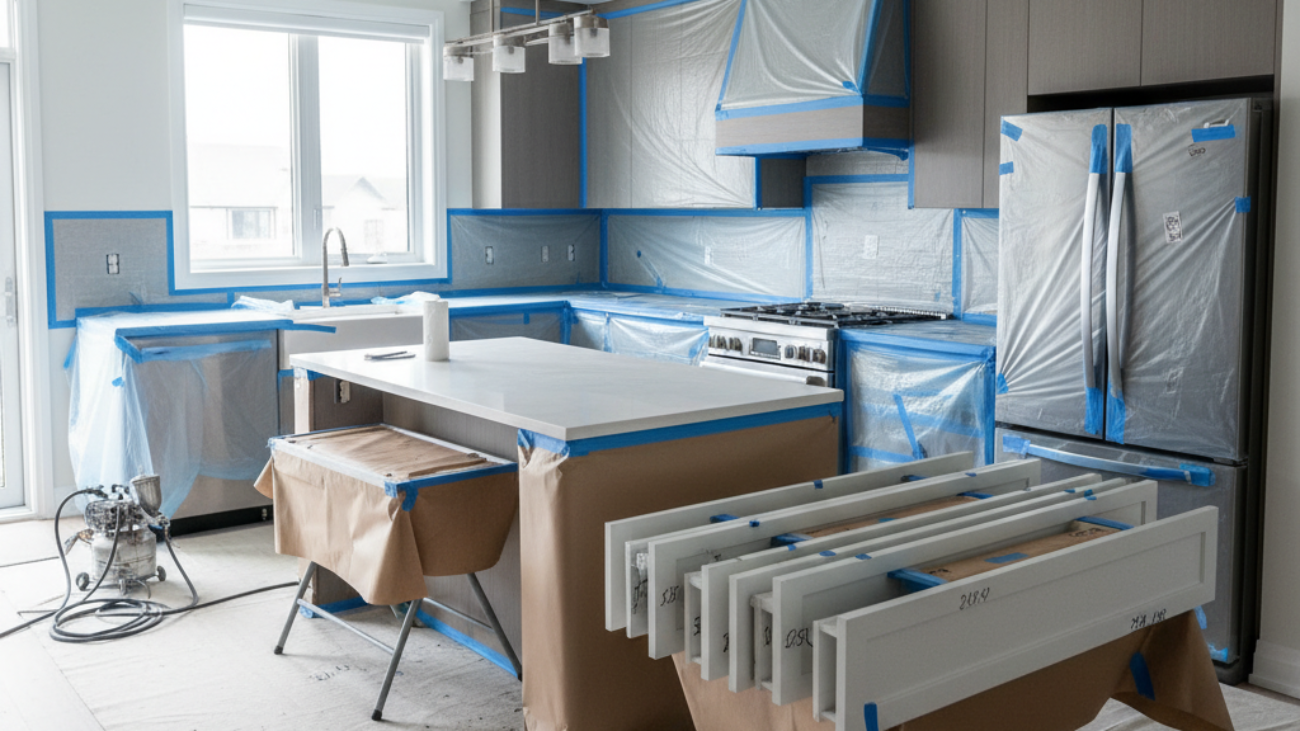
Kitchen cabinet refinishing service is the professional prep, repair, and spray finishing of your existing cabinets to deliver a like-new look without replacing boxes. From our York location at 2710 St Clair Ave W, Paint2decor INC helps Toronto homeowners refresh color, protect wood, and modernize style with minimal disruption and strong, durable coatings.
By Paint2decor INC • Last updated: 2026-06-07
Start Here: Hook & Table of Contents
If your cabinets are structurally sound but look tired, refinishing restores beauty fast. This complete guide explains what refinishing is, how pros do it, finish options, durability best practices, and when to choose refinishing, painting, or refacing—plus local York/Toronto tips and a simple next step.
Here’s what you’ll find in this guide and how to use it quickly.
- What kitchen cabinet refinishing service includes
- Why refinishing matters for Toronto homes
- How our pro process works, step by step
- Methods, finishes, and sheen options explained
- Best practices for a long-lasting finish
- Tools and materials professionals rely on
- Local case studies and results
- Refinish vs. reface vs. replace comparison
- York/Toronto service specifics and scheduling tips
- FAQs and clear next steps
What Is Kitchen Cabinet Refinishing Service?
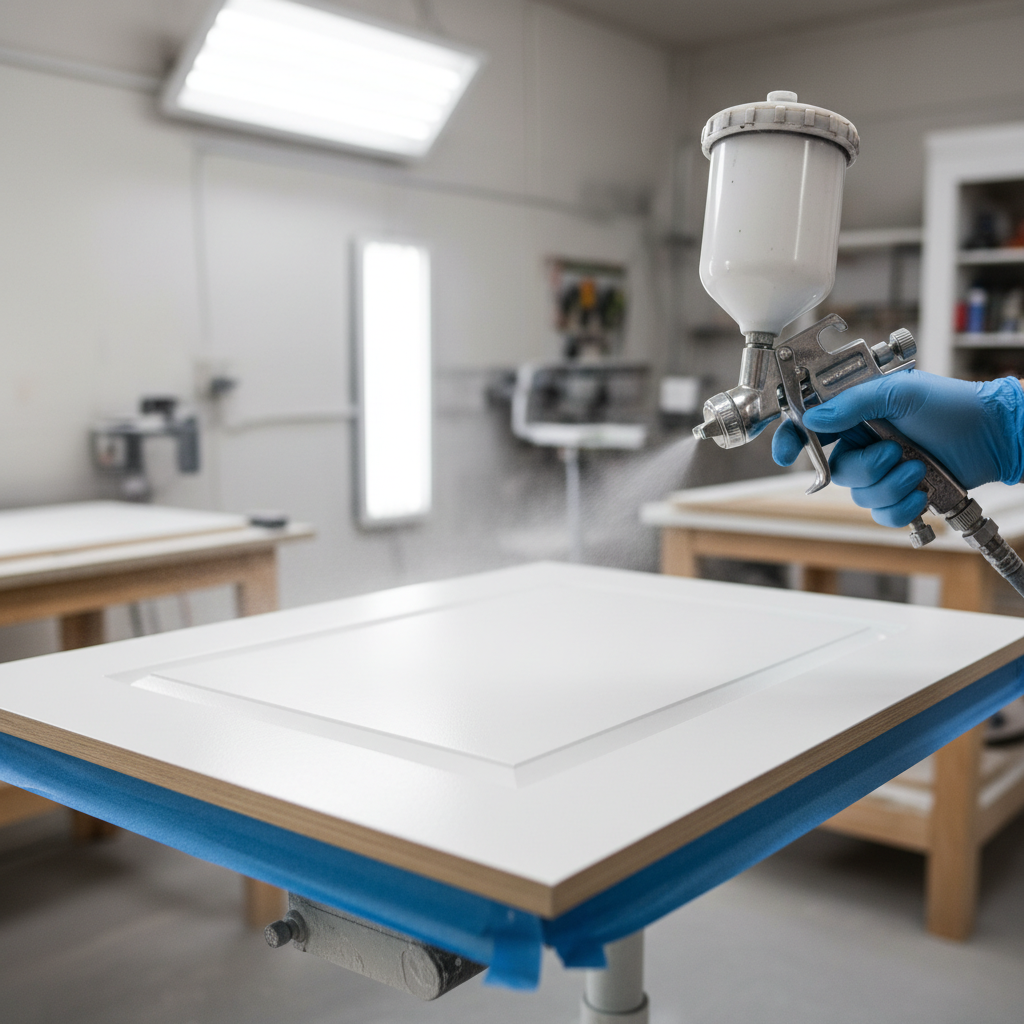
Kitchen cabinet refinishing service is a professional process that deep-cleans, repairs, primes, and spray-finishes existing cabinet doors and boxes. The goal is a factory-grade look and feel without replacing cabinetry, often using HVLP systems and durable lacquers or 2K polyurethanes for a hard-wearing, uniform finish.
Refinishing focuses on surfaces you see and touch every day—doors, drawer fronts, face frames, and exposed panels—while keeping your cabinet boxes in place. It’s ideal when wood is sound, layouts work, and you want modern color with a smooth, consistent sheen.
- Core tasks: de-greasing, sanding/scuffing, repair or filler work, bonding primer, multiple fine spray coats, and careful reassembly.
- Pro equipment: HVLP spray guns, fine-finish tips, HEPA sanding, and dust control enclosures for a clean jobsite.
- Finish systems: waterborne acrylics, conversion varnish, and 2K polyurethane—chosen for hardness, chemical resistance, and leveling.
- Typical film build: 1 primer + 2 topcoats; some woods or colors may warrant an additional coat.
- Usability timeline: doors are dry to handle within hours, light use in 24–48 hours, and full cure often reached in 7–14 days.
You might be wondering whether basic “paint only” is the same as refinishing. It isn’t. Refinishing includes substrate prep, bonding primers, and pro spray application—key steps that create the smooth, durable “factory” look homeowners want.
Related reading on our site: explore our kitchen cabinet painting service and see how it complements true refinishing for color updates and sheen control.
Why Refinishing Matters for Toronto Homes
Refinishing preserves solid cabinet boxes, reduces disruption, and delivers a modern look faster than a full renovation. For Toronto homes, it’s practical during winter, works in small condos, and aligns with sustainability goals by keeping materials in use rather than landfilled.
Toronto kitchens see heavy daily use. A properly refinished surface resists moisture, cleans easily, and handles bumps from cookware. When boxes are in good condition, refinishing lets you keep functional storage while transforming appearance in days, not weeks.
- Less disruption: most households maintain kitchen access during the project; off-site spraying of doors further minimizes downtime.
- Design agility: match trending colors (soft whites, warm grays, deep blues/greens) and hardware updates for an instant refresh.
- Sustainability: reuse quality hardwood or MDF; divert pounds of material from landfill by keeping boxes in place.
- Seasonal fit: indoor-friendly coatings and controlled ventilation mean winter projects remain on schedule.
- Condo-friendly: surface-mounted spray tents and careful masking protect adjacent areas; noise and odors are managed.
In our experience working across York and the broader GTA, homeowners report that a refreshed finish changes how the space feels every single day—brighter, cleaner, and more inviting without reconfiguring cabinetry or waiting on new millwork lead times.
For deeper color or finish exploration, check our Benjamin Moore cabinet paint guide tailored to York homes and lighting conditions.
How the Service Works: Step-by-Step
A professional refinishing workflow includes assessment, color selection, thorough prep, adhesion priming, fine-finish spray coats, and reassembly. Expect labeled doors, dust control, and quality checks at each stage so the final result looks factory-new and cures to a durable, easy-clean surface.
- Assessment & plan (60–90 minutes): confirm cabinet condition, identify wood species (oak, maple, MDF), and note repairs or seam caulking.
- Color & sheen selection (30–45 minutes): choose a neutral, timeless palette; common sheens are satin or matte for low glare.
- Site protection (1–2 hours): mask floors, counters, backsplashes, and vents; set up zipper-door containment and HEPA filtration.
- Door removal & labeling (45–90 minutes): catalog hardware; bag and tag for error-free reassembly.
- Deep clean & de-gloss (2–4 hours): remove oils and cooking films; scuff-sand for mechanical tooth.
- Repairs (variable): fill dings, tighten hinges, address minor veneer lifts; sand smooth to P220–P320 depending on substrate.
- Primer application: spray high-adhesion primer; spot prime knots/tannins on oak or pine with stain-blocking chemistry.
- Topcoats (2–3 passes): apply thin, even coats using HVLP; maintain 65–75°F and 40–60% RH for optimal leveling.
- Hardware & reassembly: reinstall with care; adjust reveals and alignment.
- Final QA & homeowner walk-through: confirm sheen uniformity and touch-feel smoothness; share care instructions for the first 14 days.
Ready to see this process in your space? Our kitchen cabinet respraying service page shows how pro spray methods achieve that crisp, factory look.
Methods, Finishes, and Sheen Options
Pros choose between brush/roll and spray methods; for a factory look, HVLP spraying wins on smoothness and consistency. Finish chemistries include waterborne acrylics, conversion varnish, and 2K polyurethane—matched to durability needs. Common sheens are matte or satin for modern, low-glare kitchens.
Here’s how methods and finishes compare in real kitchens.
- Application methods:
- Brush/Roll: practical for small touch-ups; may show texture (“orange peel”) on large flat doors.
- HVLP Spray: fine atomization for ultra-smooth films and tight edges; excellent controlling overspray.
- Airless/AAA: high production rates; used with care on detail profiles to avoid sags.
- Finish systems:
- Waterborne Acrylic: low odor, good hardness, fast dry; strong choice for residential interiors.
- Conversion Varnish: very tough; requires controlled conditions and trained applicators.
- 2K Polyurethane: premium hardness and chemical resistance; superb for busy family kitchens.
- Sheens: matte hides minor imperfections; satin balances cleanability and warmth; semi-gloss is brightest but shows defects faster.
- Color direction: warm whites and light grays lift smaller York kitchens; navy/evergreen islands add depth; two-tone uppers/lowers stay popular.
For method detail and spray setup choices, our kitchen respraying complete guide breaks down equipment selection and spray technique.
Best Practices for a Durable Finish
Durability starts with clean substrates, proper sanding, a bonding primer, and controlled spray technique. Maintain stable temperature and humidity, apply thin coats, and allow adequate cure. Use cabinet-safe cleaners and avoid heavy impacts during the first two weeks while the finish hardens.
We follow a repeatable quality framework so your finish performs year after year.
- Surface science: kitchens accumulate oils; de-greasing before sanding prevents adhesion failures later.
- Profile-sensitive sanding: stay within P180–P320; too coarse leaves scratches, too fine can hurt primer bond.
- Bonding primers: choose adhesion promoters for laminate/MDF; spot-block tannins on oak.
- Environmental control: target 65–75°F and 40–60% RH; temperature swings cause dry-spray or sags.
- Coat strategy: thin, even passes; check mil build and flash times between coats.
- Early-life care: gentle use during the first 7–14 days; avoid harsh cleaners or scrubbing pads.
Want a color change without a full refinish? See our kitchen cupboard repaint guide to understand when repainting alone is the right move.
Tools and Resources Professionals Use
Professional refinishers rely on HVLP sprayers, fine-finish tips, HEPA vacuums, and pro-grade primers/topcoats. They also use color-matching tools, anti-static tack cloths, and temporary spray enclosures that protect your home while creating a level, dust-free film.
Great results come from disciplined setups and the right kit.
- Spray systems: turbine or compressor-driven HVLP with 1.3–1.5 mm needles for fine atomization.
- Prep tools: HEPA vacs, random-orbit sanders, sanding sponges for profiles, and solvent-compatible wipes.
- Protection: zip-wall barriers, masking paper/plastic, rosin paper for floors, and filtered exhaust paths.
- Safety: respirators rated for paint mists and appropriate gloves/coveralls.
- Materials: high-adhesion primers, stain blockers, and durable topcoats engineered for cabinetry.
For a spray-first perspective, explore our kitchen cabinet spraying overview for Toronto homeowners comparing finishing methods.
Case Studies and Local Examples
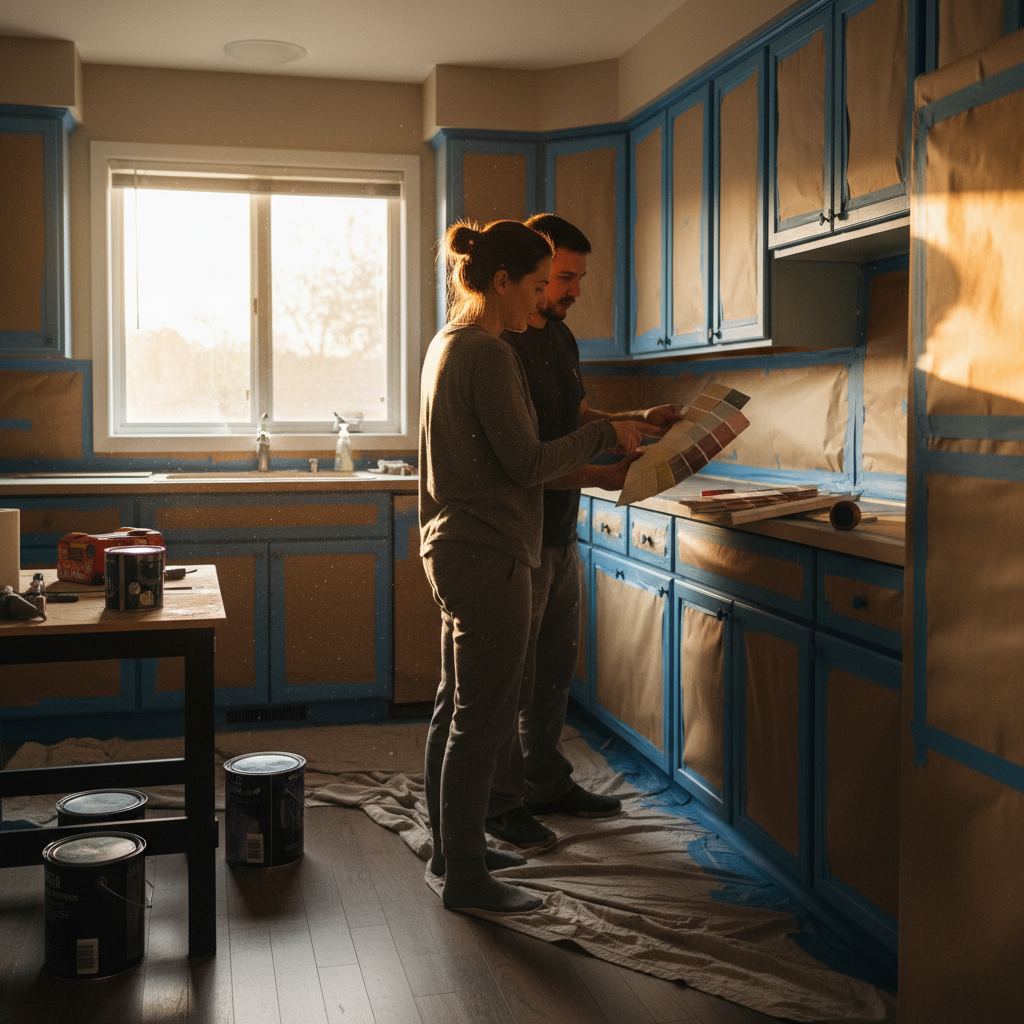
Across York and Toronto, refinishing projects transform kitchens in days, not weeks. By keeping boxes, we reduce waste and focus investment on visible surfaces. Expect labeled doors, off-site spraying, and a clean home throughout—ending with a uniform sheen, smooth touch, and hardware reinstalled to precise alignment.
Detached York home near Smythe Park: We refinished a maple kitchen to satin warm white. Prep addressed minor door dings and two veneer lifts. The result brightened the room and paired well with brushed brass pulls. Family resumed regular use after 48 hours with full cure by week two.
Toronto condo galley kitchen: With limited space, we created a compact spray tent and performed door spraying off-site. A deep green island + soft white uppers delivered contrast without crowding. The homeowner noted easier cleaning and a quieter, calmer feel during evening cooking.
York semi-detached: Oak grain received grain-filling primer and two topcoats in satin. Strategic lighting updates made the finish read “factory.” The homeowner loved that day-to-day cooking continued with only short pauses for masking and ventilation checks.
For more examples of spray technique in action, compare methods in our professional kitchen cabinet painting guide.
Refinish vs. Reface vs. Replace
Refinishing keeps your existing layout and cabinet boxes, updating only surfaces and color. Refacing swaps door/drawer fronts and applies new skins to boxes. Replacement removes everything for new cabinetry. Choose based on cabinet condition, desired style change, and tolerance for disruption.
| Option | What Changes | Disruption | Timeline (typical) | Customization Depth |
|---|---|---|---|---|
| Refinish | Color/finish on existing boxes/doors | Low | Several days to ~2 weeks | High (colors, sheens, hardware) |
| Reface | New doors/drawers + box skins | Medium | ~1–3 weeks | Very high (style + finish) |
| Replace | All-new cabinetry/layout | High | Several weeks+ | Complete redesign |
If you’re weighing surface upgrades against a full door swap, our cabinet respraying service page explains how a pro-refinish can meet many style goals without new doors.
Local Service Overview for York and Toronto
Paint2decor INC serves York and the greater Toronto area from 2710 St Clair Ave W. We coordinate building access, ventilation, and scheduling with your routine so work proceeds cleanly and on time. Expect labeled parts, dust control, and clear communication tailored to local homes.
Working locally means we plan for details that matter in the neighborhood. We stage projects to maintain kitchen access, manage condo logistics, and coordinate with your availability for a smooth experience from start to finish.
Local considerations for York
- Plan access and parking when you’re near Jane St at St Clair Ave West; a quick curbside handoff speeds door transport for off-site spraying.
- Winter projects are common; steady indoor temps help coatings level and cure. We target 65–75°F and avoid rapid ventilation swings.
- Library quiet-hours matter for many families; if you use the Toronto Public Library – Daniel G. Hill Branch, we can align on-site steps with your schedule.
Summary
Refinishing restores your kitchen’s beauty without new boxes. It’s cleaner, faster, and highly customizable—perfect for York and Toronto homes with solid cabinets. Use this section to recap process, finishes, and the decision points between refinishing, painting, and refacing.
- What it is: professional prep, primer, and spray topcoats on existing cabinetry.
- Why it works: less disruption, modern color, and durable, easy-clean films.
- How it’s done: labeled doors, dust control, HVLP spray, precise reassembly.
- Decision points: choose refinishing when boxes are sound and layout works.
For homeowners comparing options today, a quick skim of the sections above will point you to the process, methods, and local examples most relevant to your kitchen.
FAQ: Kitchen Cabinet Refinishing Service
These concise answers address the questions Toronto homeowners ask most about cabinet refinishing. Each response is built from our field experience in York and across the GTA and is designed for quick scanning and voice search results.
How long does a typical refinishing project take?
Most kitchens wrap in several days to about two weeks, depending on size, repairs, and finish system. Doors are usually sprayed off-site for speed and quality. You’ll have light use within 24–48 hours and full cure in roughly 7–14 days.
Will refinishing hide wood grain on oak cabinets?
Refinishing minimizes grain with high-build primers and careful sanding, but deep oak grain can still telegraph slightly. If a completely flat look is your goal, grain filling and additional coats help, or consider refacing to change the door style outright.
How durable are modern cabinet finishes?
Modern waterborne acrylics and 2K polyurethanes create hard, washable films that resist everyday moisture and stains. Proper prep and controlled application are critical. With normal care, finishes maintain their look for years of daily use.
What’s the difference between repainting and refinishing?
Repainting focuses on applying new color, often with basic prep. Refinishing is a full professional process—deep cleaning, repairs, adhesion priming, and fine-spray topcoats—aimed at a factory-grade look and improved durability.
Can I keep using my kitchen during the project?
Yes. We stage work so you retain access to essentials. Doors are labeled and removed for off-site spraying, and on-site areas are masked with dust control barriers. We coordinate daily milestones to reduce downtime.
Key Takeaways and Next Steps
If your cabinets are structurally sound, refinishing is the fastest path to a modern, durable kitchen. Choose pro-grade primers and topcoats, insist on dust control, and plan a simple hardware refresh. For York and Toronto homeowners, local scheduling and condo logistics are part of our daily workflow.
- Fast refresh: expect usable space in 24–48 hours with full cure by week two.
- Factory look: HVLP spray and bonding primers deliver ultra-smooth films.
- Local know-how: we coordinate building access, ventilation, and daily rhythms in York/Toronto.
- Easy next step: explore our bathroom cabinet repainting insights if you’re planning a whole-home update.
Soft CTA: Ready to refresh your kitchen? Visit our kitchen cabinet painting service page or send us a note through any service page linked above—our team at 2710 St Clair Ave W in York is happy to help.
Tools, References, and External Perspectives
Round out your research with perspective from outside sources. While we specialize in refinishing and respraying, these third-party reads can spark design ideas and help you compare surface updates with broader remodels before you decide your path.
For additional context on makeover ideas and broader renovation planning, you can scan practical checklists and before/after galleries from established renovation publishers. See balanced insights on door replacement versus surface updates, plus inspiration for tying cabinet color to new flooring or lighting plans. Helpful overviews include this comparison of replacement and refacing, a visual tour of renovation before-and-afters, and a primer on how finish updates coordinate with flooring refinishing techniques.
Explore these perspectives: a reader-friendly comparison of replacing vs. refacing, a visual set of kitchen renovation before-and-afters, and a primer on hardwood floor refinishing that can inform a coordinated finish plan for your space.
Conclusion
Refinishing gives you a clean, modern kitchen without removing boxes. With professional prep, bonding primers, and spray topcoats, the result looks factory-new and wears well. In York and across Toronto, it’s the smartest path when cabinets are solid and you want results in days, not weeks.
- Refinishing focuses on visible surfaces to deliver a like-new finish.
- HVLP spray, proper primers, and controlled conditions drive durability.
- Local staging preserves daily kitchen access and keeps projects tidy.
Final CTA: Book a friendly consultation in York. Our crew at Paint2decor INC will review your space, explain finish options, and outline a smooth plan from prep to reassembly.