
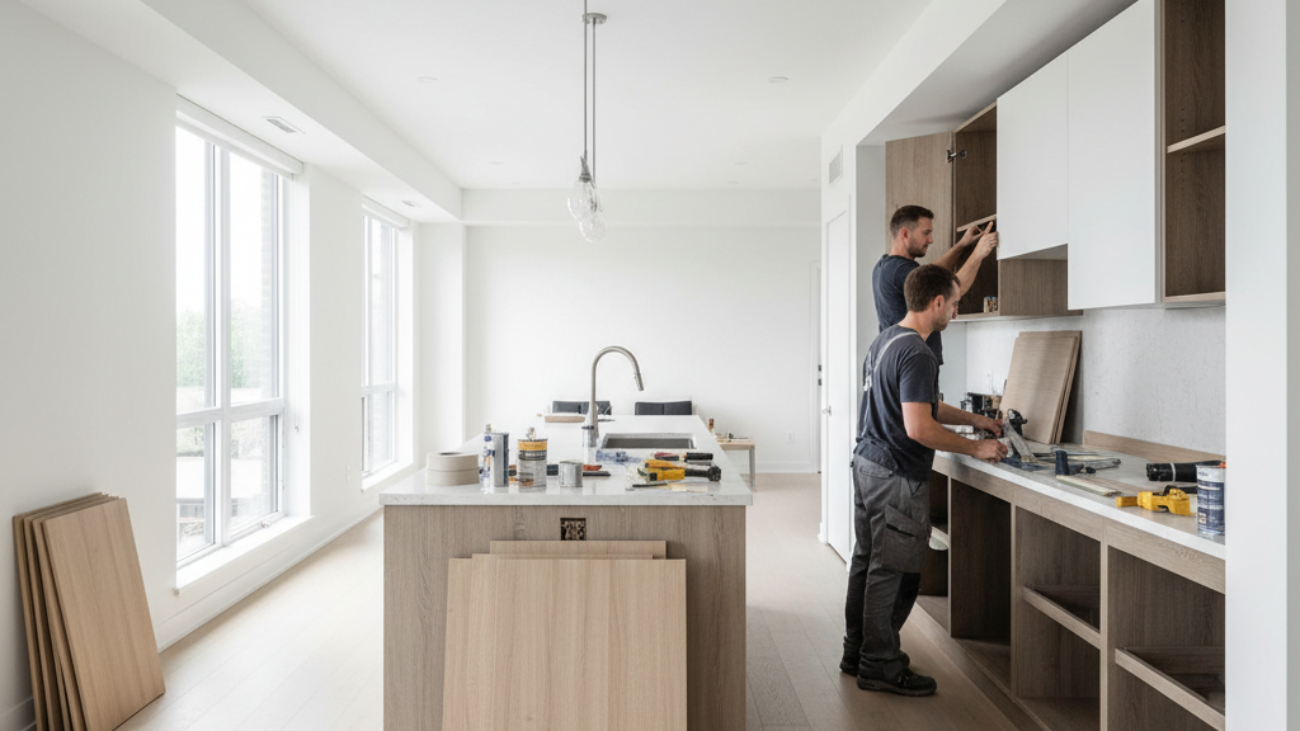
Laminate cabinet refacing cost is shaped by scope, materials, labor complexity, and finish choices—not a single flat rate. From our York shop at 2710 St Clair Ave W, Paint2decor INC helps Toronto homeowners plan smarter refacing projects that balance style, durability, and timeline. This guide explains the drivers, methods, and decisions that keep value high.
By Masoud Kakar — Paint2decor INC
Last updated: 2026-06-04
Quick Summary
Laminate cabinet refacing replaces doors and drawer fronts, veneers visible box surfaces, and updates hardware—without changing your layout. Investment depends on kitchen size, door style, laminate grade, box condition, and add-ons like panels or crown. Choosing the right material and installer protects durability, cleanability, and long-term value.
Here’s what you’ll learn and use right away:
- What laminate refacing is: Keep boxes, swap fronts, veneer faces, add hardware.
- Why it matters in Toronto: Faster, cleaner, and less disruptive than replacement.
- How it works: A reliable step-by-step from assessment to handoff.
- Materials: HPL, thermofoil, and melamine—trade-offs that affect wear.
- Best practices: Adhesion, humidity control, edge-banding, and quality checks.
- Pricing factors (no numbers): Scope, complexity, site conditions, and timeline.
- Local tips: Scheduling and home prep ideas tailored to York and Toronto.
Above-Fold Section: Your Laminate Refacing Game Plan
Laminate cabinet refacing focuses on replacing doors and drawer fronts, veneering visible box faces, and upgrading hardware. It delivers a fast, low-disruption makeover versus full replacement. Your investment depends on kitchen size, door style, laminate type, box condition, and extras like crown, panels, or glass inserts.
Think of refacing as a precision makeover that preserves the cabinet shell. Typical kitchens include 20–40 doors/drawers, which defines labor and material needs. Strong edge-banding (often 1–2 mm thick) and accurate reveals (commonly 1/8 inch) drive a crisp, furniture-grade look. Clear scopes prevent change orders and protect timelines.
- When refacing shines: Your layout works, boxes are sturdy, and you want a new style.
- When to pause: Soft or water-damaged boxes, failing fasteners, or major layout changes.
- Timeline reality: Site work is often measured in days, not weeks, when boxes are sound.
From our York base, we stage parts off-site, shield floors with ram board, and use dust control to keep daily life moving. Door counts, hinge type (35 mm cup is standard), and handle hole spacing all influence effort and accuracy.
What Is Laminate Cabinet Refacing?
Laminate cabinet refacing keeps your existing cabinet boxes while replacing doors and drawer fronts, veneering face frames and end panels, and installing new pulls and hinges. It refreshes style, improves durability, and avoids demolition—ideal when the layout works and boxes are structurally sound.
Refacing is different from painting. You’re not coating the old door; you’re replacing it and wrapping the parts you still see. That means clean, consistent grain direction and color, with edges protected by heat-fused or adhesive-bonded banding. Average edge lengths per kitchen can exceed 150–250 linear feet, so craftsmanship matters.
- Core actions: Measure, fabricate new fronts, veneer frames/panels, fit hardware, align.
- Performance levers: Hinge quality (soft-close counts), banding thickness, substrate prep.
- Design wins: Two-tone layouts, hidden hinges, and modern slab or shaker doors.
Where it overlaps other services: Our team also offers kitchen cabinet refinishing and spray painting for wood or MDF doors when repainting is strategic. If you’re comparing options, our cabinet refacing guide walks through decision points and timelines.
Why Laminate Refacing Matters for York and Toronto Homes
Laminate refacing modernizes style quickly, reduces waste, and limits kitchen downtime across York and the Toronto metro. It’s ideal for solid cabinet boxes and homeowners who want durable, wipeable finishes without a full renovation. Material and style choices shape durability, cleanability, and everyday satisfaction.
Toronto kitchens work hard. We see frequent meal prep, open-plan layouts, and steam-heavy cooking that stress finishes. Dense HPL and well-bonded banding resist edge chipping in traffic lanes. In many homes, a simple overlay increase (e.g., from 1/2 inch to 3/4 inch) tightens reveals and updates the look without changing box sizes.
- Less disruption: Many projects are completed in a handful of site days with minimal dust.
- Waste reduction: Keeping boxes in place diverts large volumes from disposal.
- Style upgrades: Matte whites, deep walnut looks, and soft greige remain popular.
Comfort note for families: We maintain 40–60% relative humidity when bonding veneers to stabilize adhesive open time and cure. Venting and zipper walls reduce airborne dust to keep nearby rooms usable.
How Laminate Refacing Works: Step-by-Step
The refacing process includes assessment, style selection, box prep, veneer application, door and drawer installation, hardware updates, and quality checks. A streamlined workflow minimizes disruption, maintains ventilation, and protects surfaces. With sound boxes, site work is generally faster than full replacements.
- Assessment and measuring: We review 32 mm system holes, hinge style, overlay targets, and any repairs. Door counts, corner angles, and panel needs are confirmed.
- Material selection: Choose HPL, thermofoil, or melamine. Request at least 2–3 physical samples and check them in morning and evening light.
- Off-site fabrication: New doors and drawer fronts are cut, edgebanded, and pre-drilled. Typical hinge cups are 35 mm; pull centers range from 96–160 mm and beyond.
- Site prep: Protect floors, mask appliances, and set up dust collection. Expect decibel levels similar to a shop vac during trimming.
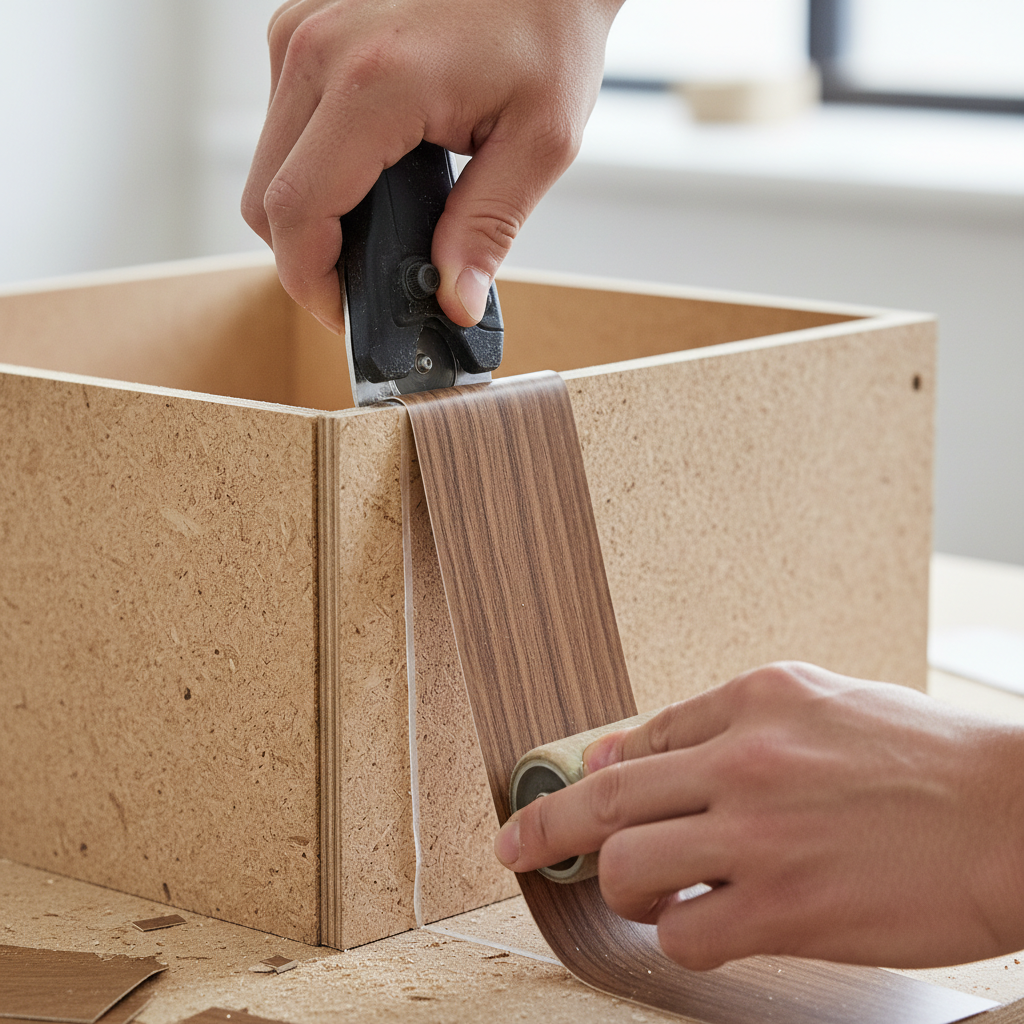
- Veneering: Clean, scuff, and bond veneer to face frames and end panels. We watch adhesive open time (often 5–10 minutes) and apply uniform pressure.
- Installation: Hang doors, set hinge cams for reveal consistency, and align drawer fronts to within a few millimeters across banks.
- Hardware and accessories: Fit soft-close hinges and slides; add panels, fillers, light valances, and crown as specified.
- Final checks and handoff: We verify gap uniformity, hardware torque, and edge integrity, then share care instructions.
Tip: Photograph your kitchen before demo and after install. It helps verify reveal targets and hardware layout, especially across 8–12 upper doors where symmetry is noticeable.
Types and Methods: HPL, Thermofoil, and Melamine
Common laminate refacing options include high-pressure laminate (HPL) for top durability, thermofoil for seamless profiles, and melamine for uniform finishes. The right choice balances scratch resistance, heat tolerance, edge treatments, and design goals like woodgrain realism or color consistency.
Every material family brings trade-offs. HPL resists abrasion and daily bumps; thermofoil molds over routed profiles; melamine offers consistency. Edge quality often determines feel—1 mm banding is sleek, 2 mm is extra robust. Door thickness typically ranges from 5/8–3/4 inch; thicker doors add weight that hinges must support.
- HPL (High-Pressure Laminate): Dense, scratch resistant, great for busy kitchens. Pair with 2 mm banding on lower cabinets for impact zones.
- Thermofoil: Smooth, wrapped look with continuous faces. Keep clearances around ovens and dishwashers to reduce prolonged heat exposure.
- Melamine: Reliable, uniform finish on slab doors. Works well in minimalist designs and laundry rooms.
Edge methods matter. We trim with dedicated edge tools to maintain a micro-chamfer and avoid over-flush edges that invite peeling. On long runs—8 feet or more—we break the veneer into logical segments behind panels to control expansion and keep seams discreet.
Best Practices for Long-Lasting Results
Long-lasting refacing comes from clean substrate prep, humidity control, accurate measurements, strong adhesives, and precise edge-banding. Upgraded hardware (soft-close hinges, full-extension slides) improves function and perceived quality. A gentle maintenance routine keeps alignment and finish looking new.
In our experience across dozens of GTA kitchens, a few habits make the difference between “nice” and “next-level” outcomes:
- Prep like paint: Degrease, scuff, and vacuum surfaces. Even new boxes carry fine dust that can reduce bond strength by measurable percentages.
- Mind the climate: Keep 40–60% RH; temperature swings alter adhesive open time and veneer pliability.
- Measure twice, hinge once: Shifts of 1–2 mm across banks stack up visually; calibrate hinge cams as you go.
- Protect edges: Use 2 mm banding on the lowers near dishwashers, trash pull-outs, and end panels facing traffic.
- Hardware torque: Recheck pulls and knobs after the first week; micro-settling is normal.
- Care plan: Non-abrasive cleaner, soft cloths, and quick wipe-ups near kettles and coffee makers.
Reality check: Corners and sink bases see the most wear. We often specify reinforced edges and moisture barriers in these zones, especially when daily dish loads push steam into faces.
Tools and Resources for Homeowners
Use a decision checklist, sample boards, and a clear scope of work to align expectations. Ask for written warranties, low-emission materials, and a defined protection plan for floors and counters. A documented schedule and daily cleanup standard keep kitchens usable during refacing.
What to request before you sign
- Scope document: Door count, overlay targets, banding thickness, accessories, and patch/repair notes.
- Three physical samples: Verify color under 3000K and 4000K light; check grain repeat and fingerprint resistance.
- Project calendar: Delivery windows, site days, and milestone approvals.
- Protection plan: Floor, counter, and appliance masking standards; dust and fume control.
- Warranty terms: Coverage for adhesion, edge integrity, hinge function, and finish stability.
Local considerations for York
- Busy corridors near Jane St at St Clair Ave West can tighten delivery windows. We schedule morning drops to keep site flow moving.
- Winter humidity dips and summer spikes in Toronto call for indoor RH control (target 40–60%) during veneer work and cure.
- If you use the Toronto Public Library – Daniel G. Hill Branch nearby, we can align quiet work (like hardware fitting) with your errands to reduce on-site overlap.
If you’re balancing refacing with painting or respraying, a short discovery call clarifies which route offers the best durability for your exact door substrate and daily use.
Pricing Factors for Laminate Cabinet Refacing in Toronto
Investment in laminate cabinet refacing is shaped by kitchen size, door style complexity, laminate grade, box repairs, hardware upgrades, panels, and moldings. Site conditions and timeline expectations also influence labor. Focusing on scope clarity prevents add-ons and keeps results aligned with your goals.
Let’s break down the drivers—without quoting prices:
- Kitchen size and count: 20–40+ fronts define labor, banding length, and hardware quantity.
- Door style complexity: Slab is faster; five-piece shaker needs more alignment and handling.
- Laminate grade: Thicker HPL and premium thermofoil improve durability and cleaning resistance.
- Repairs: Shim and fastener fixes restore box integrity; water-damaged bases may require replacement.
- Accessories: Crown, light valance, panels, and fillers extend time and materials.
- Hardware: Soft-close hinges and full-extension slides add measurable install time per opening.
- Site access: Condo elevators, narrow stairs, and parking rules affect crew flow and staging.
Comparing approaches helps. As one perspective from Altima Kitchens & Closets notes, refacing avoids major tear-out when boxes are sound, while replacement enables layout changes. If you’re exploring paint instead, Altima’s cabinet painting overview outlines prep and process differences that matter for daily wear.
How to Choose Between Refacing, Refinishing, and Replacement
Choose refacing if your layout works and boxes are solid, refinishing if doors are paintable and you like the style, and replacement if you need structural changes. Consider durability, disruption, design freedom, and long-term plans for the home.
Use this at-a-glance matrix to orient your decision:
| Approach | When It Fits | Disruption | Design Flexibility | Durability Potential |
|---|---|---|---|---|
| Laminate Refacing | Boxes are sturdy; you want a fast style reset | Low to Medium (days) | High for looks; low for layout | High with HPL + 2 mm edges |
| Refinishing (Paint) | Doors are paintable; you like existing profiles | Medium (days to a week) | Medium for color; low for profiles | Medium to High (prep-dependent) |
| Replacement | Layout or box integrity must change | High (weeks) | Very High (layout freedom) | High (new materials/options) |
If you’re weighing custom versus standard doors, this primer from RTA & RTI Cabinets explains how profiles and sizing affect lead times and fitment.
Case Studies: York and GTA Kitchens
Local projects show how scope, materials, and prep affect outcomes. With sound boxes, HPL doors with quality edge-banding provide long wear. In humid kitchens, ventilation and seal quality protect corners and edges. These examples illustrate decisions that maximize value for Toronto homeowners.
York semi-detached, family of four
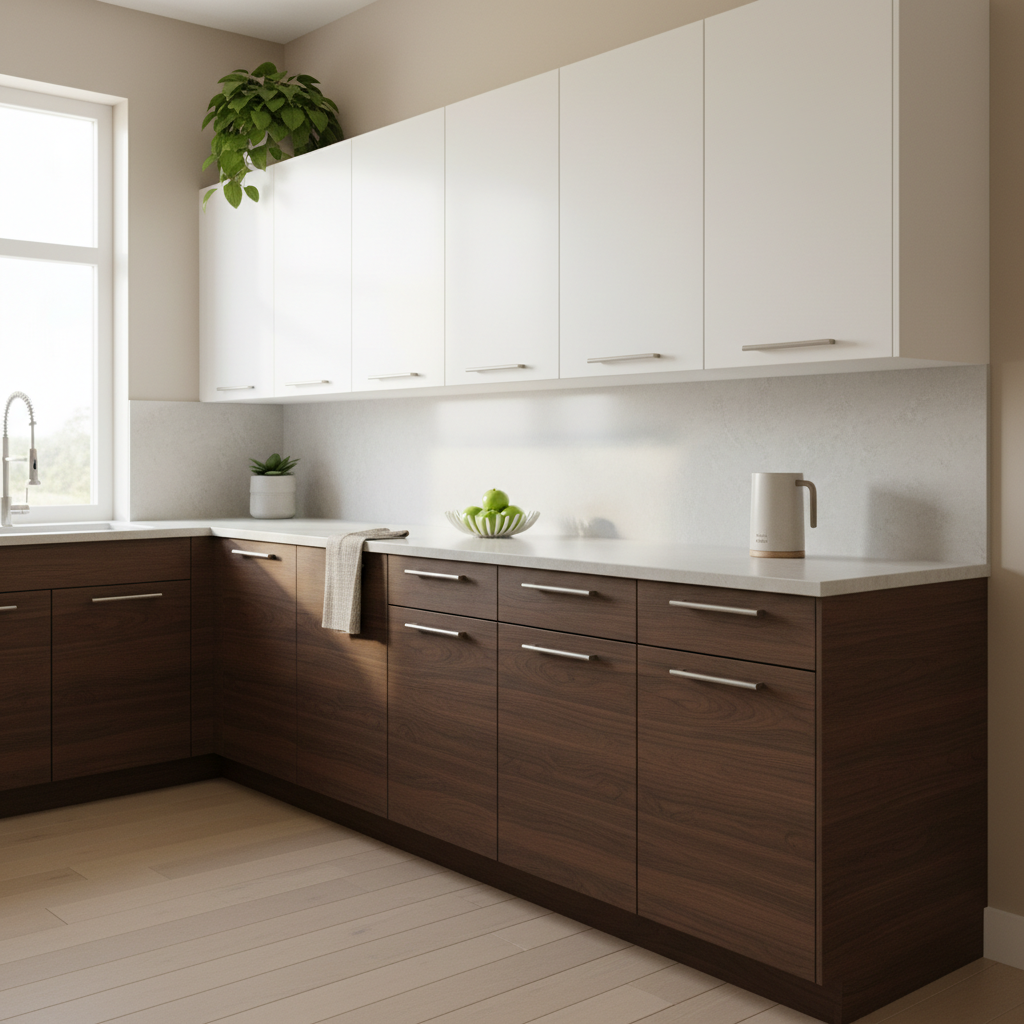
Scope: 28 fronts, slab HPL in warm white uppers and walnut-look lowers, 2 mm edges on lowers. We improved reveals to roughly 1/8 inch and added a light valance. The cooktop zone received extra venting time during adhesive cure to offset daily steam from pasta nights.
Midtown condo, galley layout
Scope: 22 fronts, thermofoil shaker with soft-close upgrades. Elevator timing and parking access dictated staging—a 90-minute delivery window kept the crew efficient. Noise limits shaped our sequencing, so trimming and drilling happened in a designated workroom.
West-end rental refresh
Scope: 24 fronts, melamine slab for uniformity and quick turnover. We specified fingerprint-resistant finishes near the fridge and microwave bank. A simple two-hole pull layout (128 mm) aligned across 8 uppers to reduce visual clutter.
FAQ: Laminate Refacing
These concise answers cover durability, layout changes, timelines, material matching, and care. Use them to decide between refacing, refinishing, and replacement—and to plan a smooth project with clear expectations.
How long does laminate refacing usually take?
Site work is often completed in several days when cabinets are structurally sound. Off-site fabrication runs in parallel. The total schedule depends on door counts, accessories like crown or panels, and condo access rules, but most families can keep using the kitchen with minor adjustments.
Can I change my kitchen layout with refacing?
Refacing preserves your existing cabinet boxes, so major layout changes aren’t part of the scope. You can add panels, fillers, light valances, and new hardware. If you need new boxes or a different footprint, replacement becomes the right path.
Is laminate durable enough for a busy family kitchen?
Yes—especially high-pressure laminate (HPL) paired with quality edge-banding. It resists daily bumps and wipes clean easily. We often specify 2 mm edges for lower cabinets and traffic corners, plus soft-close hinges to keep doors aligned over years of use.
Will new doors match my existing cabinet sides?
Yes. Refacing includes veneering visible box sides and face frames, so fronts and boxes match by design. We supply physical samples first, check them under different light temperatures, and align grain direction to keep long runs looking consistent.
Conclusion and Next Steps
Laminate cabinet refacing delivers a fast, durable style upgrade with less disruption than replacement. Results depend on solid boxes, smart material choices, careful prep, and precise installation. Use this guide to set scope, approve samples, and align on schedule—then request a detailed written proposal.
- Key steps: Decide on material family, confirm overlay targets, and review grain/finish samples.
- Protect function: Plan meal workarounds, maintain 40–60% RH, and schedule delivery windows.
- Lock quality: Specify banding thickness, hinge type, and a final alignment walk-through.
Key Takeaways
- “Laminate cabinet refacing cost” reflects scope and choices—define them early to prevent add-ons.
- HPL plus 2 mm edges and soft-close hardware create a tough, family-ready finish.
- Stable humidity and clean prep boost adhesion and keep corners tight over time.
- Photos, samples, and a written scope make approvals fast and outcomes predictable.
Ready to plan? Our team at Paint2decor INC serves York and the broader Toronto area. Call +1 (416)-831-8489 to discuss your kitchen and receive a clear, itemized scope for laminate refacing, refinishing, or painting—whichever best fits your goals.