
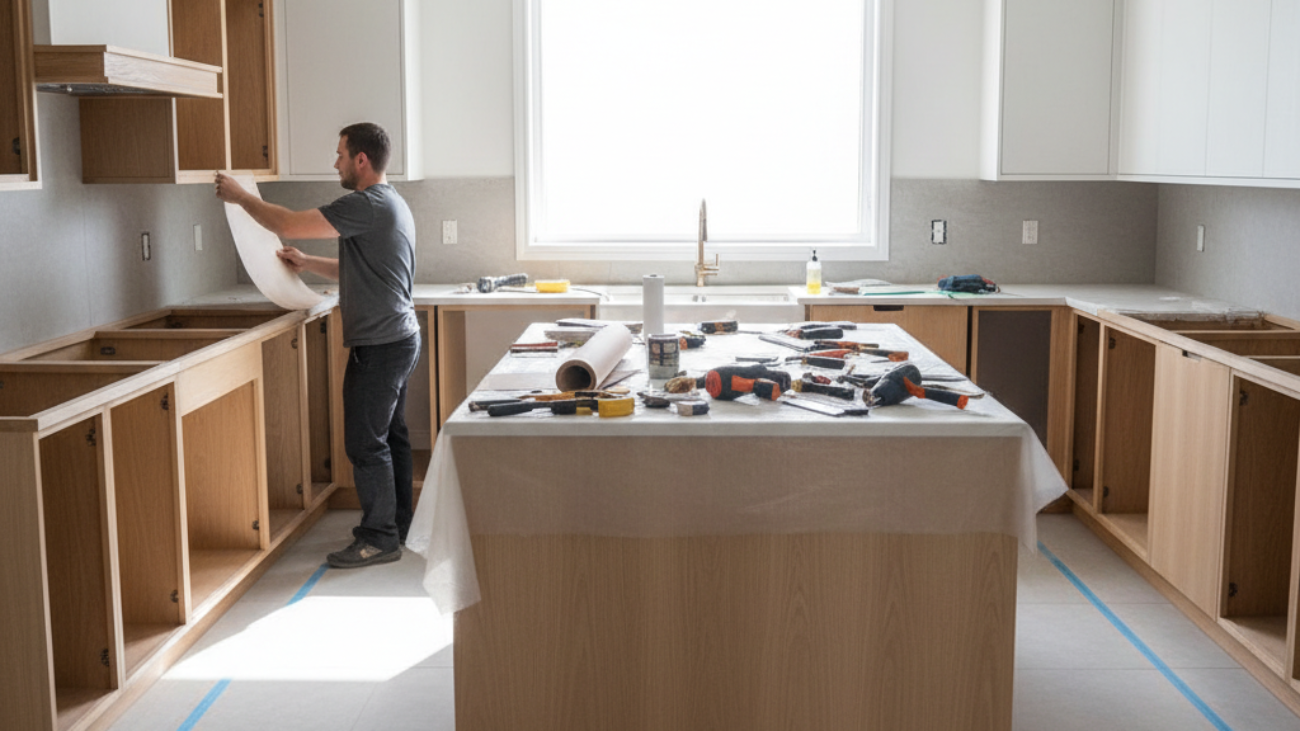
Kitchen cabinet refacing price refers to the total investment to replace your doors and drawer fronts and re-skin cabinet boxes with new veneers or laminates. At Paint2decor INC in York (2710 St Clair Ave W), we help Toronto-area homeowners budget smartly by explaining the real drivers—materials, labor complexity, layout, and finish quality—so you can plan with confidence.
By Masoud Kakar, Paint2decor INC • Last updated: 2026-05-05
Quick Summary
Cabinet refacing pricing is shaped by 12 core factors: scope, door style, box material, veneer type, finish system, hardware, layout changes, repairs, site conditions, travel and access, warranty and quality controls, and post-service care. Understanding these inputs helps you compare quotes apples-to-apples and choose value over headlines.
Planning a refacing project in Toronto’s GTA? Here’s what you’ll learn fast:
- What kitchen cabinet refacing is and when it makes sense
- How pro refacing works, step by step, without dismantling your kitchen
- Which 12 factors actually influence your final investment
- How refacing compares to refinishing and full replacement
- Tools, resources, and a friendly checklist to evaluate quotes
What Is Kitchen Cabinet Refacing?
Kitchen cabinet refacing is the professional replacement of doors and drawer fronts while applying new veneer or laminate to the cabinet box exteriors. The cabinet frames stay; the visible surfaces transform. It delivers a like-new look with less disruption, often completed in days instead of weeks.
Refacing updates 60–90% of what you see—doors, drawer fronts, end panels, and face frames—while preserving your cabinet boxes. It’s ideal when boxes are structurally sound, your layout works, and you want a dramatic style upgrade without demolition.
- Key components replaced: doors, drawer fronts, end panels, applied moldings
- Key components resurfaced: face frames and visible box edges
- Typical timeline: 3–7 working days for most GTA kitchens, depending on scope
- Common finishes: factory-finished doors plus on-site veneer or laminate on frames
For Toronto homeowners comparing options, refacing neatly bridges the gap between repainting and full replacement, delivering a major style shift while keeping your existing footprint.
Why Refacing Matters for Toronto Homeowners
Refacing matters because it delivers a high-visibility transformation with less disruption, fewer disposal needs, and faster completion. In the York and Toronto area, it’s a proven way to modernize kitchens, align with current color trends, and preserve functional layouts without renovation-level downtime.
Here’s why this decision resonates with our clients:
- Speed and convenience: Many projects wrap in under a week, so your routine stays intact.
- Lower waste: Keeping boxes reduces landfill disposal by dozens of cubic feet compared with rip-and-replace.
- Style reset: Shaker, slab, and contemporary profiles refresh dated oak or maple instantly.
- Predictable process: Defined steps mean fewer “surprises” and clearer scheduling.
We’ve found that when frames are solid and the workflow suits your household, refacing delivers a fast path to a modern, durable finish—especially in busy Toronto households that can’t spare weeks for a gut renovation.
How Kitchen Cabinet Refacing Works (Step-by-Step)
Professional refacing follows a clean, sequenced workflow: confirm cabinet integrity, remove doors, prep and mask, re-skin frames with veneer or laminate, install new doors and hardware, detail-finish, and quality-check. This structured approach delivers a factory-like result in a fraction of replacement time.
In our experience across the GTA, a well-run project follows clear stages:
- Assessment and planning: Verify box condition, hinges, and layout; finalize door style and veneer system.
- Site prep and protection: Mask appliances, floors, and counters; set up dust control.
- Removal: Label and remove existing doors and drawer fronts.
- Surface prep: Clean, scuff, and square edges; minor repairs completed before adhesion.
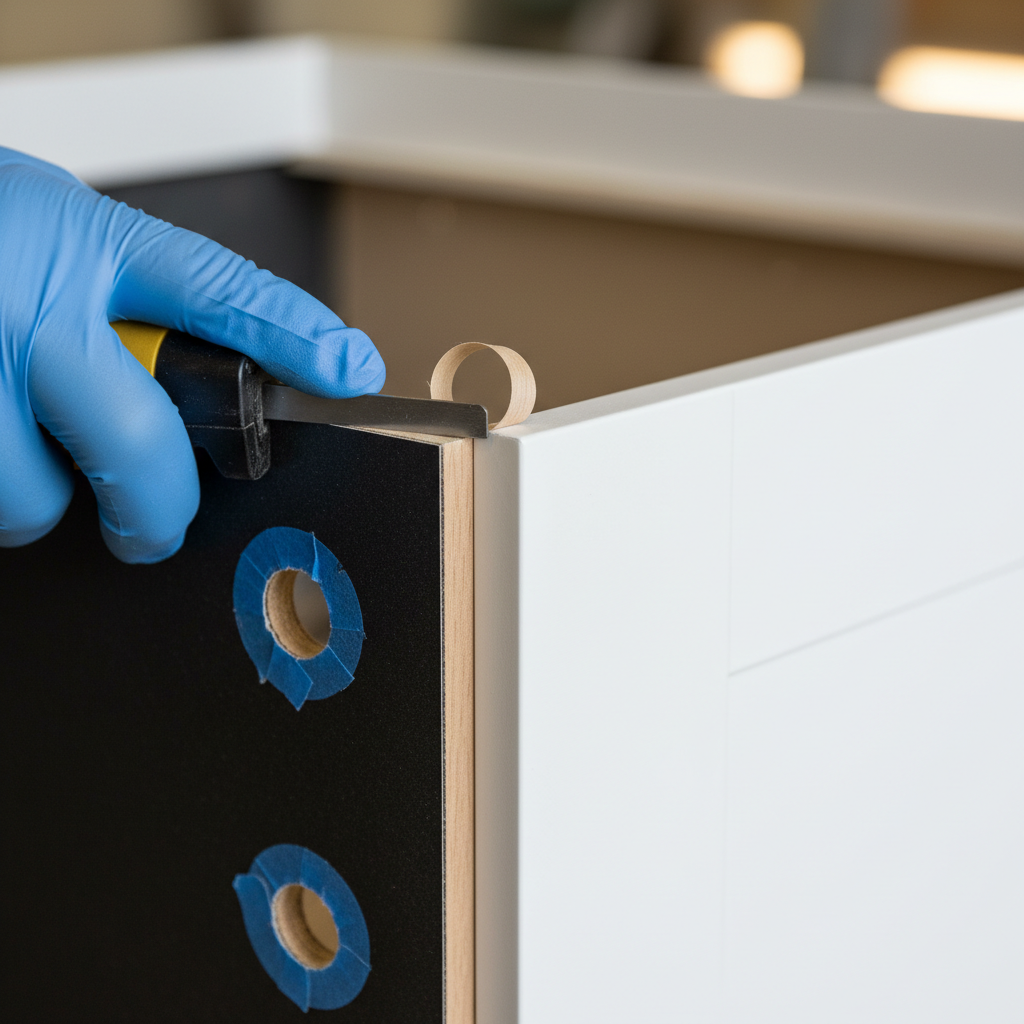
- Veneer application: Apply wood or laminate skins to visible frames and end panels.
- Door installation: Hang new doors/drawer fronts; align reveals for crisp sight lines.
- Hardware and details: Fit new hinges, pulls, and soft-close options; add trim or crown as planned.
- Inspection and handover: We run a 20–30 point quality check; you get maintenance notes and touch-up kit.
Most projects require 2–4 technician visits. Kitchens with islands, pantries, or glass inserts can add one extra day for precision work and seal curing.
The 12 Factors That Actually Influence Kitchen Cabinet Refacing Price
Kitchen cabinet refacing price is driven by scope, materials, finish systems, hardware choices, repairs, and site logistics. Focus on these 12 levers to understand quotes and control outcomes without sacrificing durability or design.
1) Project scope and door count
- More doors, drawer fronts, and panels increase materials and labor time.
- Glass inserts, mullions, and custom heights require extra handling and alignment.
- Rule of thumb: every 10 additional fronts can add 4–8 technician hours.
2) Door style and construction
- Shaker vs. slab vs. raised panel: Edge profiles and panel details affect finish work and alignment.
- Solid wood vs. MDF/hybrid: Impacts weight, paint behavior, and longevity.
- Five-piece doors can require more precise hinge setting for uniform reveals.
3) Box condition and substrate
- Solid plywood boxes accept veneers differently than particleboard.
- Out-of-square frames or swollen edges demand carpentry before re-skinning.
- Expect an extra day if multiple cabinets need squaring or structural shims.
4) Veneer or laminate system
- Real wood veneer: Warmer depth and stain options; needs careful sealing.
- High-pressure laminate (HPL): Excellent wear and moisture resistance.
- PVC/thermofoil skins: Smooth, consistent color; heat tolerance varies by brand.
5) Finish color and sheen
- Darker colors and high-gloss sheens spotlight imperfections and demand finer prep.
- Two-tone kitchens, accent islands, or specialty colors add masking and curing steps.
- Typical professional systems involve 1–2 primer coats and 2–3 topcoats.
6) Hardware, hinges, and accessories
- Soft-close hinges, integrated dampers, and under-cabinet lighting require layout checks.
- Changing handle hole patterns introduces drilling, filling, and finish blending.
- Adding pull-outs or organizers increases install time per cabinet by 20–40 minutes.
7) Layout tweaks (minor vs. moderate)
- Keeping the footprint unchanged keeps timelines tight.
- Minor changes—like swapping a microwave cabinet—impact a few adjacent panels.
- Moderate tweaks—converting doors to drawers—affect runners, clearances, and alignment.
8) Repairs and remediation
- Water damage under sinks, loose toe-kicks, or cracked panels need attention before skins.
- Plan for 2–5 repairs in older kitchens; each adds targeted time but protects longevity.
- Correcting prior DIY “fixes” often takes longer than doing it right once.
9) Site conditions and protection
- Tight condos, elevators, or limited parking add handling and staging time.
- Occupied homes need extra protection—zip walls, floor guards, and appliance masking.
- Clean, well-lit spaces shave hours off alignment and inspection.
10) Access and travel logistics
- Downtown cores or high-rises may require scheduled loading and permits.
- Garage or first-floor access speeds material flow and tool setup.
- Coordinated door deliveries can save a day on the calendar.
11) Quality controls and warranty
- Factory-finished doors plus pro-grade veneer adhesion deliver consistent results.
- Documented QA—20–30 point checks, moisture tests—reduces callbacks.
- Longer-coverage hardware (hinges, slides) improves long-term value.
12) Post-service care and support
- Clear cleaning protocols preserve sheen and color uniformity.
- Touch-up kits and maintenance tips prevent small dings from spreading.
- Annual check-ins catch hinge drift or seasonal movement early.
Refacing vs. Refinishing vs. Replacement: What’s the Difference?
Refacing swaps doors and re-skins boxes for a near-new look. Refinishing repaints or re-stains existing doors and frames. Replacement removes everything and installs new cabinetry. Choose based on box condition, desired style change, and acceptable disruption.
Use this high-level comparison to align expectations with outcomes (no pricing—just scope, time, and disruption):
| Approach | What changes | Typical timeline | Disruption level | Style flexibility | Waste/Disposal |
|---|---|---|---|---|---|
| Refacing | New doors/drawers + veneer on frames | 3–7 days | Low–moderate | High (profiles, colors) | Low |
| Refinishing | Existing doors/frames repainted or re-stained | 3–5 days | Low | Moderate (color only) | Very low |
| Replacement | All-new boxes, doors, layout options | 2–4+ weeks | High | Very high (full redesign) | High |
Best Practices to Maximize Value (Without Chasing the Lowest Number)
You’ll get the strongest value by matching door style to your home, keeping your layout stable, choosing durable finishes, and validating quality controls. In busy markets like Toronto, an organized process, clear scope, and reliable warranty outperform bargain shopping.
- Keep the footprint: Save time by avoiding structural changes; put budget into quality doors and hinges.
- Standardize hardware: Pick consistent pulls/knobs to reduce drilling and alignment complexity.
- Choose proven finishes: Pro-grade primers/topcoats and factory-finished doors resist daily wear.
- Ask about QA: A documented inspection checklist prevents rework and protects your timeline.
- Plan staging: Clear counters and a parking spot can shave hours off install days.
Pro tip: If you’re renovating multiple rooms, sequence projects to minimize repeat masking and travel. Kitchens first, then vanities—your household rhythm will thank you.
Local Factors: York and Greater Toronto Area Considerations
In York and across Toronto, condo access rules, parking, elevator bookings, and winter timing can influence timelines. Plan ahead for building permissions and clear staging to keep installation days efficient and predictable.
Local considerations for York
- Confirm elevator and loading logistics if you’re near Jane St at St Clair Ave West; scheduled windows keep crews moving.
- Winter projects need heated, ventilated spaces for proper curing; summer humidity also affects dry times.
- Quiet hours near the Toronto Public Library – Daniel G. Hill Branch block may limit power-tool use; schedule cutting off-site.
We plan around Toronto traffic, condo rules, and seasonality every week. It’s common for high-rise projects to add 1–2 hours of handling per visit due to elevators and loading docks. Good planning keeps your 3–7 day target intact.
How to Evaluate Refacing Quotes (Apples-to-Apples)
Evaluate quotes by comparing equal scopes: door style and count, veneer system, hardware, layout changes, repairs, protection, QA, and warranty. Ask providers to state inclusions and exclusions clearly to avoid change orders later.
- Door package: Material, profile, edge detail, glass options, and factory finish brand
- Veneer/laminate: Species or color, thickness, heat rating, and edge-banding details
- Hardware: Hinge type, soft-close, slide rating, and finish
- Protection: Floor, counter, and appliance masking; dust control method
- QA and warranty: Checklist items, tolerances (reveal gaps), and coverage terms
- Scheduling: Number of visits, expected hours on site, and crew size
Request line-item clarity. If one quote includes soft-close hinges and another doesn’t, you’re not comparing the same thing. In our proposals, we explicitly list door specs, veneer type, and hardware brand so you can see where value lives.
Tools and Resources for Smarter Decisions
Use structured checklists, sample comparisons, and third-party references to choose confidently. Templates help you capture door styles, finishes, and hardware specs so you can compare providers with clarity.
- Door and veneer sampler: Keep two or three Shaker and slab options next to your countertop sample for 48 hours; compare in daylight and evening light.
- Quote comparison sheet: List scope, veneer type, door material, hardware brand, and warranty notes from each provider.
- Process checklist: Confirm masking, dust control, and daily cleanup routines.
For broader renovation context, Altima Kitchens & Closets outlines paint process steps that mirror pro-grade finishing workflows—helpful when you’re evaluating refacing vs. repainting trade-offs.

The Paint2decor Approach: GTA Specialists, Award-Backed
We specialize in cabinetry refinishing and refacing for Toronto homeowners, pairing organized process with clear communication. Our award recognition on HomeStars and local focus in the GTA signal reliability, accountability, and results you can see and feel.
- Local specialization: Kitchens and bathrooms in Toronto and surrounding GTA neighborhoods
- Comprehensive services: Cabinet refacing in Toronto, kitchen cabinet refinishing, and kitchen cabinet painting options
- Recognition: Voted Toronto’s Best Cabinetry & Millwood Company; HomeStars Best of Awards 2020 and 2021
- Consultative quoting: We scope door style, veneer system, hardware, and QA up front—no guesswork
Curious how this looks in your space? Our consultations include door and veneer samples, hardware suggestions, and a clear schedule. Most site visits take 45–75 minutes, and you’ll get a written scope that maps to the 12 factors above.
Mini Case Studies: York and Toronto Kitchens
Real GTA projects show how scope and site conditions shape timelines. Solid boxes and stable layouts move fast; high-rise access or layout tweaks add handling time. Clear planning keeps most refacing projects inside a one-week window.
York detached home, family of four
- Scope: 28 doors/drawers, Shaker profile, HPL veneer on frames
- Site: Driveway access, first-floor kitchen, open staging area
- Result: 4 working days; added soft-close hinges and a glass-insert pair over the sink
Toronto mid-rise condo, professional couple
- Scope: 18 doors/drawers, slab doors, thermofoil skins
- Site: Elevator booking, tight loading, limited daytime access
- Result: 5 working days; 1 added day for elevator logistics and masking
Toronto bungalow, aging-in-place refresh
- Scope: 22 fronts, Shaker doors, wood veneer frames, new pulls
- Site: Minor sink-base repair and toe-kick replacement
- Result: 5 working days; included handle re-drill and organizer add-ons
These scenarios reflect what we see weekly: access and add-ons matter as much as door count. Solid planning plus a steady crew produces consistent timelines across seasons.
Refacing Quote Comparison Checklist
Use a structured checklist to compare providers. Confirm door materials, veneer system, hardware, protection, QA, warranty, and schedule. Side-by-side clarity prevents surprises and aligns expectations.
- Door style and material clearly listed (with profile name)
- Veneer/laminate brand, thickness, and color code
- Hinges and slides specified with model or load rating
- Masking and dust-control method described
- Quality checklist and reveal tolerances stated
- Number of visits and expected hours on site
- Warranty terms in writing
For context on full replacement considerations, see this overview from Altima Kitchens & Closets. It underscores how installation logistics and material choices shape scope and timelines—useful when weighing a complete overhaul versus a targeted refacing.
Thinking About a Refacing Project?
If your boxes are solid and your layout works, refacing is often the fastest path to a like-new kitchen look. A short consultation clarifies style, finish, and timeline—so you can move forward confidently.
Free, friendly consult: If you’re in Toronto or nearby, our team can assess box integrity, show door and veneer samples, and outline a clean, efficient plan. Start here: book a cabinet consultation.
Common Mistakes to Avoid
The biggest mistakes are changing the layout mid-project, underestimating protection needs, and picking incompatible hardware. Lock the scope early, protect the site well, and verify hinge and pull specs to keep timelines tight.
- Scope creep: Adding layout changes late introduces rework and delays.
- Hardware mismatch: New pulls with different hole spacing increase filling and repaint steps.
- Skipping repairs: Ignoring water damage undercuts veneer adhesion and longevity.
- DIY prep errors: Aggressive sanding can round edges and complicate clean veneer lines.
Lock these details at quoting time. You’ll reduce risk and keep the 3–7 day target realistic.
When Refinishing Beats Refacing
Refinishing is a strong choice when your door style is timeless, wood is in good shape, and you primarily want a new color. It preserves character, minimizes waste, and finishes fast—often in 3–5 days with pro-grade spray systems.
Explore color-driven makeovers if you like your current door profile. Our kitchen cabinet refinishing service uses professional spray systems and durable topcoats tailored to daily use in busy homes.
Frequently Asked Questions
Homeowners ask about timelines, durability, cleaning, and whether refacing fits older cabinets. Here are concise answers to help you move forward with clarity.
How long does cabinet refacing usually take?
Most kitchens finish in 3–7 working days. Door complexity, site access, and add-ons like glass inserts or organizers can add a day. High-rises may need elevator bookings that extend daily on-site time.
Will refacing work if my boxes are particleboard?
Yes—if the substrate is dry, plumb, and structurally sound. We address swollen edges, add shims if needed, and use adhesion systems appropriate for the core. Severely water-damaged boxes should be repaired before re-skinning.
Can I change from hinges to soft-close?
Absolutely. We specify compatible soft-close hinges during planning. Expect minor drilling or plate changes. Many homeowners also upgrade drawer slides to full-extension soft-close for smoother daily use.
Is refacing better than repainting existing doors?
They solve different problems. Refacing changes door style and box exteriors for a near-new look. Repainting keeps your current doors and focuses on color. If your boxes and door style are good, refinishing can be the faster, simpler route.
Key Takeaways
Cabinet refacing price depends on scope, materials, finish system, and site logistics—not a single number. Match your goals to the right method, compare equal scopes, and partner with a specialist who puts process and quality first.
- Refacing changes what you see most—doors and box exteriors—fast.
- 12 levers shape your investment; control them to protect outcomes.
- Stable layouts and proven finishes create lasting, low-maintenance results.
- Use a structured checklist for clear, apples-to-apples comparisons.
Conclusion: Plan the Look, Then the Logistics
Start with door style, color, and hardware. Then confirm box integrity, access, and protection. With scope set, refacing delivers a like-new kitchen in days, not weeks—especially with an organized GTA specialist.
Ready to explore options? See our cabinet refacing service or compare with cabinet refinishing. If you’re vetting shops, this page on cabinet refacing companies near you outlines smart selection criteria. For homeowners focused on repainting, our overview of cabinet refinishing considerations explains the factors—without quoting numbers.