
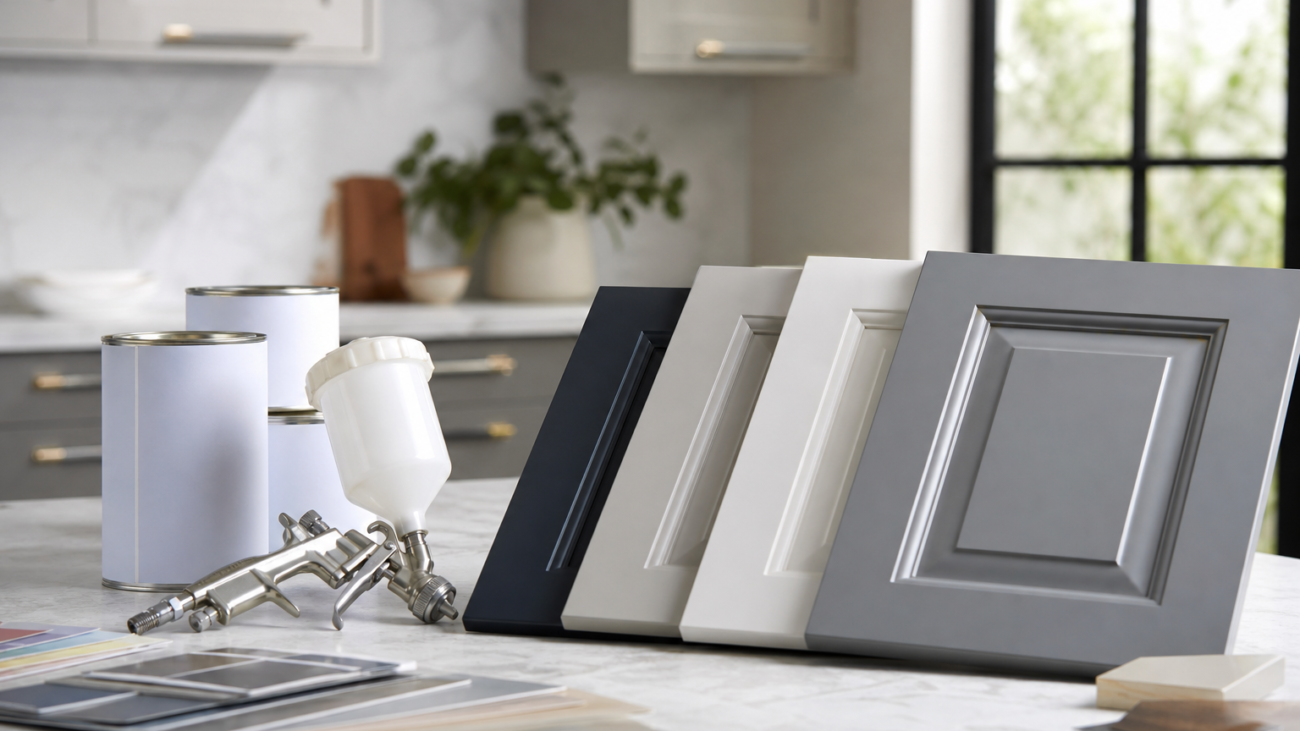

How to choose cabinet respray coatings
If you are planning a kitchen or bathroom cabinet respray in Toronto or the Greater Toronto Area, choosing the right cabinet respray coatings matters for durability, odour, and long term appearance. This article gives a clear, ordered decision flow you can use with a contractor, concise tradeoffs for the main coating families, safety and VOC checkpoints, and a copy-paste contractor questionnaire to get a reliable quote.
Quick decision checklist: three questions to answer first
Before you read the full flow, answer these three questions to decide whether you can pick a coating now or need more contractor details.
- What is the cabinet substrate and condition: solid wood, maple, MDF, thermofoil, melamine, or factory finish?
- Which matters most: maximum hardness and scratch resistance, lowest odour and low VOCs, or a balance of both?
- Will the application be done in a shop booth or on-site in your home, and can the contractor provide the product Technical Data Sheet (TDS) and a sample panel to inspect?
If you cannot answer all three, stop and ask the contractor to supply the missing details before you sign a contract. For a primer on surface preparation and when refinishing is appropriate, see our cabinet refinishing guide.
Step 1: Identify your cabinet substrate and finish condition
The substrate guides which coatings will adhere and how likely you are to see yellowing, lifting, or tack after the respray. Typical substrates include:
- Solid wood, including maple, which can be prone to ambering with some oil-based finishes.
- MDF and engineered substrates, which accept coatings evenly but need proper priming to avoid edge swelling and adhesion issues.
- Melamine, thermofoil, and factory baked finishes, which often require adhesion-promoting primers and factory-style adhesion methods.
Substrate and existing finish determine whether the contractor must sand to bare wood, use an adhesion-promoting primer, or recommend refacing instead. If you are unsure about structural or internal damage to cabinet boxes, consider refacing or replacement rather than a surface respray.
Step 2: Compare coating families and their tradeoffs

Below are the common professional coatings used for cabinet resprays, with practical tradeoffs you can use to decide.
Pre-catalyzed lacquer
- Pros: Fast dry times, excellent flow and sprayability, and a smooth factory-style finish.
- Cons: Lower ultimate chemical resistance and hardness than modern 2K systems, which can make lacquer less durable in very high-traffic kitchens.
Two-component (2K) polyurethane
- Pros: Highest film hardness and long term durability when mixed and applied correctly, with excellent chemical and scratch resistance.
- Cons: Requires on-site mixing and strict safety controls. Some 2K products contain isocyanates, which raise health and ventilation concerns and need trained applicators and proper personal protective equipment. For an overview of when isocyanates matter and how professionals weigh options, see a trade explanation on cabinet paint options: Spray-Net.
Waterborne acrylic-urethane
- Pros: Low VOC formulas, good hardness and resistance that approaches 2K performance in modern formulations, lower odour and easier cleanup. Advances in resin technology allow waterborne systems to achieve film hardness comparable to traditional oil-based products. Cure time remains the indicator of when a coating reaches intended hardness and resistance, so ask for the product TDS for specifics. See a chemistry overview for further detail: US Paint Supply.
- Cons: Some early waterborne products had tack issues, but current high-quality formulations are designed to minimise tackiness that can cause doors and drawers to bond when closed.
Alkyd-acrylic hybrids
- Pros: Blend the look and early hardness of alkyds with water cleanup and lower VOCs, offering an oil-like finish without oil cleanup.
- Cons: Performance varies by brand, and some hybrids can yellow more than premium waterborne urethanes on pale wood tones.
The tradeoffs above are synthesised from product chemistry reviews and installer guidance. Request product-specific TDS documents because performance and cure times vary by brand and formulation.
Step 3: Match coating to your use case and finish priorities
Use this short matrix to align your priorities with the coating family.
- Maximum durability for a heavily used family kitchen: favour a well-applied 2K polyurethane, but insist on a ventilation and safety plan from the contractor because of mixing and potential isocyanates.
- Low odour or condo living: waterborne acrylic-urethane or alkyd-acrylic hybrids offer lower odour. Modern waterborne systems can provide comparable hardness while reducing VOC exposure — request the TDS to confirm solvent and VOC data.
- Maple or pale woods: avoid oil-first coatings if you worry about yellowing; ask for tested panels and references that show minimal ambering in similar conditions.
- Factory-finished thermofoil or melamine: adhesion and primer choice are more important than the topcoat family. Confirm the contractor has successfully resprayed these substrates before.
For examples of finish sheens and how they change a kitchen look, review our finish options gallery.
Step 4: Safety, ventilation, and VOC considerations for GTA homes
Two practical safety points matter to homeowners in Toronto and the GTA. First, some high-performance 2K systems contain isocyanates. Those materials require trained applicators, respiratory protection, and adequate ventilation. Ask the contractor whether the chosen product contains isocyanates and to show the Safety Data Sheet (SDS).
Second, consider shop spraying versus on-site work. Shop booth spraying in a controlled environment with a downdraft booth reduces odour and household exposure and is often the recommended approach for 2K systems. If on-site spraying is required, the contractor must present a written ventilation and containment plan and fall-back steps for seasonal constraints like closed winter windows in Toronto.
Always request Technical Data Sheets and Safety Data Sheets for any coating you are quoted, and do not proceed without them. If you want to ask about safe application options, contact us via our contact page.
Step 5: Contractor questionnaire and verification checklist

Copy and paste the list below into the message when you request quotes. These are the exact items any professional should answer.
1. What is the product brand and full product name for the topcoat and primer?
2. Is the topcoat 1-component or 2-component? If 2-component, what is the hardener/activator name?
3. Please attach the Technical Data Sheet (TDS) and Safety Data Sheet (SDS) for each product.
4. Will spraying be done in-shop or on-site? If on-site, what is your written ventilation and containment plan?
5. Can you supply a small sample panel sprayed in the selected colour and sheen for my approval before full application?
6. What drying and cure milestones do you expect, and when can cabinets be returned to service?
7. Do you offer a written finish warranty or guarantee? What does it cover and for how long?
8. Can you provide references and photos of recent GTA projects with similar substrates and coatings?
9. Are you listed on HomeStars or do you have local awards or recognitions? Please provide links.
If a contractor refuses to provide TDS, a sample panel, or references, treat that as a stop condition and get another quote.
Step 6: Project milestones, homeowner prep, and explicit stop points
Expect the project to follow these milestones. Use the stop points to protect yourself if something is missing.
- Measure and quote, including confirmation of substrate and whether priming or repair is required.
- Sample panel and colour sign-off, complete with the specified product names and sheen.
- Removal of hardware and preparation for transport or on-site masking and containment.
- Spray application in a shop booth or on-site with documented ventilation, followed by drying and specified cure time before reassembly.
- Reassembly and final inspection, with a punch list for any touch ups.
Hard stop conditions: do not allow work to start if the contractor will not provide the product TDS and SDS, refuses to produce a sample panel, or cannot explain a ventilation plan for on-site spraying. If you see tacky finishes after reassembly that persist beyond the stated cure window in the TDS, contact the contractor immediately and do not accept final payment until the issue is resolved.
Common homeowner questions
Will a waterborne urethane yellow on maple cabinets over time
Modern waterborne urethanes are formulated to minimise ambering, and many products perform well on maple without significant yellowing. Ask the contractor for brand-specific test panels and long term photos on maple.
How do 1-component and 2-component cabinet coatings differ in smell and safety
One-component systems generally produce less odour and are simpler to apply. Two-component systems often deliver greater hardness and resistance but may contain isocyanates and require stricter PPE, mixing procedures, and ventilation. Insist on the SDS and a ventilation plan for any 2K work, and prefer shop spraying when possible.
Is a respray as durable as replacing cabinets
A professional respray with the correct coating and preparation can extend usable life significantly and deliver a near-factory finish, but it will not change cabinet geometry or internal damage. Choose respraying for cosmetic and surface-life improvements, and consider refacing or replacement if the cabinet boxes are structurally damaged or you want layout changes.
What sheen should I choose for kitchen cabinets and why
Satin and semi-gloss are the most common choices. Satin hides minor surface flaws while offering a modern low-sheen look. Semi-gloss gives a smoother, wipeable surface that stands up better to cleaning in kitchens. Discuss traffic and cleaning needs with your contractor and request sample panels in both sheens.
What should I do if a contractor will not provide a Technical Data Sheet or a sample panel
Do not proceed. A reputable contractor will share TDS and SDS documents and will provide a sample panel for colour and sheen approval. If they refuse, ask for another bid. Transparency on products and application is essential for a safe, lasting finish.
Next step: request a no-cost quote from a local GTA specialist
If you want help choosing the right cabinet respray coatings and a sample panel for your kitchen or bathroom, request a free, no-obligation quote and consultation. For questions about shop spraying or on-site options and to start with a sample panel, contact us.
Final CTA: Visit Paint2decor INC to request your free quote and sample panel from a Greater Toronto Area cabinetry refinishing specialist.