
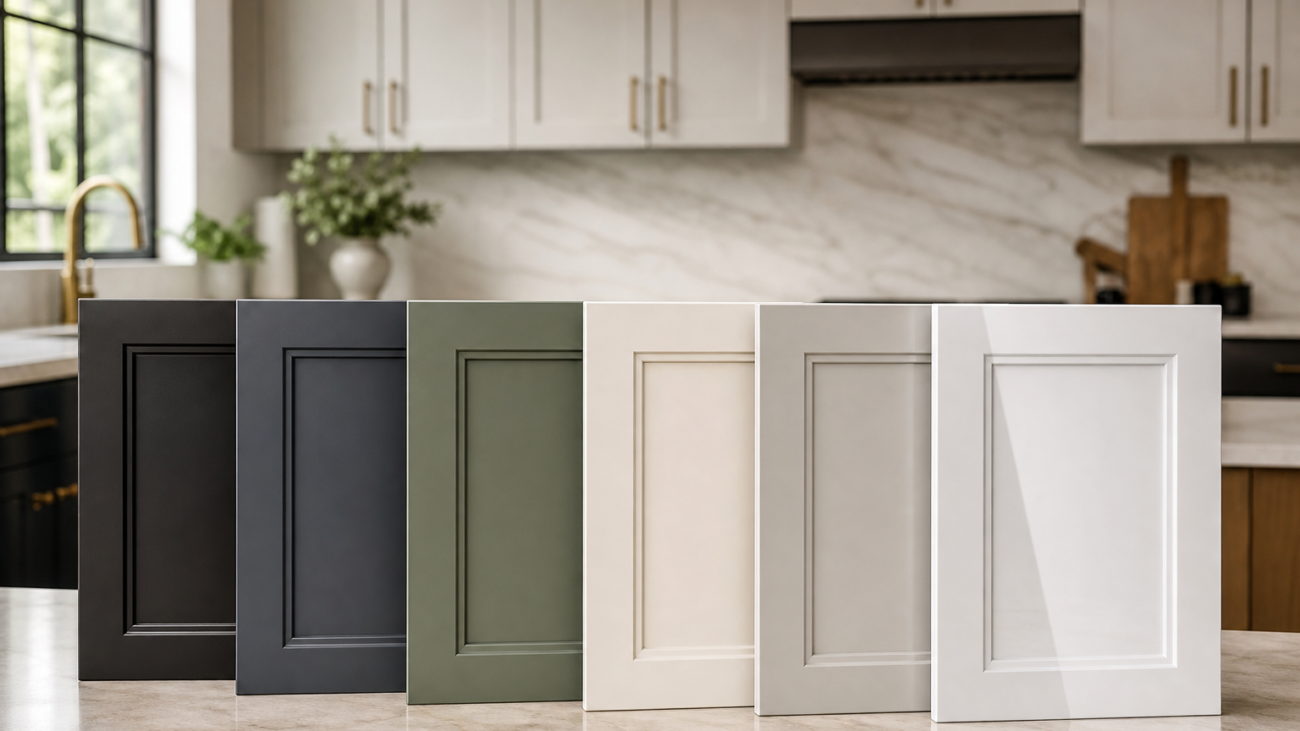
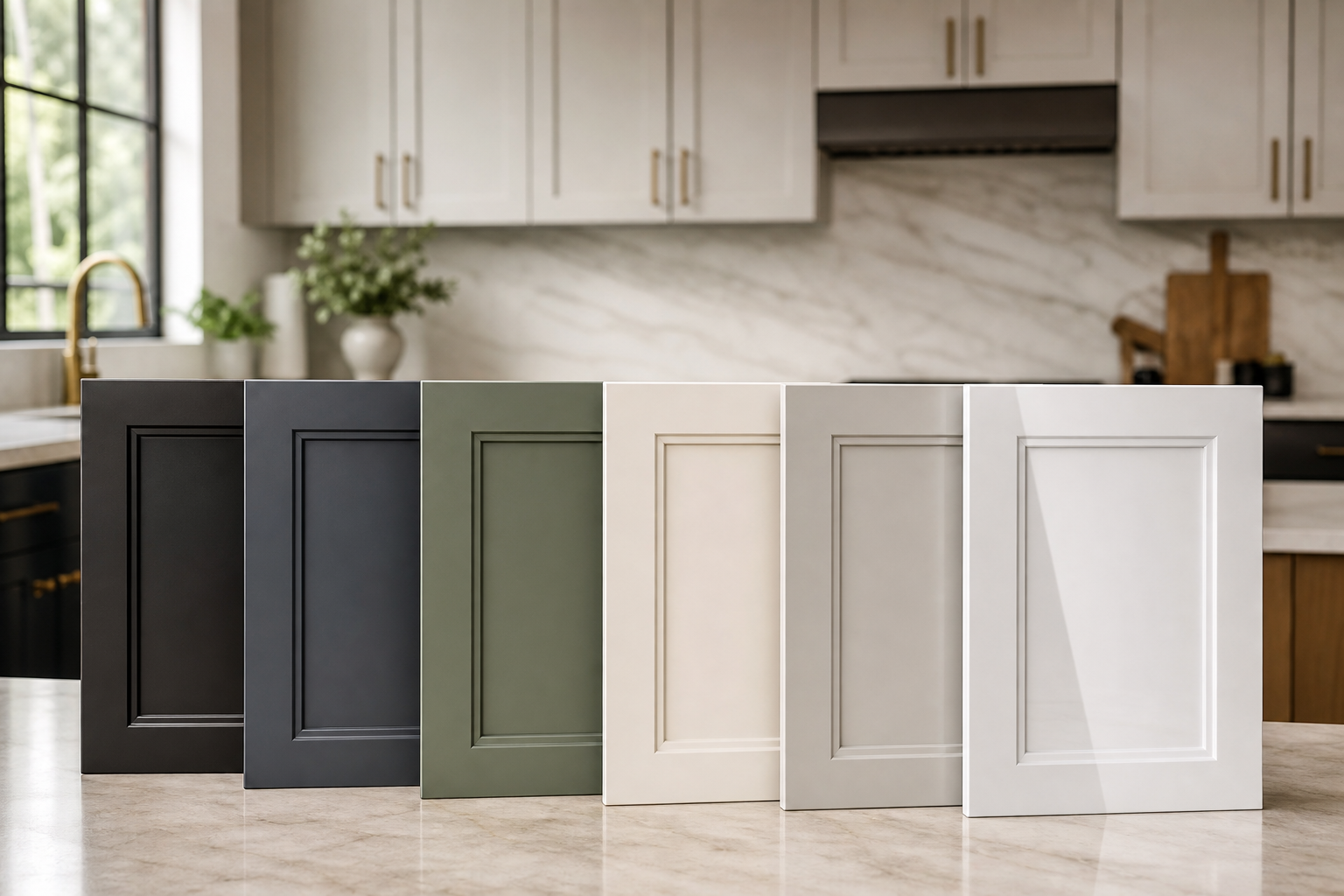
Cabinet spray painting finish types compared: which suits your kitchen
If you are weighing cabinet spray painting finish types for a Toronto or GTA project, this article gives a clear, criteria-led comparison so you can choose with confidence. Read on to compare the common finishes by durability, cleanability, visual depth, application complexity, and the use cases where each finish performs best. For local finish packages and visual samples, see Paint2decor’s Toronto cabinet spray painting finish options.
Quick decision summary: best finishes by need
- Best for heavy wear and long-term durability: two-component (2K) urethane or catalyzed coatings. They deliver top performance with the trade-off of professional mixing and stronger chemistry. See a plain-language industry overview for details.
- Best for a lower-VOC refresh or faster project: modern waterborne acrylic enamels. They balance strong finish quality with easier cleanup and lower fumes when sprayed correctly.
- Best for ultra-smooth, high-end sheen: lacquer systems when sprayed by an experienced shop. Lacquer flows exceptionally well and produces a glass-like appearance but is more sensitive to moisture and recoat timing.
- Recommended sheens for kitchens and bathrooms: satin or semi-gloss. These sheens balance visual depth and cleanability better than flat or very high gloss options.
Finish types explained
Two-component (2K) urethane or catalyzed coatings
What it is: a resin mixed with a hardener that triggers a chemical cure and forms a cross-linked film. Performance profile: exceptional abrasion and chemical resistance, high hardness, and long service life. Trade-offs: requires accurate mixing, has a limited pot life once activated, and typically demands professional shop conditions for best results. Typical use cases: busy family kitchens, rental units, or any situation where maximum durability is the priority. For more on professional paint choices see a contractor-level primer on cabinet paint options from industry experts.
Conversion varnish
What it is: a factory-style catalyzed finish related to 2K urethanes, engineered for shop production and long-term clarity. Performance profile: very high hardness and solvent resistance, excellent for furniture-grade cabinetry and custom millwork. Typical use cases: designer kitchens and cabinetry where longevity and visual clarity are the top priorities.
Waterborne acrylic enamels
What it is: water-based enamel formulations that provide enamel-like hardness and finish with lower solvent content. Performance profile: very good durability, lower VOCs, easier cleanup, and less odour during application. Trade-offs: may require slightly longer cure to reach full chemical resistance compared with catalyzed systems. Typical use cases: homeowner projects where environmental comfort and a strong finish are both important.
Lacquer (acrylic or nitrocellulose)
What it is: fast-drying solvent-based coatings prized for flow and a glass-like finish. Performance profile: outstanding smoothness and build when applied correctly, but generally less forgiving to moisture and heavy cleaners unless properly sealed. Typical use cases: modern, ultra-smooth finishes and high-gloss cabinetry executed by skilled sprayers in controlled conditions.
How to judge finishes: five decision criteria
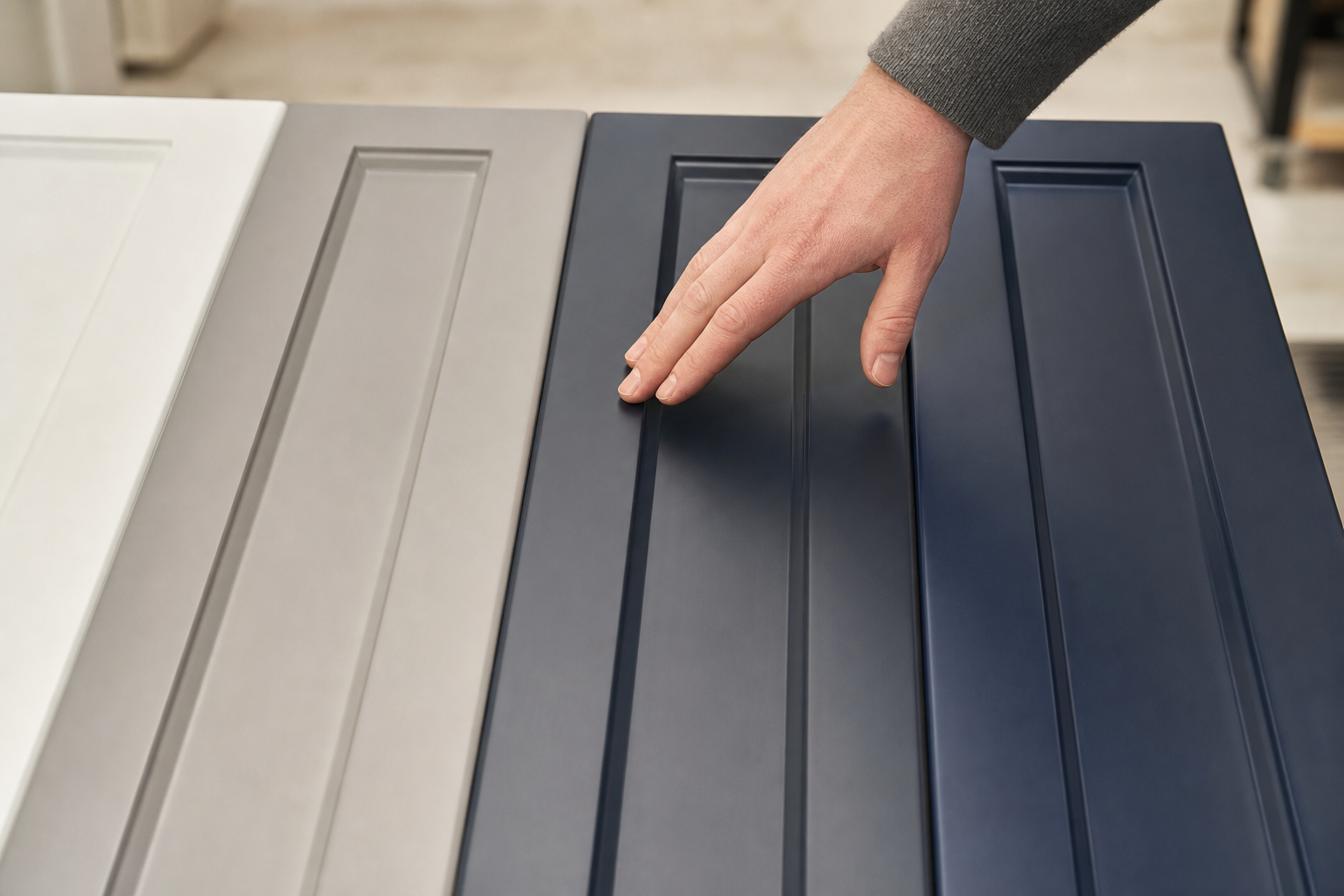
Compare every finish using the same criteria to make an objective choice. Below is what matters most when you evaluate a finish or a contractor quote.
1) Durability and scratch resistance
- What to look for: cross-linked or catalyzed chemistry such as 2K or conversion varnish typically offers the highest wear resistance.
- How to verify: request the product data sheet and confirm whether the system is two-component or waterborne.
2) Cleanability and stain resistance
- What to look for: products rated for kitchen surfaces and independent test data for chemical resistance.
- Practical note: semi-gloss is easiest to clean, while satin hides minor flaws better and still cleans well.
3) Sheen and visual depth
- What to look for: physical sheen samples viewed in your kitchen lighting and a clear sheen specification on the quote.
- Rule of thumb: satin or semi-gloss often works best in kitchens and bathrooms to balance depth and maintenance.
4) Application complexity and site disruption
- What to look for: whether doors will be sprayed off-site in a booth or on-site, the spray equipment used, and ventilation plans.
- Why it matters: some finishes require precise environmental control or a booth to cure properly and avoid flaws.
5) Best-fit use cases and qualitative cost-to-apply
- What to look for: an honest description of expected longevity and whether the contractor recommends the finish for high-traffic homes or design-first projects.
- Practical note: higher-performance systems usually mean more prep, shop time, and labour, which raises upfront cost but reduces life-cycle touch-ups.
Preparation and application factors that change performance
A high-quality finish depends on prep and application as much as chemistry. These variables often explain why one contractor’s result outperforms another, even with the same paint.
Equipment and spray technique
The right spray equipment delivers the smoothest finish and controls overspray. Pros typically use HVLP systems for cabinet spraying and match fluid tip sizes to the coating. A common tip range for many cabinet paints is 1.4 mm to 1.8 mm, which balances atomization and material flow without excessive thinning. In some shop workflows, technicians use dedicated spray booths and pressure settings tuned to the chosen chemistry. For an in-depth look at spray techniques and gear see a comprehensive spray-painting guide.
Primer, adhesion, and surface repair
Proper priming and adhesion promotion are essential. Projects normally include filling, sanding to agreed grit levels, repairing loose veneer or edge damage, and applying a specified primer. On woods like maple, tannin-blocking primers are often recommended. Ask the contractor for brand names and primer technical sheets so you can compare systems fairly.
Off-site versus on-site spraying
Shop spraying produces better flow, less dust in the finish, and reduced home disruption. On-site spraying can suit partial jobs or situations where removal is impractical, but it requires rigorous masking, HEPA-filtered ventilation, and dust control to achieve comparable results.
Environmental conditions and cure
Temperature and humidity affect cure speed and final film properties. In the GTA, many contractors recommend scheduling interior spray projects in spring or early fall to avoid extremes that complicate curing. Follow manufacturer cure windows to reach full chemical resistance before heavy use.
What to ask your contractor and what to check in a quote
Copy this checklist when you contact contractors. Clear answers reduce surprises and let you compare quotes on equal terms.
- Which paint chemistry will you use: two-component (2K) or conversion varnish, waterborne acrylic enamel, or lacquer? Please provide the product data sheet.
- Will doors and drawers be sprayed off-site in a booth or on-site in my home?
- What primer and adhesion steps are specified, and will you perform required repairs before priming?
- Which spray equipment will you use and what fluid tip range do you commonly use for cabinet paints?
- Can you spray a sample door or a test panel for approval, and will you provide physical sheen samples?
- What ventilation and dust control steps do you take for on-site spraying?
Red flags: vague answers about chemistry, refusal to provide product sheets, or no option for a sample panel or test spray.
You can copy this short sample email when requesting quotes:
Hi, I am planning a cabinet respray and would like a quote. Please confirm the paint chemistry, primer, off-site or on-site spraying plans, spray equipment and tip sizes you use, and whether you can spray a sample door. Thank you.
Test finishes and validate results in your kitchen

Before committing, order physical finish and sheen samples and ask the contractor to spray a sample door or a discreet corner test. View samples under your kitchen lighting at different times of day. Perform a gentle cleaning test using mild soap and water on an inconspicuous area to check stain resistance. If you need a stronger test, a small isopropyl alcohol swab on a tiny corner can identify weak cure, but only do this with the contractor present.
Post-spray inspection checklist: adhesion on a light scrape test, uniform sheen across doors, consistent colour matching, and normal curing odour that dissipates. If any of these fail, request written corrective steps before the crew leaves.
Common objections and trade-offs explained
Higher upfront cost for 2K systems: catalyzed finishes often require more controlled prep and shop work, which increases labour costs. They typically last longer and resist everyday abuse better, so the higher initial price can be offset by reduced maintenance.
VOC and odour concerns: waterborne acrylic enamels reduce solvent exposure and cleanup burden, making them a common choice for homeowners who prefer lower fumes or faster re-entry to the space.
Sheen regrets: very high-gloss surfaces highlight every imperfection. If your cabinets have minor blemishes, satin or semi-gloss usually gives the best balance between a modern look and forgiveness for small flaws.
Decision shortcuts for typical GTA households:
- Busy families and rental units: prioritise 2K or conversion varnish for longevity and resale durability.
- Homes with sensitivity to fumes or a need for faster turnover: waterborne acrylic enamel is a practical choice.
- Designer and modern kitchens seeking flawless visual depth: lacquer or shop-applied conversion finishes sprayed by a specialist.
Frequently asked questions
Which cabinet spray painting finish is easiest to clean for a busy kitchen?
Satin or semi-gloss finishes clean most easily while still hiding minor surface flaws. For maximum long-term stain resistance and chemical durability, catalyzed 2K urethanes or conversion varnishes generally perform best. Ask for product data sheet cleaning test results when you compare systems.
Can I change the sheen of my cabinets later without a full refinish?
Changing sheen reliably requires at least light sanding and a new topcoat. You cannot dependably alter sheen by buffing alone. Discuss the planned sheen change with your contractor so they can specify the compatible topcoat and preparation steps.
Should cabinet doors be sprayed off-site or on-site, which is better?
Off-site shop spraying usually produces the cleanest finish with less dust and better environmental control. On-site spraying is possible but requires strict masking and ventilation. If doors can be removed, shop spraying is generally preferred for a flawless outcome.
How do I verify a contractor actually uses two-component or catalyzed coatings?
Ask for the exact product name and the product data sheet. A reputable contractor will explain the two-component mixing process, pot life, and curing requirements. If a contractor resists transparency, treat that as a warning sign.
What sheen is best for bathrooms and why?
Satin or semi-gloss is recommended for bathrooms because these sheens stand up to moisture and clean more easily than flat or eggshell finishes. Ensure the chosen system is compatible with high humidity and follow cure instructions carefully.
Get a free quote from a GTA cabinetry refinishing specialist
If you are ready to compare finishes in person or request a sample door spray, Paint2decor INC offers free quotes and local expertise for Toronto and the GTA. For more on local finish options see the Toronto cabinet spray painting finish options page, or request your free quote to schedule a no-obligation consultation.
Technical references and further reading: How to choose the best kitchen cabinet paint, How to spray paint cabinets: complete guide, and How to choose the right spray paint. For local timing and seasonal notes see regional cabinet painting guidance.