
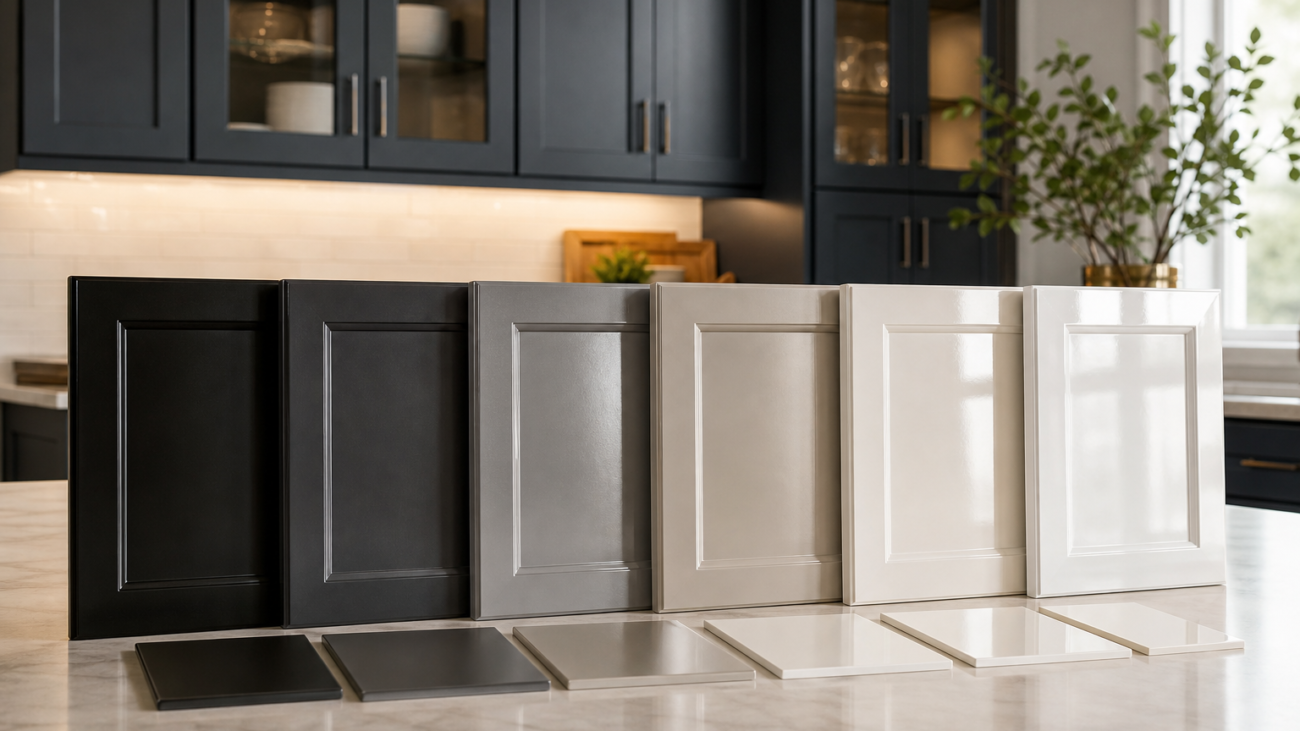

Which cabinet finishing sheen options should you ask about?
Choosing the right cabinet finishing sheen options is a small decision that can have a large visual and practical impact on a kitchen or bathroom. Sheen changes how colour reads, how much wear shows, and how easy surfaces are to clean. Below are plain-language definitions, practical trade-offs by sheen, five common mistakes to check before you sign a quote, exact questions to ask your refinisher, and a short checklist to bring to your GTA quote.
What sheen means and the common options for cabinets
Sheen refers to how much a finish reflects light, from very low shine to very glossy. That reflection, or lustre, is why the same paint colour looks different at different sheens. Typical cabinet choices are matte or flat, eggshell, satin, semi-gloss, and gloss. Each level creates a distinct look and level of reflectivity. For example, a gloss finish looks bright and reflective while a matte finish gives a soft, low-lustre appearance.
For a clear primer on the terminology, see the varnish buying guide at a Canadian home centre and a cabinet manufacturer primer on colour and sheen.
References: Varnish buying guide at RONA, How to choose a colour for kitchen cabinets.
How sheen changes colour, brightness, and room reflections
A higher-sheen finish reflects more light, so the same paint can appear brighter and more saturated on gloss than on matte. Low-sheen or matte finishes scatter light and can make colours look deeper and less reflective. That effect matters in kitchens with limited natural light and in open-plan spaces where reflections are visible across the room. To see the difference before you commit, place a painted sample at full size under your kitchen lights and view it at different times of day.
Reference: the cabinet colour guidance linked above explains how sheen alters perceived brightness and why in-room testing matters.
Practical pros and cons for cabinets: cleaning, wear, and flaw visibility

When homeowners compare sheens for cabinets, most balance three priorities: cleanability, how well the surface hides chips and brush marks, and how the finish ages under daily use. Here are general pros and cons to help weigh those priorities.
- Gloss and semi-gloss — Pros: very durable, easy to wipe clean, resists moisture, good for high-traffic kitchens. Cons: highlights surface imperfections, fingerprints and scratches are more visible. For painted cabinets professionals often recommend semi-gloss for its durable, wipeable surface.
- Satin and eggshell — Pros: moderate sheen that hides minor imperfections while still cleaning reasonably well, offering a softer, modern look. Cons: not as forgiving as matte for major blemishes, but easier to maintain than flat finishes.
- Matte or flat — Pros: excellent at concealing surface flaws and creating a contemporary painted-wood look. Cons: can be harder to clean, may absorb oily stains, and repeated scrubbing can dull the surface unevenly in active kitchens or bathrooms.
These trade-offs are consistent with common refinishing guidance and cleaning recommendations for kitchen cabinetry.
References: How to paint kitchen cabinets, The Home Depot, Kitchen cabinet finishing overview, RenoAssistance, Door finishes and surface texture, RTI Cabinets.
5 cabinet finishing sheen options mistakes to check before you decide
Use these five decision checks to avoid a finish that disappoints after installation. Each is a specific mistake homeowners frequently make, and each has a clear fix you can require before you sign a quote.
Mistake 1: Choosing high gloss for a busy kitchen
Why it matters: high-gloss and gloss finishes show scratches, dents, and sanding marks more easily because they reflect light strongly. In a family kitchen with active use, that reflection makes normal wear obvious. If you want a bright look, ask for semi-gloss rather than full gloss, or accept that touch-ups will be more visible.
Evidence: sheen levels and blemish visibility are explained in the varnish buying guide referenced earlier.
Mistake 2: Picking a matte finish without testing cleanability
Why it matters: matte or flat finishes conceal flaws, but they can absorb and hold grease and stains more readily than higher-sheen paints. Repeated scrubbing may change the surface appearance. Before you commit, request a cleaned sample or insist the refinisher apply a mock-up panel, then test common kitchen spills and a standard wipe to see how the surface responds.
Evidence: cleaning limitations of flat paints and the recommendation to test samples are covered in the cabinet painting guidance from a major home improvement resource.
Mistake 3: Ignoring paint type and sheen compatibility
Why it matters: the labelled sheen is only part of the story. Sheen is controlled by both topcoat and paint chemistry. A waterborne product may have a different sheen appearance and durability than an oil-modified product at the same labelled sheen. Do not treat sheen as independent from product family. Ask your refinisher which paint system they will use, and confirm the recommended sheen within that system.
Evidence: paint type and finish recommendations are discussed in the expert how-to primer on painting kitchen cabinets.
Mistake 4: Not sampling sheen in your kitchen lighting
Why it matters: room light, cabinet placement, and nearby surfaces change how sheen reads. A sample in a showroom will not behave the same in your home. Insist on a painted door or large swatch placed in situ, viewed at night under your task lighting as well as during daytime. The difference can be surprising and will prevent later regret.
Evidence: the cabinet colour guide explains how sheen alters perceived brightness and why in-room testing matters.
Mistake 5: Failing to confirm application method and topcoat
Why it matters: how a finish is applied matters as much as sheen. Spray application, proper sanding, and an appropriate topcoat produce smoother, more durable cabinet faces than poor brush-and-roll work. If the contractor plans to brush and roll instead of spraying, or will use a hobbyist-grade topcoat, ask for those details in writing. The right method reduces brush marks and improves longevity.
Evidence: door finish and surface texture guidance emphasises surface prep and application method as core performance factors. For more about professional spray options and finish choices see the local spray painting finish options resource.
See: Toronto cabinet spray painting finish options at Paint2decor.
Exact questions to ask a refinisher before you sign a quote
Bring this list to every appointment. Asking these questions out loud forces clarity and gives you a written record for the quote.
- Which sheen do you recommend for my cabinets and why, considering daily use and my kitchen lighting?
- What paint brand and product family will you use, and can you specify the exact product name?
- Can I see a full-size sprayed sample or a painted door in my kitchen under my lighting?
- How will you apply the finish, spray or brush and roll, and how many topcoats will you use?
- What cleaning method and products do you recommend for the chosen sheen?
- Do you provide a written touch-up plan and a limited workmanship note for finish issues?
For local refinishing and spray options you can request examples and finish samples from a GTA cabinetry refinishing specialist. See contact options and service details at the company’s site.
Local resource: Request a free quote from Paint2decor INC, or learn more about spray finishes at their service page.
Which sheens professionals usually recommend and why

Many painting professionals recommend satin or semi-gloss for kitchen and bathroom cabinets because these sheens balance cleanability and flaw concealment. Semi-gloss is easier to wipe and resists moisture, which is useful for busy, humid bathrooms. Satin offers a softer, contemporary look while still performing well for cleaning. The final recommendation depends on surface condition, colour choice, and how much maintenance you are willing to accept.
See also: a local overview of spray-painted finish options for Toronto cabinets at the Paint2decor service page.
A short checklist to bring to your GTA refinishing quote
Print or copy this checklist when you speak to a refinisher in Toronto or the GTA.
- Desired sheen: matte, eggshell, satin, semi-gloss, or gloss.
- Request a full-size sprayed sample or a painted door for in-room testing.
- Confirm paint brand, product name, and whether the finish is waterborne or oil-modified.
- Confirm application method: spray, number of topcoats, sanding and prep steps.
- Ask for cleaning and maintenance instructions for the chosen sheen.
- Request written touch-up instructions and any workmanship note on the quote.
- Compare samples in your kitchen under both daylight and evening lighting before final sign-off.
If you would like help with sheen selection or to arrange a free estimate in the Toronto area, a local cabinetry refinishing specialist can supply in-home samples and explain spray finishes and topcoat options in person.
Frequently asked questions
Which sheen is easiest to clean on kitchen cabinets?
Semi-gloss is typically the easiest to clean because it resists moisture and wipes clean without dulling easily. Satin cleans well too and is often chosen when homeowners want less shine than semi-gloss but still need practical cleanability. See the cabinet painting how-to for cleaning considerations.
Which sheen hides scratches, dents, and brush marks best?
Matte or flat finishes hide surface imperfections best because they diffuse light. If your cabinets have noticeable gouges, raised grain, or old brush marks, a low-sheen finish will disguise these flaws more effectively than a glossy finish.
Will a higher-sheen finish make my cabinet colour look different?
Yes. High-sheen finishes reflect more light and often make colours look brighter and glossier. Matte finishes diffuse light and can make the same paint colour appear deeper. Test a full-size sample under your kitchen lighting to confirm the effect.
Should I insist on spray application for cabinet respraying or is brush and roll acceptable?
Spray application generally produces a smoother, more uniform result on cabinet faces, especially for modern flat-panel or shaker doors. Brush and roll can be acceptable for textured doors or budget projects, but confirm how the contractor will achieve a smooth finish and ask for examples of previous work.
What should I include in a written quote to avoid sheen-related problems later?
Ask the contractor to list the paint brand and product, the specified sheen, application method, number of topcoats, sample approval condition, touch-up plan, and any workmanship note. Having these items written into the quote reduces surprises and provides a reference if issues arise later.
Ready to compare sheen samples and get a free in-home quote in Toronto or the GTA?