
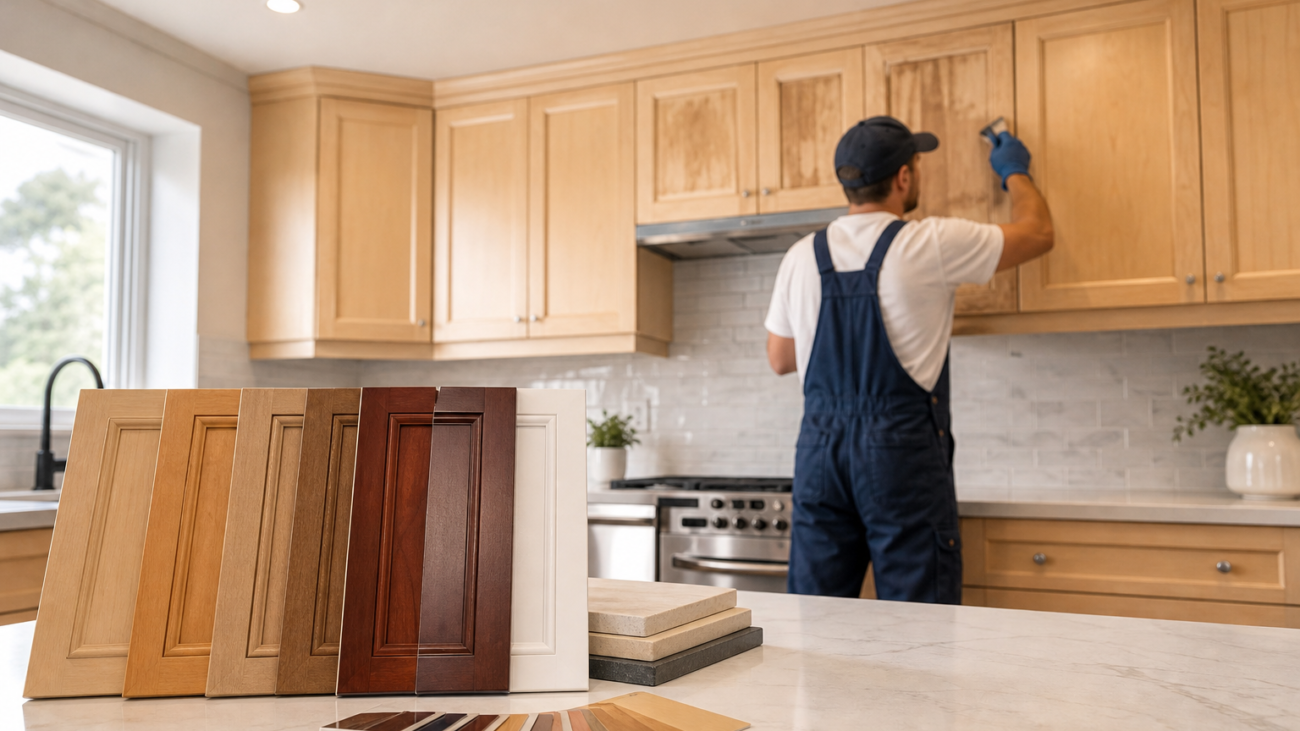

What should you ask before maple cabinets refinishing in Toronto?
If you own maple kitchen or bathroom cabinets in Toronto and are considering a refresh, refinishing can save money and time compared with a full replacement. This article helps you check whether maple is a good candidate, lists seven concrete mistakes and contractor red flags to avoid, and gives the exact finish and prep questions to ask a refinisher. Paint2decor INC positions itself as a GTA cabinetry refinishing specialist and offers free quotes for local homeowners, with educational resources available on the company blog.
When is refinishing a good option for maple cabinets in Toronto
Refinishing is a good choice for maple cabinets when the visible surfaces are structurally sound and your goal is a new colour or surface finish rather than a layout change. Use this short decision checklist before you call contractors.
- Surface condition: doors and drawer fronts have minor scratches, worn finish, or faded colour, but no major water damage, deep warping, or delamination.
- Carcass soundness: cabinet boxes are straight, fasteners hold, and shelves are stable. Refinishing does not repair structural failure.
- Style goal: you want to change colour or sheen, modernize hardware, or get a sprayed, smooth finish for maple’s tight grain.
- Budget and disruption: you want an affordable alternative to replacement and accept that doors are usually removed for off-site spraying or refinishing in a controlled space.
- Access and logistics: you can remove doors and hardware or allow a contractor to do that, and building access rules in Toronto or your condo permit on-site work and containment.
If the above are true, refinishing maple is often practical and cost effective. For background on typical limits and preparation needs, consult a woodworking primer on cabinet refinishing or a local refinisher’s technical notes. Paint2decor INC publishes educational material for the GTA and offers a free quote process online.
When refinishing is not the best choice for maple cabinets
Refinishing cannot solve underlying structural or fit problems. Consider refacing or replacement instead when any of the following apply.
- Water damage, rot, or severe swelling of door edges and frames, which compromises adhesion and fit.
- Delaminated veneers or large areas where veneer has separated from substrate, because patched veneers rarely match the original appearance.
- Warped or twisted doors that will not sit square after work, causing gaps and binding.
- Carcass failure or damaged cabinet boxes that require replacement or significant carpentry to restore function.
- You need a layout change, extra cabinets, or new drawer banks, which refinishing does not provide.
When you encounter these issues, ask for a combined estimate that includes carpentry, refacing, or replacement options so you can compare total costs and disruption. A local refinisher or carpenter can advise whether repairs make refinishing viable or if refacing or replacement is the better long term solution.
Seven mistakes and contractor red flags to check before you hire
Here are seven specific, standalone contractor errors and homeowner mistakes that commonly lead to disappointing maple cabinet refinishing results. Use these checks when you call for a quote and when you review written bids.
1) No written surface assessment or sample doors
Ask whether the contractor will perform a documented surface assessment and provide a sample door or mockup. Why this matters: maple’s tight grain and natural colour variation affect adhesion and staining behaviour. You should approve an actual sample before committing to a full project. If a refinisher refuses to inspect surfaces or produce a test panel, treat that as a warning sign.
2) Skipping a grain and colour-match discussion for maple
Maple can look different under stain or paint depending on cut and prior finish. A competent refinisher will explain grain fill options and whether painting, staining, or respraying best meets your design goals. If the contractor treats every maple job the same, ask for references and examples of previous maple projects.
3) Vague preparation scope for sanding, filler, and veneer repair
Preparation determines longevity. Verify whether the bid includes hand or machine sanding, filling of chips and gouges, veneer repairs, and edge work. If a quote only lists “prep” without specifics, request a written breakdown. Maple needs correct prep to avoid visible flaws showing through the new finish.
4) No specification for primer, sealer, and topcoat products
Ask for brand and product names for the primer, sealer, and topcoat and whether the finish is a two part polyurethane, acrylic lacquer, or another system. A vague answer such as “we use good products” is a red flag. Different systems perform differently on maple so you need to know what will be applied and why the contractor recommends it.
5) Refusal to spray in a controlled booth or offer containment
Spray application produces the most uniform, durable finish on maple. Ask where spraying will occur and how dust, overspray, and VOCs will be managed. A professional refinisher typically uses an off site spray booth or a well contained on site area with HEPA extraction and proper masking. If the contractor refuses to describe containment or insists on uncontrolled in home spraying, consider that a safety and quality concern.
6) No photos or local references showing maple projects
Request before and after photos of completed maple cabinet projects in Toronto or the GTA and ask for local references. A supplier who cannot show examples of similar work or provide local referrals makes it hard to evaluate finish quality and colour matching under real conditions.
7) Missing or vague warranty and finish maintenance terms
Get warranty terms in writing including what is covered, for how long, and how touch ups are handled. Also ask what maintenance the finish requires and what voids warranty coverage. Vague or verbal only warranties are a red flag when you compare bids.
Finish and preparation questions that matter for maple cabinets

These technical questions give you straightforward answers that reveal a refinisher’s competency. Ask them during a phone call and again at the appointment.
- Will you remove doors and hardware, and where will spraying occur? Off site booth spraying typically yields the best finish and reduces dust in your home.
- Do you use a separate primer and clear topcoat, or a single stage system? Understand the layers and how they protect maple.
- Will you spray or brush the finish, and why is spraying usually preferred for maple? Spraying gives a smooth, even layer that hides grain inconsistencies and reduces brush marks.
- How do you handle maple’s tight grain when staining or painting? Ask about grain filling and how the contractor will obtain consistent colour.
- Can you provide a sample door or small mockup with the chosen colour and sheen? Approve a sample before full production.
Insist on written responses and, when possible, product data sheets for the finishes that will be used. A professional refinisher will provide these details and help you interpret them.
Durability expectations and maintenance for refinished maple cabinets
Refinished maple will show typical wear in high contact areas such as drawer edges and around handles. Expect the contractor to tell you how to clean the finish, what cleaners to avoid, and how to handle small touch ups. Ask the contractor to perform basic adhesion and scuff resistance tests on your mockup panel so you can evaluate results before full application.
When a contractor claims unusually long lifespans, request written warranty language and ask how they will address wear that appears under normal use. Avoid accepting vague longevity claims without a plan for follow up service.
How to compare quotes: decision criteria and a printable checklist
When you receive bids for refinishing, refacing, or replacement, compare them using these criteria. Create a line item comparison so you can see differences at a glance.
- Scope clarity: Are doors, hinges, hardware removal, and reinstallation included?
- Prep included: sanding, filler, veneer repair, edge work, and dust control.
- Finish system: product names, number of coats, and whether spraying is used.
- Work location: off site booth, on site contained sprayer, or brush work in home.
- Warranty and maintenance: written terms and expected touch up policy.
- References and photos: evidence of similar maple projects in Toronto or the GTA.
- Contingencies: how unexpected repairs such as hidden veneer or hinge issues will be handled and billed.
Use this checklist during quote calls and bring it to in home inspections. If you want a printable version, copy the list into a note app or print directly from this page.
Toronto specific logistics and safety questions

Ask about local details that matter in Toronto row homes, semi detached houses, and condos.
- Service area and local address to confirm the contractor regularly works in the GTA.
- Containment and VOC controls for on site work, especially in condos where ventilation may be limited.
- Scheduling constraints like building access, elevator booking, and quiet hours that could affect timing.
- Local references or HomeStars recognition to verify Toronto projects and customer satisfaction. Paint2decor INC highlights local awards and educational resources for GTA homeowners on its blogs.
Confirm these items in writing before you sign any contract or schedule a start date.
Get a free quote and the exact questions to bring to your appointment
Bring these eight short questions to your quote appointment to ensure you cover the decisions that matter.
- What is the surface condition and will you provide a written assessment?
- Will you remove doors and hardware, and where will spraying or finishing occur?
- What primer, sealer, and topcoat products will you use?
- Will you spray or brush, and why do you recommend that method for maple?
- Can you produce a sample door or mockup with my chosen colour and sheen?
- How do you contain dust and overspray in a Toronto home or condo?
- What warranty and maintenance commitments do you provide in writing?
- Can you show local maple project photos or references I can contact?
Take clear photos of all doors, drawers, and the cabinet interior and measure door panels before the visit. These items speed up quoting and reduce surprises.
Frequently asked questions
Can maple cabinets be refinished or should I replace them?
Maple cabinets can be refinished when surfaces and carcasses are structurally sound. Replace or reface when you find water damage, delamination, severe warping, or when you want a layout change. For an initial assessment and local options, consult a GTA specialist.
What questions should I ask a refinishing company in Toronto before hiring?
Ask about surface assessment, removal and spray location, specific primer and topcoat products, whether spraying is used, sample mockups, containment plans for dust and VOCs, written warranty terms, and local references or project photos.
How does refinishing differ from refacing for maple cabinets?
Refinishing updates the existing surfaces and finish while keeping doors and carcasses in place. Refacing replaces visible surfaces such as door veneers and drawer fronts or applies new laminates. Refacing addresses cosmetic surface options but does not change cabinet layout unless additional components are installed.
How do I request a free quote from Paint2decor INC for maple cabinet refinishing in the GTA?
Paint2decor INC offers free quotes for Toronto and GTA homeowners. Start by reviewing educational blog material and request a quote through the company contact page to schedule an assessment and get a written estimate.
Is refinishing my maple cabinets the right choice for my Toronto home?
Request a free quote from Paint2decor INC
References include Paint2decor INC blog content and standard woodworking guidance on cabinet refinishing and preparation.