
toronto cabinet respraying benefits: a clear decision checklist
If you want a kitchen that looks new without a full renovation, cabinet respraying is one of the most effective ways to get there. This article explores toronto cabinet respraying benefits, how the method compares to other options, when it’s the right choice (and when it isn’t), and what to expect from the process and maintenance.
What cabinet respraying means
Cabinet respraying is a finishing method where doors, drawer fronts, and fixed frames are prepped and then coated with a paint or coating that is applied using a spray system rather than a brush or roller. The goal is to achieve a smooth, consistent finish that looks factory-applied.
It’s helpful to distinguish respraying from neighbouring options:
- Refinishing: A broad term covering prep and re-coating of existing cabinets (sprayed or brushed). Respraying is one way to refinish.
- Refacing: Replacing the door and drawer fronts (and often adding new veneer or panels to the boxes) while keeping the cabinet boxes.
- Full replacement: Removing boxes and doors and installing new cabinetry.
Because respraying works with what you already have, it can deliver a dramatic visual change with less material waste and less disruption than replacing cabinets.
Top Toronto cabinet respraying benefits
The advantages below explain why many homeowners shortlist respraying before committing to refacing or replacement.
- Transformation without tear-out: Respraying updates colour and sheen while preserving the footprint, layout, and existing cabinet boxes.
- Less disruption at home: Much of the work (especially doors and drawers) can be handled off-site, reducing on-site mess and downtime compared to demolition and install.
- Smoother finish quality: Sprayed coatings can produce a uniform, factory-like surface that’s difficult to replicate with brushes or rollers.
- Flexible style changes: From crisp whites and soft greys to deep blues and greens, colour and sheen choices can align with almost any design direction.
- Material reuse: Keeping your existing boxes and doors (when they’re in good condition) helps reduce waste versus full replacement.
- Speed to “after”: With no cabinetry lead times, you can re-energize a space on a comparatively shorter timeline than ordering and installing new cabinets.
- Repair-friendly: Minor dents, scratches, or fillable hardware holes can be addressed during prep prior to spraying.
These benefits make respraying especially appealing when your cabinet boxes are structurally sound, you like the current layout, and your main goal is a fresh, modern finish.
When respraying is—and is not—a good fit
Use this quick checklist to evaluate fit before you schedule quotes or book work:
Good candidates
- Structurally sound boxes: No sagging, separation, or water-compromised panels.
- Door and drawer fronts in serviceable condition: Minor wear or cosmetic damage that can be filled and sanded.
- Stable existing finish: No widespread peeling or failing finishes that indicate adhesion problems throughout.
- Functional layout: You don’t plan to move appliances, change cabinet sizes, or add major new features that require carpentry.
- Compatible materials: Solid wood and quality MDF often take sprayed coatings well when properly prepped. Many previously painted surfaces can also be resprayed after deglossing and priming.
Poor candidates
- Severe water damage or swollen substrate: Especially on particleboard or low-grade MDF, which may not hold fasteners or finishes reliably once compromised.
- Loose veneer or delamination: Extensive lifting often points to the need for repair, re-veneering, or replacement parts rather than spraying alone.
- Major layout changes ahead: If you’re reconfiguring the kitchen, it may be more practical to combine carpentry work with new components or refacing.
- Heavily contaminated surfaces: Persistent silicone, oil, or smoke residues can complicate adhesion unless thoroughly remediated.
If your cabinets fall in a grey area—some components are sound while others are not—you can mix approaches: replace or reface only the irreparable parts, and respray the rest. The key is verifying that every surface to be sprayed can be prepped to accept a durable coating.
Finish and colour choices
Colour and sheen do more than change the look—they affect how the kitchen feels and how the finish behaves day to day.
- Colours: Light neutrals can make spaces feel brighter and larger; mid-tones add warmth; deeper hues create contrast and drama. Testing sample boards next to your counters, floors, and backsplash under your actual lighting helps avoid surprises.
- Sheens: Lower sheens (matte/eggshell) reduce visual texture and can hide small imperfections; mid sheens (satin) balance cleanability with a soft glow; higher sheens (semi-gloss) emphasize crisp lines but can show more surface variation.
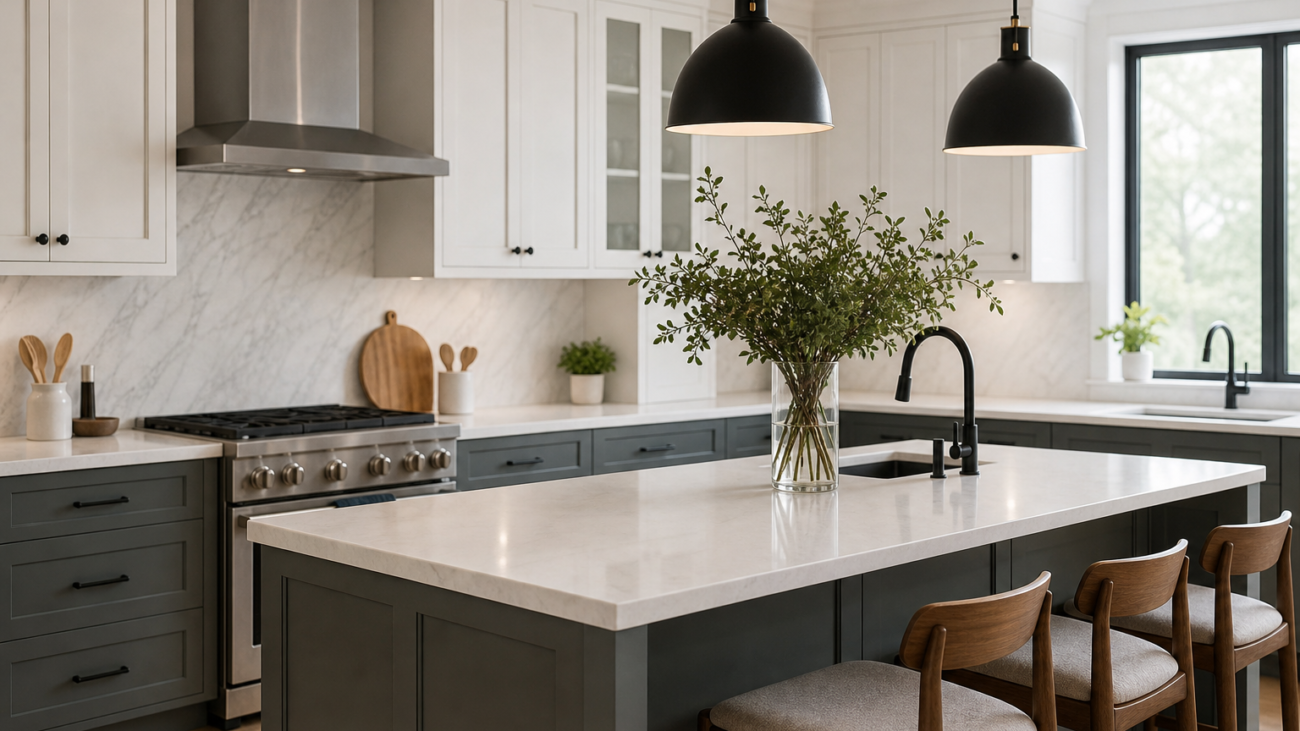
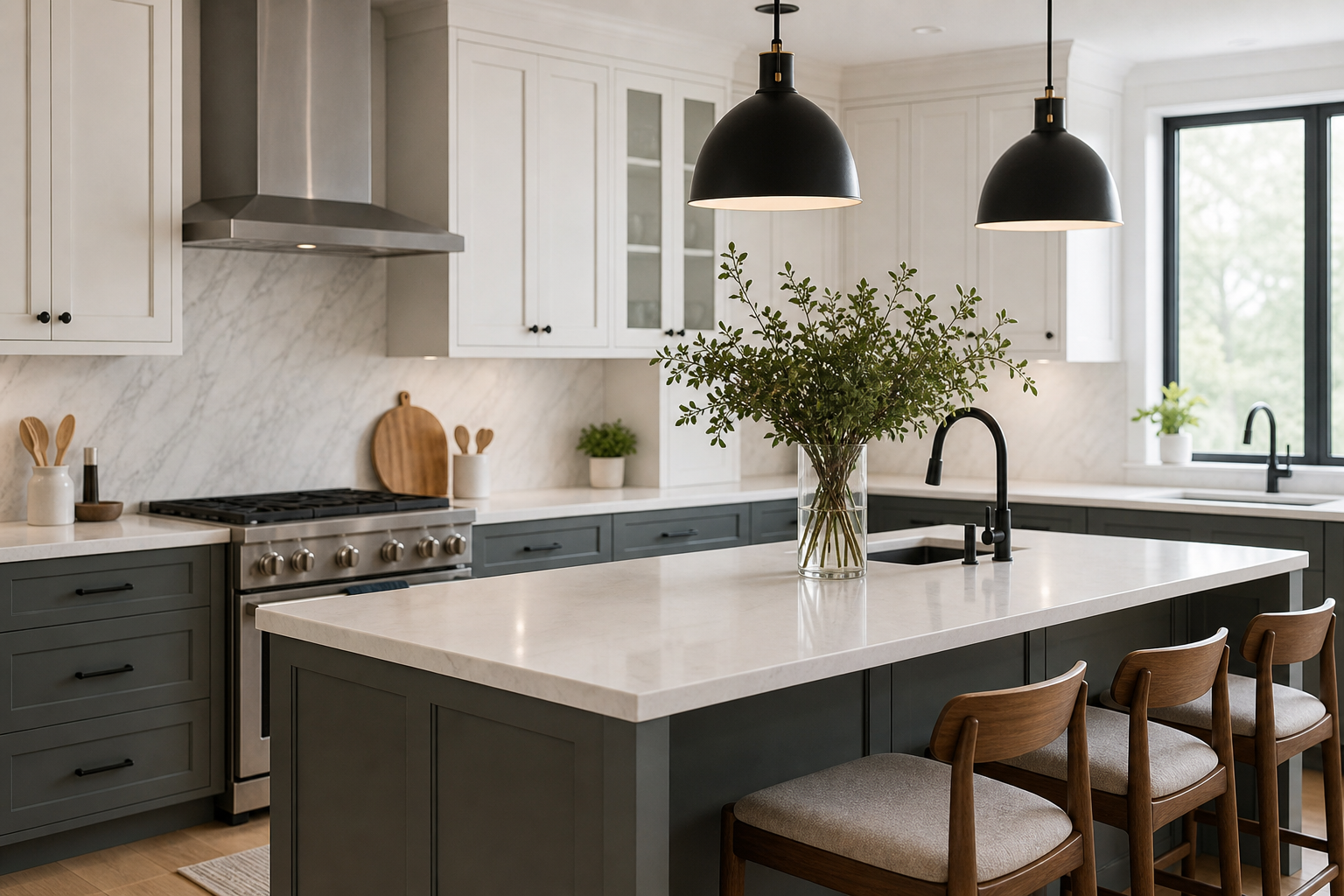
- Two-tone looks: Pairing a lighter upper with a darker lower cabinet can define zones and add visual interest without overwhelming the space.
- Hardware synergy: Updating pulls and knobs at the same time as respraying is an efficient way to complete the transformation. If you plan to change hole spacing, factor in filling and re-drilling during prep.
Whichever palette you choose, consistency in prep, priming, and topcoat sheens across all parts (doors, drawers, frames, panels) is what makes the result feel cohesive and “factory.”
What to expect from the process
While each project is unique, most cabinet respraying follows a predictable arc:
- Assessment and planning: Confirm which components will be sprayed, any repairs needed, hardware plans, and the target colour and sheen.
- Removal and labelling: Doors and drawers are carefully removed, labelled, and transported to a controlled spray environment. Hinges and hardware are stored for reinstallation or replacement.
- Site protection: In the kitchen, masking and containment protect counters, appliances, floors, and adjacent rooms. Ventilation and filtration are set up as needed.
- Cleaning and deglossing: Surfaces are degreased to remove cooking residues and contaminants that can impede adhesion, then mechanically or chemically deglossed.
- Repairs and sanding: Chips and dings are filled, seams addressed, and profiles sanded smooth. Caulking may be applied at strategic joints.
- Priming: An appropriate primer is sprayed to bond to the substrate and create an even base for colour coats.
- Topcoats: One or more sprayed colour coats are applied for coverage and film build, with drying or curing time observed between coats.
- Drying/curing: Coatings are allowed adequate time to set to handling strength before reassembly; full cure continues over days to weeks depending on the system.
- Reassembly and touch-ups: Doors and drawers return, hardware is installed, and any minor adjustments or touch-ups are completed.
- Cleanup and care briefing: Masking is removed, protection pulled, and you’ll receive practical guidance for early-stage care while coatings complete their cure.
This sequence helps ensure that the finish adheres well and looks uniform across all surfaces.
Care and maintenance basics
Sprayed cabinet finishes are designed for everyday use. A few simple habits can keep them looking great:
- Go gentle at first: During the initial cure window, avoid harsh cleaners and heavy scrubbing. Use a soft, damp cloth and mild soap if needed.
- Wipe spills promptly: Especially around sinks, dishwashers, and coffee stations where water and acids can sit unnoticed.
- Mind heat and steam: Use range hoods and avoid placing small appliances that vent steam directly under upper cabinet faces for extended periods.
- Protect high-contact spots: Add clear bumpers where doors meet frames and consider organizers that prevent contents from scuffing interior faces.
- Clean with care: Skip abrasives, scouring pads, and strong solvents that can dull or damage finishes.
With routine care, a sprayed finish remains attractive and easy to clean.
FAQs
How long does cabinet respraying typically take?
Project timelines vary based on kitchen size, complexity, and repair needs. Because you’re keeping your existing cabinet boxes, there is no wait for new cabinetry fabrication. Expect coordinated phases—off-site spraying of doors and drawers and on-site work on fixed parts—so your kitchen is out of commission for less time than a full replacement.
Will a sprayed finish hold up in a busy kitchen?
When surfaces are properly cleaned, sanded, primed, and coated, sprayed finishes are built for day-to-day kitchen use. Durability depends on thorough prep, appropriate primers and topcoats for the substrate, and adequate cure time. Normal care—wiping spills, avoiding harsh chemicals, and protecting high-wear zones—helps finishes look their best for years.
Is respraying better than refacing?
It depends on your goals. Choose respraying when the cabinet structure and doors are in good shape and you’re seeking a colour and sheen change. Choose refacing when doors are dated or damaged beyond simple repair, or if you want a different door style and updated exterior panels without replacing boxes. Some projects blend both: reface select components and respray others to match.
Can I DIY cabinet respraying?
Spraying requires careful prep, controlled environments, masking and containment, and equipment know-how to achieve a smooth, consistent finish. Small test projects can help you gauge comfort level. If you prefer a streamlined process and a unified result across doors, drawers, and frames, consider hiring experienced help.
What if my cabinets are laminate or have veneer?
Many laminate and veneered surfaces can be resprayed when adhesion issues are addressed up front. That means removing contaminants, thoroughly deglossing, and choosing compatible primers. If there is widespread delamination or water damage, replacement parts or refacing may be the better path.
Decision checklist to save time
Use this concise checklist to confirm whether respraying aligns with your project:
- Boxes are structurally solid and level.
- Doors/drawers are repairable with filling and sanding.
- You’re satisfied with the layout and storage function.
- You want a smooth, consistent, “factory-like” finish.
- You prefer less disruption compared to demolition and new installation.
- You’re ready to choose a colour and sheen and can allow for proper cure time.
If you can check most of these boxes, you’re likely to capture the key advantages of cabinet respraying.