
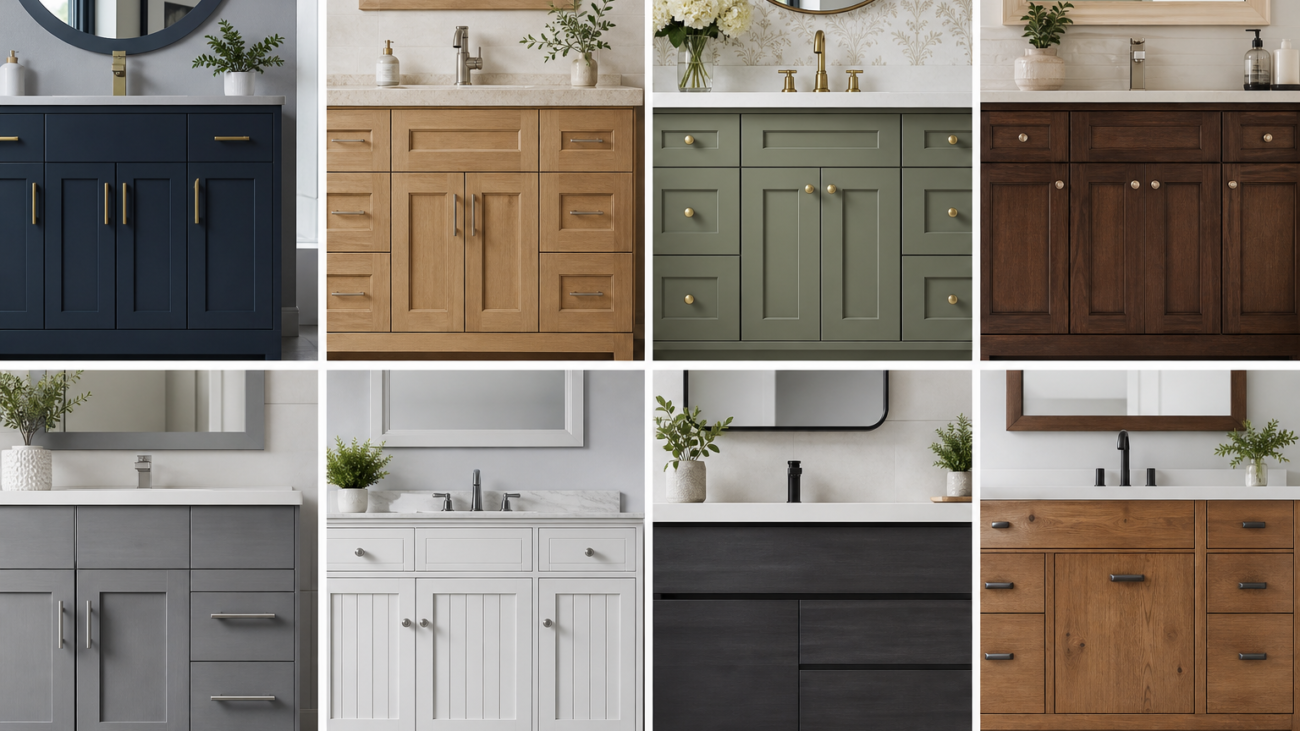
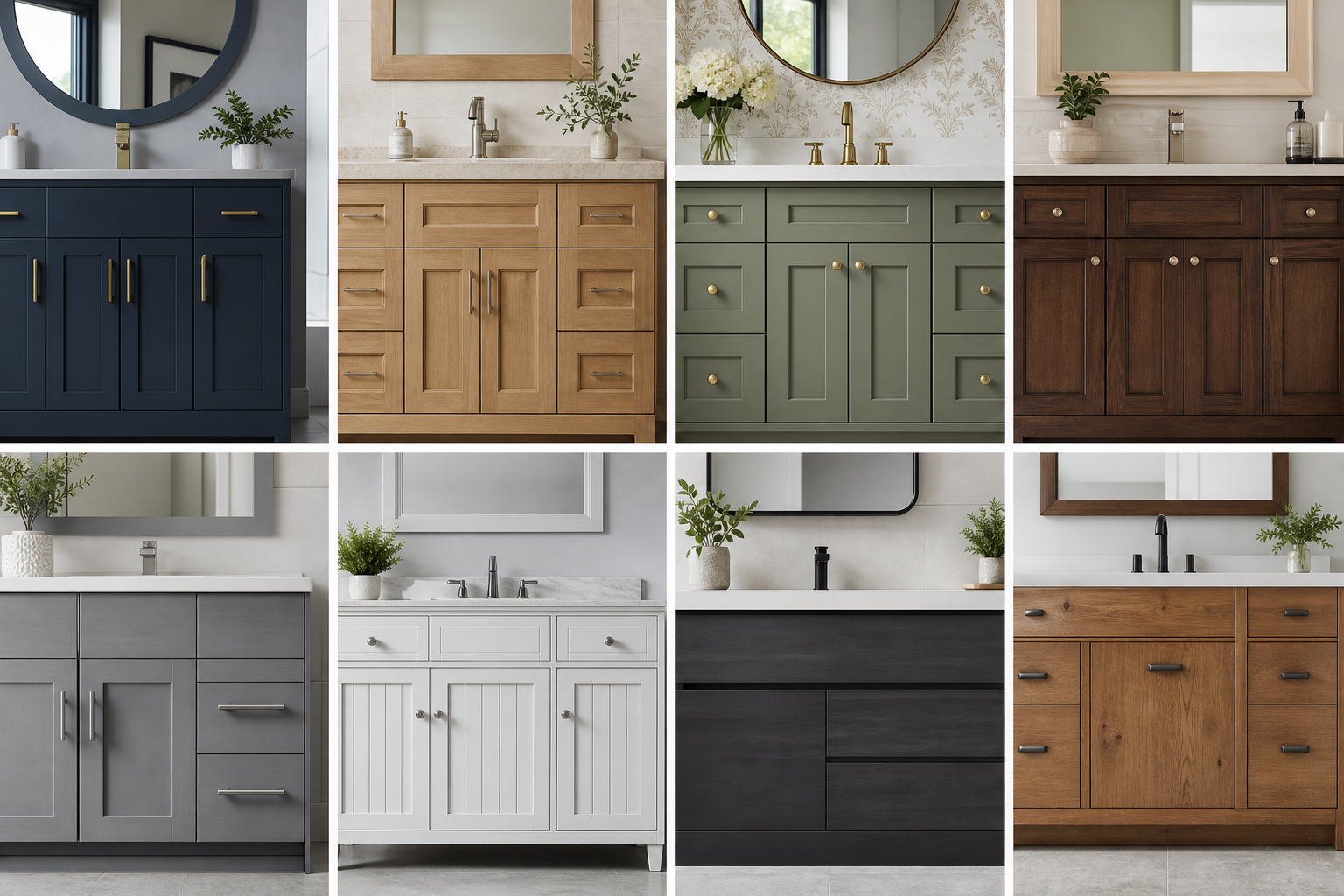
7 bathroom cabinet refinishing ideas compared for Toronto and the GTA
If your bathroom cabinets are structurally sound but the finish is worn, refinishing is a cost effective way to refresh the room. This article compares seven practical bathroom cabinet refinishing ideas and finishes, with attention to moisture suitability, visual outcome, disruption level, and the contractor questions you should ask before you request a quote in Toronto and the surrounding GTA.
How we chose these 7 options and what to compare
We selected approaches Toronto homeowners ask about most often and that perform reliably in humid bathrooms: painted solids, stains with clear coats, professional resprays, partial two tone updates, hardware upgrades, decorative textured finishes, and protective topcoat systems. The comparison factors are moisture resistance, visual impact, likely disruption, maintenance, and which cabinet constructions each option suits best. For practical preparation steps see the how to refinish bathroom vanity guide from The Cat Carpenter and the medicine cabinet update guide from Aosom. For creative finish ideas consult Coohom. This list is informational and not a paid ranking. Local climate and typical Toronto cabinet materials were considered when evaluating each option.
7 bathroom cabinet refinishing ideas compared
-
1. Painted solid-colour finish (brushed, rolled, or sprayed)
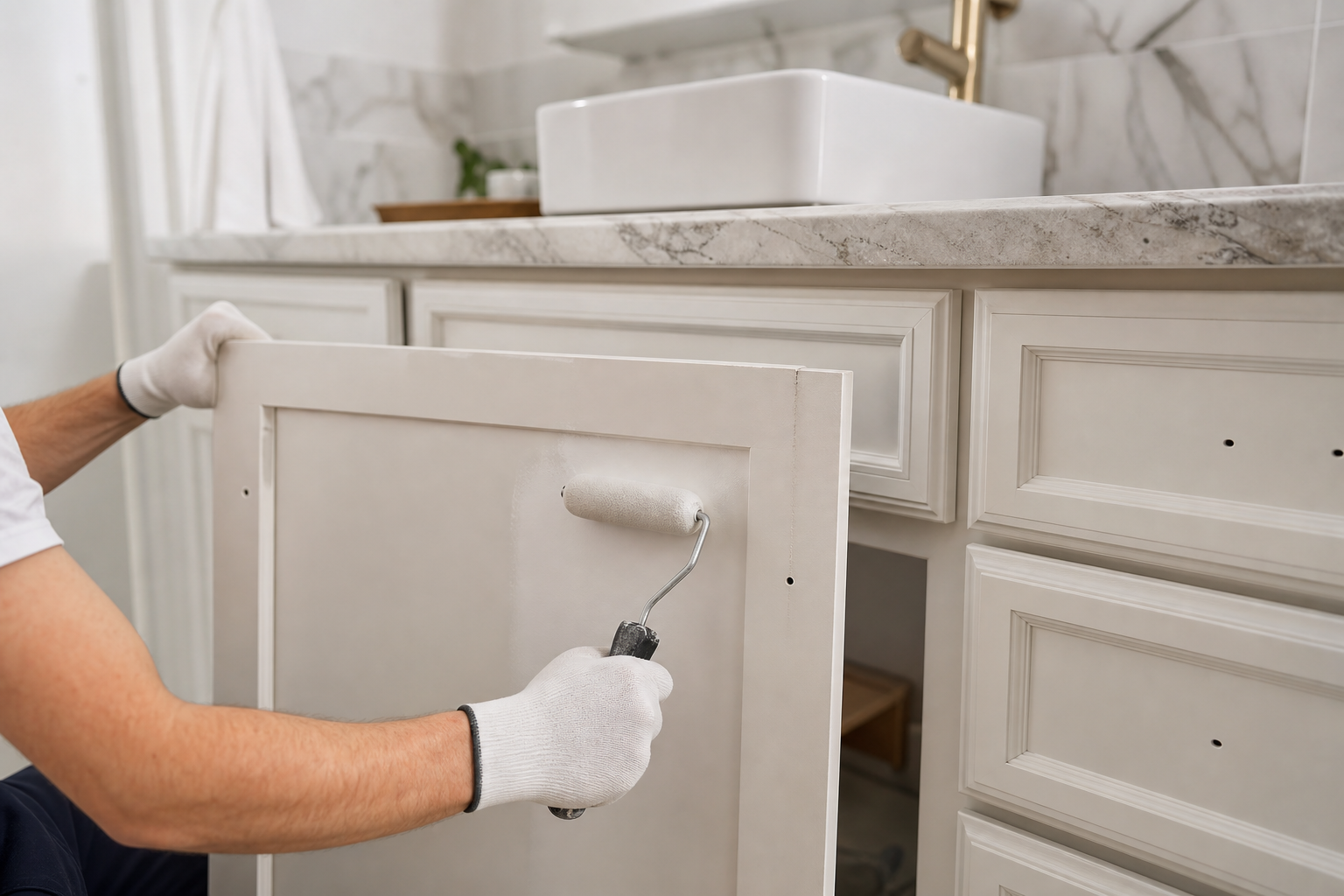
Overview: A uniform repaint of doors, drawer fronts, face frames, and trim to deliver a clean, modern look. Two tone schemes work well, such as darker base cabinets with lighter uppers or a contrasting island.
Why homeowners choose it: It is the fastest visual change, usually the most cost effective, and it modernizes dated styles without changing layout or hardware.
Moisture and products: For bathrooms use a bonding primer then a moisture resistant topcoat such as a semi gloss or enamel. Proper adhesion is critical, especially on laminate and previously painted surfaces. Aosom recommends sanding, a bonding primer, and a semi gloss or enamel topcoat for humid rooms.
Visual outcome and durability: When sprayed, painted finishes look smooth and contemporary. Expect several years of good performance if preparation and topcoats are correct. Maples and woods that show brush marks benefit from spraying.
Disruption: Low to medium. Contractors can remove doors and spray offsite, or spray onsite with containment to reduce odour and mess.
Ask your contractor: Which primer and paint brand are you using, will doors be sprayed offsite or painted in place, how many coats will you apply, will you provide a sample panel, and what warranty do you offer for bathrooms?
Example decision cue: Pick painted solids when you want a high impact style change at moderate cost and your cabinet boxes are sound.
-
2. Stained or clear-coated wood finish
Overview: A stain enhances natural grain and tone, then a protective clear coat is applied for water and wear resistance. This keeps a natural, warm look rather than full paint coverage.
Why homeowners choose it: Staining preserves and highlights wood character, which suits traditional, transitional, or Scandinavian schemes.
Moisture and products: Select water resistant polyurethane or conversion varnish topcoats to resist steam and splashes. The Cat Carpenter notes that good preparation and multiple protective coats are essential for humid rooms.
Visual outcome and durability: A well executed stain and clear coat can last many years, but success depends on substrate quality. Thin veneers or damaged surfaces are poor candidates because they may not accept stain uniformly.
Disruption: Low to medium. Multiple drying periods add time, but work is often completed without changing cabinetry layout.
Ask your contractor: How will you prepare the wood to accept stain, what stain system and clear coat do you recommend, how many protective coats will be applied, and can I see a sample on my door?
Example decision cue: Choose staining when you have high quality wood like oak, maple, or walnut and want to preserve grain and warmth.
-
3. Professional cabinet respraying (industrial spray finish)
Overview: A factory style sprayed finish applied with professional equipment, producing a very smooth and uniform look across faces, edges, and recessed profiles.
Why homeowners choose it: Respraying gives a high end, flawless finish and superior edge coverage that brush or roll work cannot match.
Moisture and products: Professional resprays often use conversion varnishes or catalysed polyurethane systems that cure harder than standard coatings, improving humidity resistance. Coohom and The Cat Carpenter highlight respraying as an effective way to achieve a factory appearance.
Visual outcome and durability: Expect an almost factory quality finish with higher resistance to wear, provided the correct materials and curing are used.
Disruption: Medium. Offsite booth spraying removes most odour and reduces onsite disruption. Onsite spraying needs containment and ventilation and will create temporary odour.
Ask your contractor: Will spraying be done in a controlled booth or onsite, which paint system do you use, what are drying and cure times, how will you control odour, and do you offer a warranty for bathroom use?
Example decision cue: Consider professional respraying when you want a near‑factory finish, are renovating to sell, or have wood species that show brush marks.
-
4. Partial refinishing and two-tone updates
Overview: A targeted approach such as painting base cabinets while staining upper cabinets, replacing door fronts only, or refreshing just an island or vanity face.
Why homeowners choose it: Partial updates reduce cost and downtime while achieving a strong visual change through contrast and focus.
Moisture and products: Apply the same moisture resistant primers and topcoats to any treated sections. Confirm colour and sheen consistency when mixing treatments.
Visual outcome and durability: Two tone schemes add depth and can make small bathrooms feel larger or more styled without a full renovation.
Disruption: Low. Because only portions are addressed, projects often complete faster and at lower cost.
Ask your contractor: How will you ensure a consistent finish between treated and untreated sections, which pieces will be removed for offsite work, and what is the minimal scope to achieve the look?
Example decision cue: Use partial refinishing when you want a designer look on a limited budget or need to limit bathroom downtime.
-
5. Hardware, trim, and small upgrades that transform the look
Overview: Swap knobs and pulls, upgrade hinges to soft close, replace trim, or add undercabinet lighting and new toe kicks to modernize the vanity with minimal refinishing.
Why homeowners choose it: Hardware is an efficient way to modernize the room at very low cost and with minimal disruption.
Moisture and products: Choose corrosion resistant materials such as stainless steel or solid brass with protective finishes that hold up in humid bathrooms.
Visual outcome and durability: A new hardware finish can change perceived style immediately. Soft close hinges and improved hardware also increase resale appeal.
Disruption: Very low. Many hardware upgrades are completed in a few hours to a day.
Ask your contractor: Will new hinges require routing, can you retrofit soft close, what metal finishes do you recommend for bathrooms, and will hardware replacement require door or frame repairs?
Example decision cue: Start with hardware upgrades when boxes are sound and you want a quick, inexpensive refresh.
-
6. Textured and decorative finishes (glazes, distressing, laminate overlays)
Overview: Specialty finishes such as antique glazes, hand distressing, or applying thin decorative laminates to change texture and pattern.
Why homeowners choose it: Decorative finishes deliver a bespoke look for period bathrooms or feature vanities where paint alone will not achieve the desired effect.
Moisture and products: Specialty techniques must be sealed with a reliable topcoat and require careful selection of sealant and application method to perform in humid conditions. Coohom catalogs creative refinishing ideas and notes the need for good sealing in bathrooms.
Visual outcome and durability: When sealed correctly these finishes look unique and attractive, but they may need more maintenance than standard painted or stained finishes.
Disruption: Low to medium depending on the method. Many decorative finishes are applied in place, but curing times vary.
Ask your contractor: Can you show sample panels, how will you seal the finish for bathroom use, and what ongoing maintenance will be required?
Example decision cue: Pick a decorative finish when you want a signature look and are comfortable with occasional maintenance.
-
7. Protective topcoats and moisture-resistant systems compared
Overview: Clear protective systems applied after painting or staining, including water based polyurethane, oil based polyurethane, and conversion varnishes. Marine grade options are available for extreme exposure.
Why homeowners choose it: The topcoat is the final protection layer and is essential in bathrooms to protect against steam, splashes, and cleaning chemicals.
Moisture and products: Conversion varnish and catalysed polyurethanes cure harder and often resist humidity better than standard polyurethanes. Aosom recommends semi gloss or enamel topcoats for bathroom fixtures.
Visual outcome and durability: The correct topcoat extends life significantly and keeps finishes easier to clean. Application technique, number of coats, and sanding between coats determine long term performance.
Disruption: Low. Multiple coats add time but are a necessary step for durable results.
Ask your contractor: Which clear coat do you recommend for frequent humidity, how many coats will you apply, do you sand between coats, and what are the cure and reoccupation times?
Example decision cue: Always pair your chosen finish with a topcoat selected for bathroom conditions to protect your investment.
Preparing your bathroom: a short homeowner checklist
- Clear counters and remove personal items, toiletries, and wall art.
- Confirm access to water and power if the contractor requires it.
- Decide whether doors and drawers will be removed for offsite spraying to reduce odour.
- Ask about odour mitigation and ventilation plans, especially for catalysed finishes and onsite spraying.
- Request a sample panel or a door mock up and sign off before full work begins.
Maintenance tips for humid Toronto bathrooms
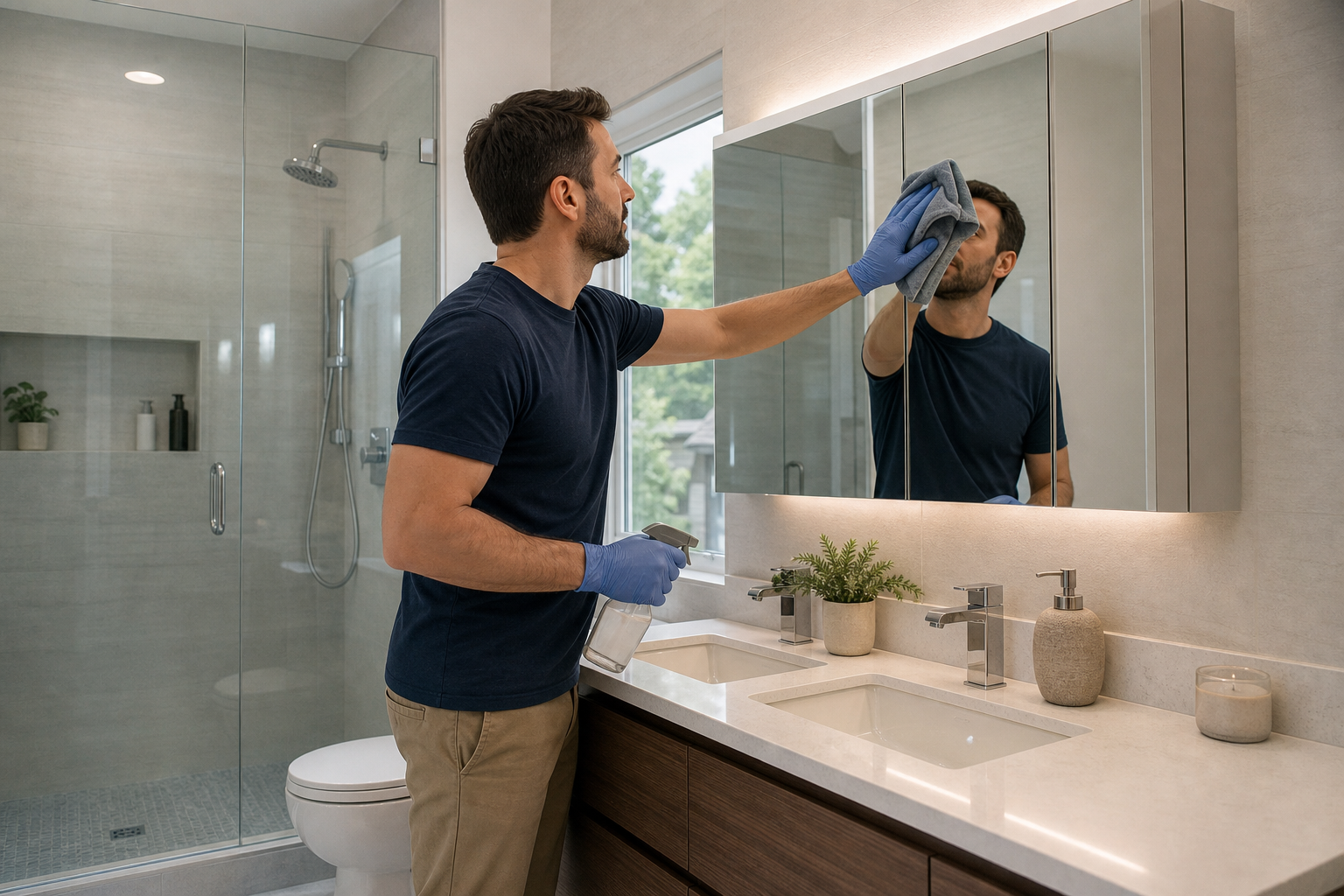
Run ventilation during and after showers, wipe splashes promptly, and use nonabrasive cleaners. Proper topcoat selection and correct application are the two biggest factors in long term performance. For stepwise preparation and product suggestions see the how to refinish bathroom vanity guide from The Cat Carpenter and the medicine cabinet update tips from Aosom. For creative finish ideas review Coohom’s refinishing collection.
When to refinish, reface, or replace in the GTA
If cabinet boxes are structurally sound with solid substrate and undamaged door edges, refinishing or respraying usually provides the best value. If you find delamination, extensive swelling, or rot, replacement or refacing may be more appropriate. Paint2decor INC offers refinishing, refacing, painting, and respraying services across the Greater Toronto Area, and can advise which option fits your vanity and moisture conditions.
Frequently asked questions
How long will a refinished bathroom cabinet last in a humid Toronto bathroom
Answer: Longevity depends on substrate condition, preparation, the products used, and ventilation. With proper sanding, a quality bonding primer, and a moisture resistant topcoat such as conversion varnish or multiple coats of polyurethane, a professional refinish can perform well for many years. Exact life will vary by use and ventilation.
Can refinishing fix water damage or do I need to replace the cabinet structure
Answer: Surface stains, blistering paint, and minor swelling can often be repaired and refinished. Structural damage, persistent delamination, or rot usually requires replacement or refacing. A qualified contractor should inspect the boxes and advise whether repairs are feasible.
What disruption and odour should I expect from professional respraying
Answer: Offsite booth spraying greatly reduces onsite odour and disruption. Onsite spray work requires containment and ventilation, and there will be temporary odour until coatings cure. Ask your contractor about booth options, ventilation, and cure times so you can plan bathroom access.
Can you achieve a smooth painted finish on maple or laminate cabinets
Answer: Yes, but preparation differs. Maple benefits from thin sprayed coats to avoid brush marks. Laminate usually needs a bonding primer and may not accept stain, so paint or laminate overlays are often better solutions. Contractors should offer adhesion testing or a mock up so you can approve the finish.
How should I prepare my bathroom before a contractor starts refinishing
Answer: Remove personal items and clear counters, provide access to water and power if required, and agree whether doors and drawers will be removed for offsite work. Ask for a sample panel and a written scope with timelines, odour expectations, and cure periods before work begins.
Next step
Ready to compare options for your bathroom vanity in Toronto or the GTA? Contact Paint2decor INC for a free quote and an on site assessment tailored to your cabinet construction and moisture conditions. For further reading and prep guides visit The Cat Carpenter, Aosom, and Coohom.